Pembrokeshire Planners Visit Controversial DARC Radar Site at Cawdor Barracks After 1,100 Objections
Pembrokeshire County Council planning members have unanimously agreed to conduct a site visit to Cawdor Barracks in Brawdy. This decision follows the submission of more than 1,100 formal objections regarding the Ministry of Defence’s proposed Deep Space Advanced Radar Concept (DARC) facility. The committee will inspect the location before the controversial application returns for final determination.
The Ministry of Defence submitted the planning application earlier this year, seeking permission to install 27 radar antennas and associated infrastructure at the barracks. The project forms part of a global sensor network designed to track active satellites and other objects in space. The system utilises three sites worldwide under the AUKUS trilateral security partnership involving the USA, the UK, and Australia.
The proposed network aims to enable 360-degree coverage of the sky at all times of day and under any weather conditions. Then-Defence Secretary Grant Shapps identified Cawdor Barracks as the preferred UK site for the installation in late 2023. The scheme is intended to protect and defend services provided by satellites, ensuring continuity and resilience against collisions or debris-related incidents.
A supporting statement for the application warns that without DARC, the UK faces a significant risk of losing access to vital satellite services. The document states this loss would have severe consequences for national security, economic stability, and public safety. The project is expected to create 90 full-time equivalent construction jobs and 60 operational roles covering operation, maintenance, and security.
At their November 3 meeting, county planning committee members were initially due to discuss the scheme. However, they could not make a decision because the application had been called in for determination by the Welsh Government. Planning and Environment Decisions Wales (PEDW) raised an issue regarding the need for the scheme to be publicised as a departure from the development plan.
Members heard that more publicity was needed before the committee could lawfully proceed to consider the merits of the scheme. Any debate at the November meeting was strictly limited to a procedural course of action. Members were presented with two options: defer the application until the publicity period ended or visit the site, with the application returning to a future meeting in either case.
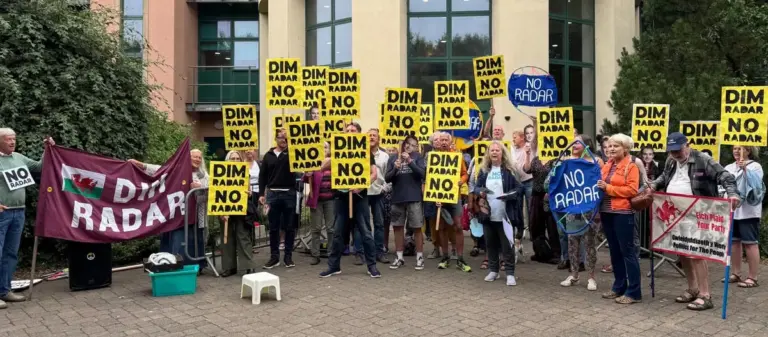
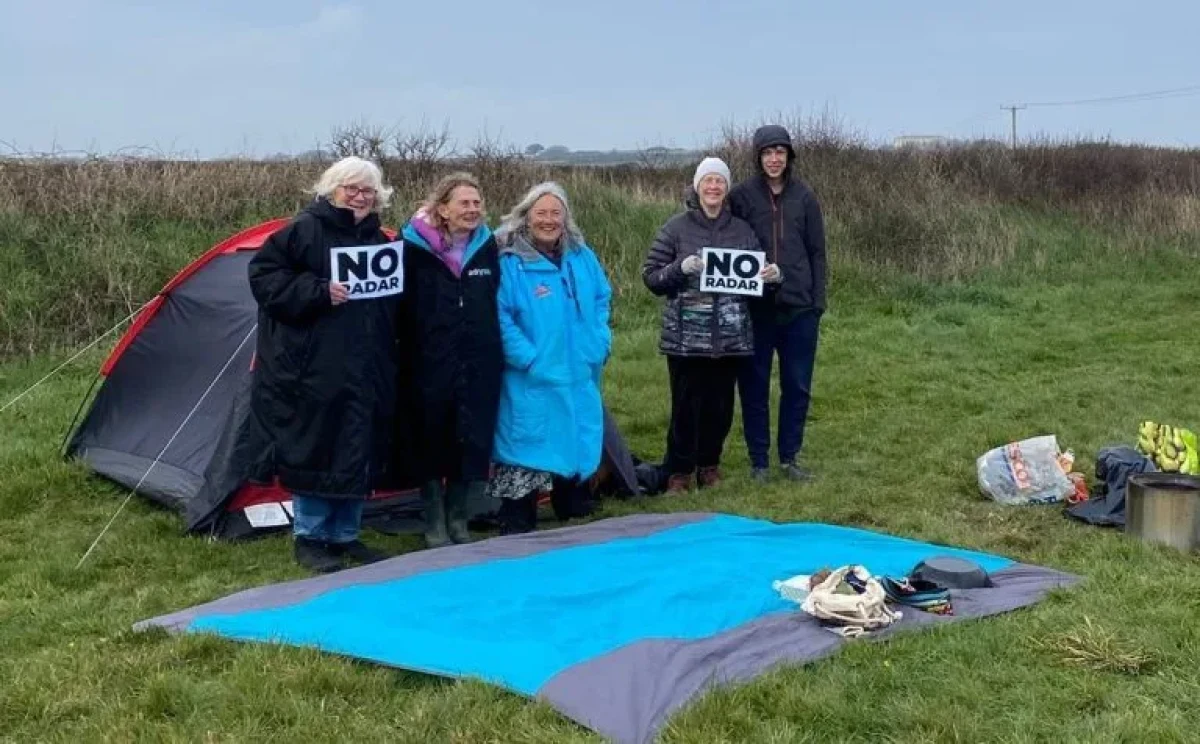
Public opposition to the project has been significant, with protesters gathering outside the barracks and County Hall in Haverfordwest. More than 1,100 objections were submitted to county planners, including from actor Jerome Flynn, known for Soldier Soldier, Robson & Jerome, and Game of Thrones. Flynn described the proposal as “the most unspeakably abominable planning application led by the US military, backed by Donald Trump.”
The campaign group PARC against DARC, established in 2024 to oppose the scheme, has attracted more than 20,000 signatures to its petition. The group described DARC as “part of a weapons system designed to track and target satellites belonging to other countries around the world.” They added that it is being developed for the US Space Force, which was created under Donald Trump.
PARC noted that US military spending has doubled since Trump took office, leading them to describe DARC as a significant escalation in the militarisation of space. Roy Jones of PARC against DARC warned that “rival superpower China” viewed the scheme as “a significant escalation” likely to increase the area’s targeting priority. This perspective contrasts sharply with the government’s security-focused justification for the radar network.
In contrast, Brawdy Community Council backed the scheme, stating it would secure a “long-term strategic future of the Brawdy site itself.” A representative for the scheme argued that rejecting it would pose “significant risks to national security.” They further described the project as “a vast opportunity for the economy of Wales,” highlighting the potential job creation and infrastructure investment.
St Davids City Council members also unanimously opposed the proposals during the pre-application consultation phase. Despite the mixed local reactions, the county planning committee chair and local member Cllr Mark Carter called for a site visit to Brawdy. He argued that members needed to assess the potential visual impact of the 27 radar antennas on the local landscape.
The committee members unanimously backed the decision to visit the site, ensuring a direct assessment of the proposed development. The DARC application is now due to return to a future planning committee meeting for full consideration. The outcome of this visit will likely influence the final decision on whether the Ministry of Defence can proceed with the installation at Cawdor Barracks.

Eli Nathan
Eli Nathan covers Wales news, politics, community stories, and sports for The National Wales (thenational.wales).
Follow real-time news and explainers on X at @elinathan1122. Reports are verified from official public announcements, emergency authorities, the Met Office, NHS Wales, and established news outlets across Wales.
Corrections and tips: if you spot an error in one of our reports, or have a story you think we should cover, contact the desk at [email protected] or via the contact page.