
MP visits Baavet’s Porthmadog wool duvet factory
Liz Saville Roberts tours Baavet’s factory, showcasing its growth, Welsh Government grant support and commitment to premium local wool.
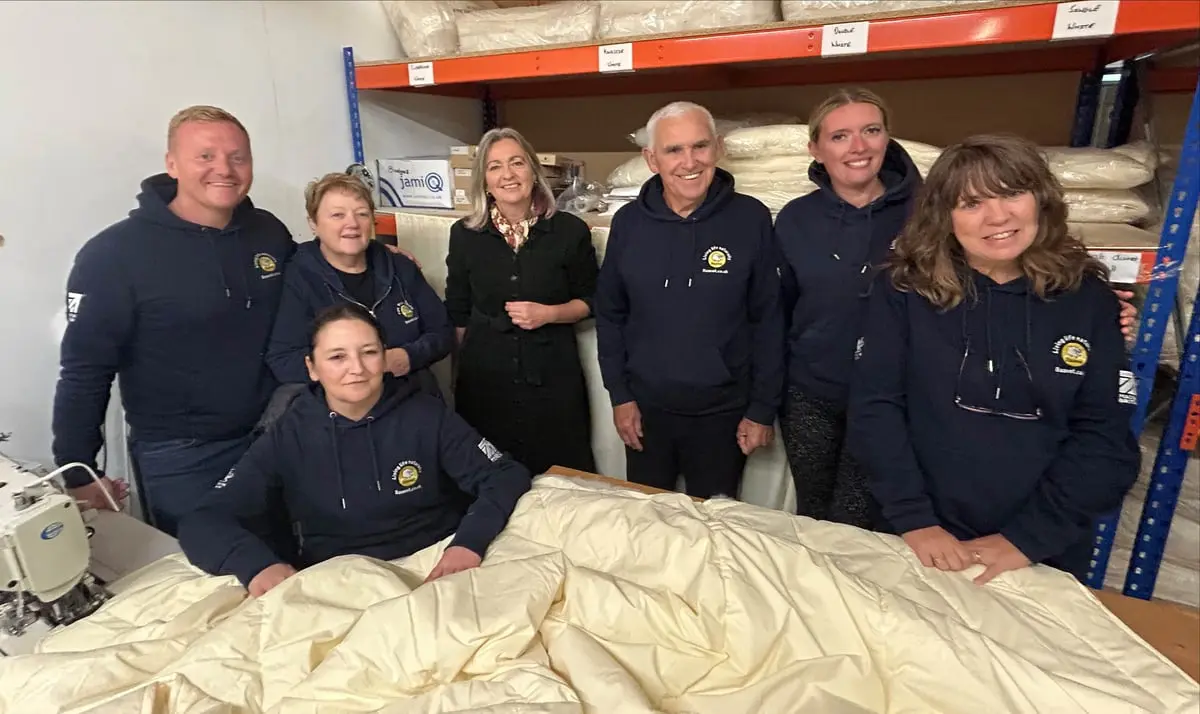
Gwynedd MP Liz Saville Roberts marked National Wool Month with a tour of Baavet’s wool‑duvet factory on the outskirts of Porthmadog on Thursday.
The visit highlighted the company’s growth from a modest start‑up to the only UK producer of full‑process wool duvets.
Roger Payne, who founded Baavet 17 years ago with his wife Lesley, recalled the inspiration behind the brand’s name.
“Wool prices had hit rock bottom, and we needed to do something with our wool.”
Initial production relied on external facilities.
Success soon outgrew those constraints.
The Porthmadog site, formerly owned by Piano Cymru and originally a furniture factory of the Quaeks family, provides the space required for the two‑metre‑wide carding and quilting machines.
Baavet sources its raw material directly from local farmers, paying a premium for high‑quality fleeces such as Lleyn and Texel.
Each year the company purchases roughly 40 tonnes of wool, which is graded at the British Wool depot in Newtown before being washed in Dewsbury.
Washing reduces the fibre weight by 30‑40 per cent, depending on the season.
Beyond duvets, Baavet now produces wool pillows, mattresses and pet beds, all manufactured in the Porthmadog facility.
When asked why consumers should consider a wool duvet, Payne cited recent academic research.
“They are the best.” Of course I would say that wouldn’t I, but it’s true.
Bangor University’s Textile Department has just completed a yearlong study of duvet fillings, and wool has come out on top, far superior to polyester, feather or duck down.
The MP praised the company’s contribution to the local economy and its role in sustaining Welsh wool farming.
Baavet’s expansion demonstrates how targeted government support and a focus on premium, locally sourced material can revive a traditional industry.
With National Wool Month drawing attention to the sector, the factory’s success may encourage further investment in Welsh textile manufacturing.