
National Park refuses commercial units at Pembrokeshire farm
Ben Phillips, acting through the agent Irvine Johnston, sought permission to subdivide former farm structures into three business, storage and distribution units and two office spaces.
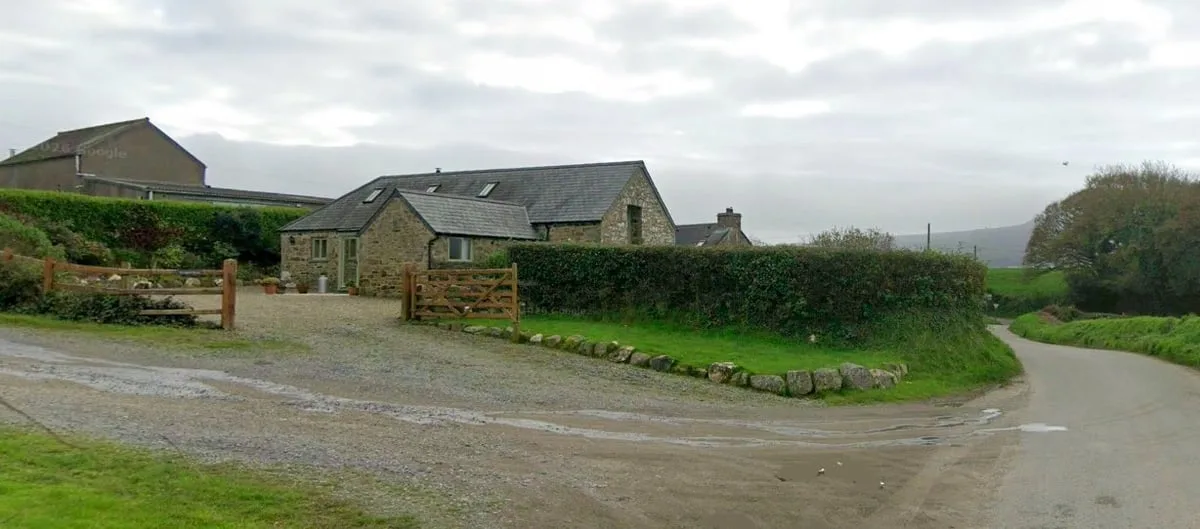
The Pembrokeshire Coast National Park Authority has turned down a bid to convert agricultural buildings at Sychpant, Felindre Farchog, into commercial units.
Ben Phillips, acting through the agent Irvine Johnston, sought permission to subdivide former farm structures into three business, storage and distribution units and two office spaces.
The proposal was a resubmission of an earlier 2025 application that was withdrawn to allow further information to be supplied.
Site inspectors describe the complex as comprising the original farmhouse, a holiday‑let barn conversion, a two‑storey former milking parlour and newer large portal‑framed buildings extending east and north‑east.
The three‑bedroom barn conversion, known as Sychpant Barn, shares the entrance to the application site.
According to the officer’s report, the farm historically operated a dairy, a function that has now ceased, with the owner currently running sheep and cattle alongside the holiday‑let accommodation.
However, the report argues that the submitted information does not prove the proposed commercial activity would remain ancillary to the farm’s core agricultural work.
Key deficiencies highlighted include the absence of a comprehensive farm plan and financial data that fails to account for existing holiday‑let income.
The officer also notes that converting further agricultural buildings would see a “significant proportion of the site being used for non‑agricultural purposes”.
Transport and accessibility concerns feature prominently in the decision.
The site is described as “unsustainable” because of limited public transport, poor pedestrian access and a lack of detailed highways information such as trip generation, speed surveys and visibility splays.
Without this data, the authority could not assess the impact of increased traffic on the narrow rural roads that serve the farm.
Local planning policy stresses that any change of use must not compromise the character of the national park or the viability of the agricultural enterprise.
In this case, the authority concluded that the evidence provided fell short of those standards.
National Park officials also warned that the proposed units could set a precedent for further commercial encroachment on protected countryside.
Community groups have previously voiced concerns about the cumulative effect of development within the park’s boundaries.
While the applicant argues that the new units would create jobs and diversify income, the authority maintains that such benefits must be demonstrably linked to the farm’s primary activity.
The refusal underscores the delicate balance the park must strike between supporting rural economies and preserving the landscape that defines the Pembrokeshire Coast.
Applicants have the right to appeal the decision to the Planning Inspectorate, where a further review of the evidence will be undertaken.
Should the appeal proceed, the inspectorate will likely request a detailed farm business plan, traffic impact assessments and a clearer financial model that incorporates the holiday‑let revenue.
For now, the Sychpant site remains a farm with a holiday‑let barn, its agricultural operations continuing under the current licence.
The decision serves as a reminder to developers that the national park’s planning framework demands robust, site‑specific data before any change of use can be approved.