
Cardigan’s historic bank to become restaurant after council approval
Ceredigion planners have approved the conversion of Cardigan’s Grade‑II listed former Lloyds TSB branch into an open‑plan restaurant, preserving its heritage.
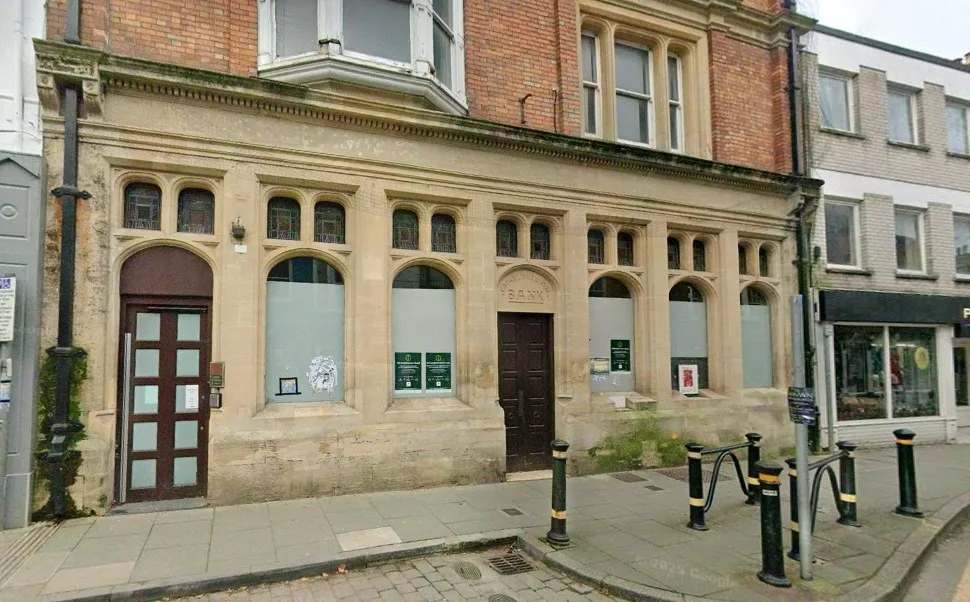
County planners in Ceredigion have given the green light for the former Lloyds TSB branch on High Street, Cardigan, to be reborn as a restaurant.
The Grade‑II‑listed building, originally erected in the 1880s as Brecon Old Bank, closed its doors as a bank in June 2024 after a century of service.
CAD Properties, acting through Harries Planning Design Management, submitted a change‑of‑use application that was approved last year, allowing Class A1, A2 and A3 uses.
The council’s officer report noted that the bank’s former function had ceased and that the proposal was intended to attract a range of future occupants.
At present, no specific tenant has been named, meaning any future works will still require separate listed‑building and planning consents.
A subsequent application detailed the internal and external alterations needed to transform the ground floor into an open‑plan eatery.
The supporting statement argues that the restaurant layout will echo the original banking hall while complying with modern fire‑safety standards.
“The reuse of the ground floor as an open‑plan restaurant is appropriate, the layout broadly following that of the historic banking hall.”
According to the officer’s recommendation, the ground floor will host customer seating, a bar, kitchen facilities, storage and accessible toilet provisions, with the historic vaults retained for storage.
“The proposal involves the retention of the principal building, with restaurant accommodation located at ground floor level.” The ground floor would contain customer seating areas, a bar, kitchen facilities, storage areas and accessible toilet facilities.
The first and second floors are slated for staff facilities, training rooms and ancillary spaces, with modern partitions removed to reveal the original spatial character.
“The first and second floors would be used for staff facilities, training rooms, storage and ancillary operational spaces.”
Listed‑building consent, granted in 2024, allowed the removal of non‑historic signage and the decluttering of the façade while preserving the building’s inscribed historic lettering.
Local heritage groups have welcomed the plan, seeing it as a way to breathe new life into a landmark while safeguarding its architectural integrity.
Work is expected to commence early next year, with the restaurant aiming to open its doors to the public by mid‑2025, adding a culinary destination to Cardigan’s town centre.