
Britain readies home defence as Europe revives conscription
The UK accelerates a Home Defence Programme, updating War Books and planning a 2027 exercise, while neighbours expand conscription and total defence.
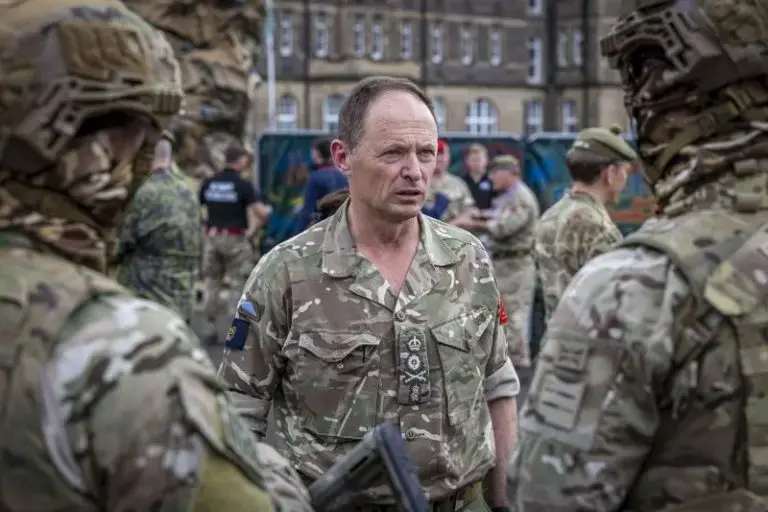
Britain is accelerating a Home Defence Programme that aims to fuse civilian and military planning as Europe revives conscription and total‑defence strategies.
General Sir Roly Walker told 700 soldiers at Catterick Garrison that political leaders would “very soon” begin a frank conversation with the British public about the sacrifices required to prioritise defence and security.
He added that citizens may need to play a part in defending the country, signalling a shift from a solely professional armed forces model.
The Home Defence Programme is part of a Resilience Action Plan that updates the Government’s “War Books” – classified contingency arrangements for serious crises affecting the UK mainland.
Officials are preparing a national exercise for 2027 that will involve hundreds of ministers, emergency planners and senior civil servants.
New guidance for households, schools and colleges is being drafted, alongside a multi‑year public‑information campaign on emergency preparedness.
Across the continent, governments are already expanding reserve forces, re‑introducing conscription elements and training civilians in first aid, survival and security.
Germany has restarted structures that could support a larger military, while Denmark has broadened its conscription remit.
Latvia now selects recruits by lottery when volunteer numbers fall short, requiring up to 11 months of service after medical assessment.
Poland runs civilian training programmes that teach first‑aid and emergency response, aiming to create a population capable of functioning during prolonged disruption.
Sweden’s “total defence” model places responsibilities on the armed forces, local authorities, businesses and citizens alike.
Norway has declared 2026 its “Total Defence Year”, urging a coordinated effort between military, civilian authorities and the public.
The shift reflects NATO’s updated resilience requirements, which call for reliable energy, food, water, communications and transport systems, as well as plans for civilian evacuation and continuity of government.
In Wales, First Minister Rhun ap Iorwerth warned on 13 October that the nation faces increasingly interconnected threats, including cyber attacks, pandemics and disruption to energy, water and communications.
He said the Wales Resilience Framework was bringing together government, emergency responders, the public sector, businesses, voluntary organisations and communities through a “whole‑of‑society approach”.
The timing of the First Minister’s statement closely preceded General Walker’s remarks, highlighting parallel thinking at Westminster and Cardiff Bay.
Welsh infrastructure such as the Milford Haven oil and gas terminals and regional ports would be central to any national home‑defence strategy.
Transport links in Pembrokeshire, already limited, could become critical bottlene‑cks in a prolonged crisis.
Responsibility for defence remains a reserved matter for the UK Government, but health, fire and rescue, transport and local emergency services are devolved, meaning coordination will be essential.
Experts caution that “sacrifice” could take many forms, from higher defence spending and tougher taxation to expanded reserve commitments for employers.
Specialist skills in medicine, cyber security, engineering and logistics are likely to be in greater demand for resilience planning.
Businesses operating critical infrastructure may face stricter requirements to demonstrate continuity capabilities.
Families could be encouraged to keep basic emergency supplies at home, while schools receive preparedness material and communities are offered first‑aid or civil‑defence training.
Air Chief Marshal Sir Richard Knighton, speaking at the Royal United Services Institute, warned that “Our security cannot be outsourced only to the armed forces.”
He added, “Our objective must be to avoid war,” and stressed that “the price of maintaining peace is rising.”
His concluding remark, “The whole of Britain must step up,” underscised the push for a broader societal contribution to national security.
Defence analysts note that the UK still lags behind several European neighbours in implementing a whole‑of‑society defence approach.
Dr Katharine A.M. Wright of the Royal United Services Institute argued last year that the UK’s resilience planning cannot be treated merely as another military programme.
She highlighted the need for health, education and civil society institutions to be integrated into national security strategies.
While there is no indication that Britain will re‑introduce compulsory military service, the Home Defence Programme signals a move toward greater civilian involvement in crisis preparedness.
As Europe deepens its total‑defence policies, Britain’s forthcoming 2027 exercise and updated War Books will test the nation’s ability to coordinate across government, industry and the public.
The evolving landscape suggests that future conflicts may be fought as much on the home front as on the battlefield, with civilian resilience becoming a key element of deterrence.