
Mother urges Wales to match England’s school allergy protections
Tanya Ednan‑Laperouse calls for consistent allergy safety rules in Welsh schools after her daughter’s fatal reaction.
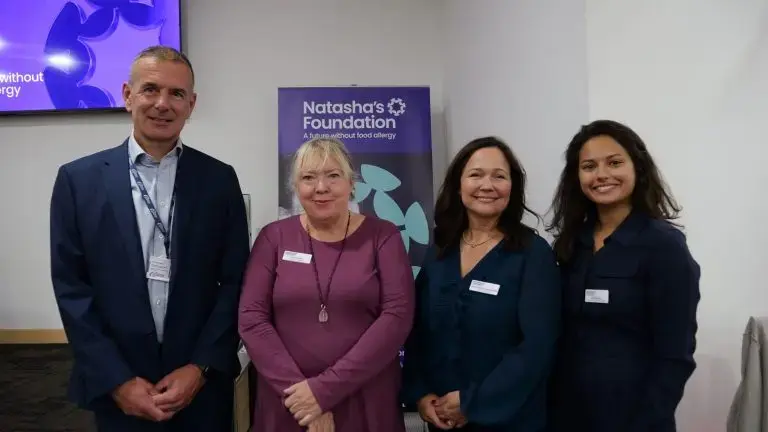
A mother whose 15‑year‑old daughter died from a severe food‑allergy reaction has pressed Welsh schools and education officials to adopt the same statutory allergy‑safety measures now in force in England.
Tanya Ednan‑Laperouse OBE addressed an audience of about 140 council representatives, headteachers, cooks and catering staff in the Caerphilly Council Chamber on 5 October, after an invitation from food distributor Castell Howell.
Ms Ednan‑Laperouse recounted how her daughter Natasha succumbed in 2016 after eating a baguette that contained sesame – an allergen that was not listed on the packaging.
The tragedy led the parents to establish Natasha’s Foundation, a charity that campaigned for tighter food‑labelling rules and helped secure Natasha’s Law, which now requires full ingredient and allergen labelling on pre‑packed foods sold directly to consumers.
At the Caerphilly event, the foundation’s Director of Education, Jan Parnell, outlined the charity’s work with schools and its push for measures modelled on England’s Benedict’s Law to be introduced in Wales.
England’s new statutory framework, which came into force in September, obliges state‑funded schools to produce and regularly review an allergy‑safety policy, train staff, maintain individual healthcare plans, record incidents and prepare emergency response procedures.
Further regulations are expected to require schools to keep spare adrenaline auto‑injectors on hand, although the exact timetable has not yet been set.
Wales already has statutory guidance on supporting learners with healthcare needs and advice on emergency adrenaline devices, but the Welsh Government has not adopted the comprehensive package introduced in England.
Welsh ministers announced in July that they were reviewing the existing guidance and would consider the provisions of Benedict’s Law when shaping future policy, with a review slated to finish in November.
Data on how many Welsh schools currently stock spare adrenaline devices or have recorded serious allergic reactions remain unavailable, according to the Welsh Government.
Hywel Dda University Health Board has said its school nursing service provides training for pupils who carry prescribed adrenaline auto‑injectors and offers additional sessions when circumstances change.
“The care and protections that people living with food allergy in the UK receive vary hugely across the 4 nations,” Ms Ednan‑Laperouse said.
She added that the foundation supports extending comparable school protections to Wales, Scotland and Northern Ireland and is supplying free educational material through its Allergy School programme, which now includes Welsh‑language resources.
Natasha’s Foundation also calls for each UK nation to appoint a dedicated national lead for allergies, tasked with championing the needs of affected families and improving consistency of care.
Through Allergy School, the charity provides schools with training modules, practical resources and guidance designed to enable children with food allergies to participate fully in school life without unnecessary risk or exclusion.
The issue resonates strongly with families in Pembrokeshire, Carmarthenshire and Ceredigion, where the Welsh Government is weighing whether additional national requirements are needed to protect pupils with allergies.
As the review draws to a close, education leaders and health officials in Wales face mounting pressure to align their policies with England’s statutory regime, ensuring that no other child suffers the same fate as Natasha.