
Newport council eyes £102m Civic Centre overhaul
Newport City Council weighs relocation as an independent review flags up to £102m needed for Civic Centre repairs.
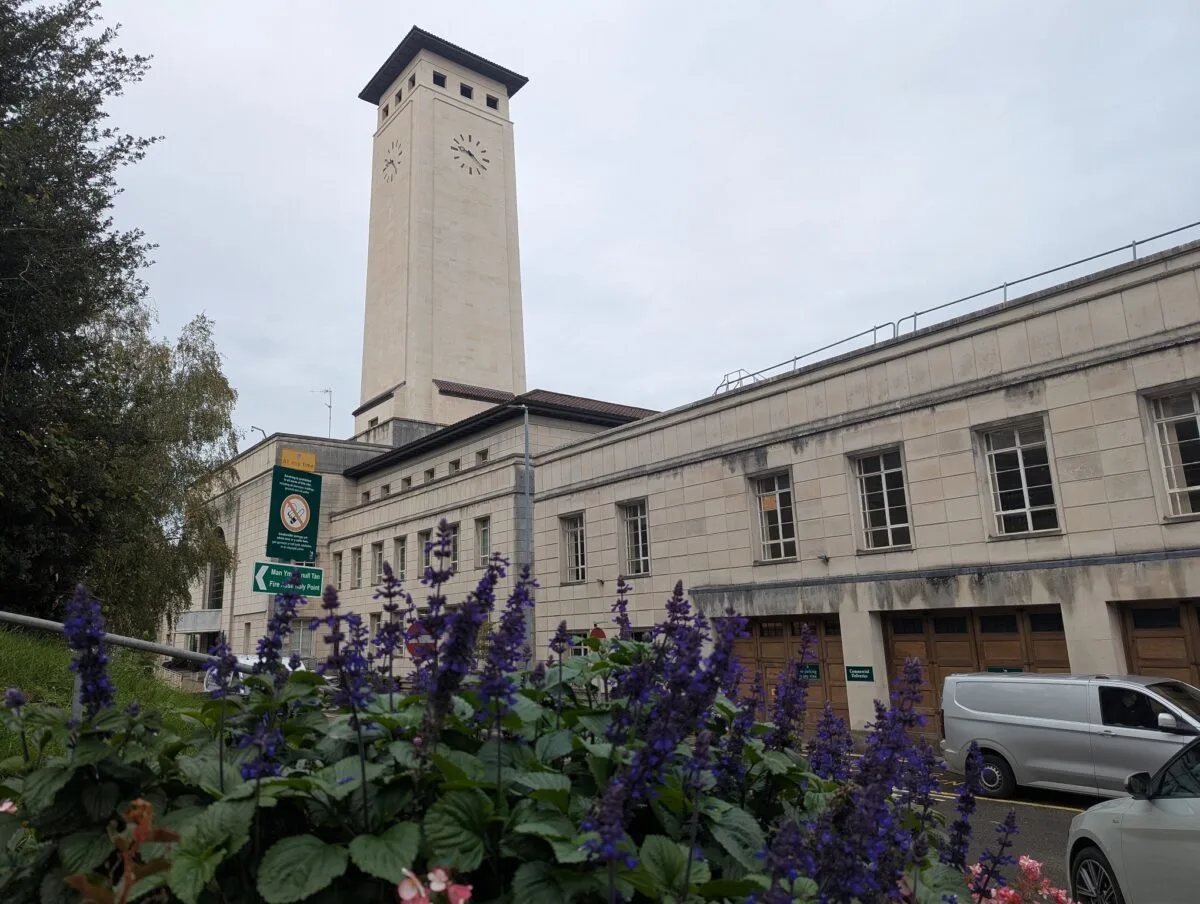
Newport City Council is weighing a move from its iconic Grade II* listed Civic Centre after an independent review warned that refurbishment could cost as much as £102 million.
The 24,000 square‑metre complex, a fixture on the city’s skyline since the 1960s, has seen its use dwindle as remote‑working practices accelerated by the pandemic left large sections under‑occupied.
Council officials commissioned the review to assess the building’s condition and future viability, and cabinet members are slated to decide next week whether to launch a formal exploration of relocation options.
“The Civic Centre is an important civic and heritage asset, and we recognise the strength of public feeling about its future,” said Cllr Dimitri Batrouni, the council leader.
He added, “However, we also have a responsibility to ensure that our buildings support effective services and represent a sustainable use of public resources.”
The independent evidence, the council said, shows the Civic Centre is “much larger than we now need and would require significant investment”.
Cost estimates for bringing the lesser‑used parts of the building up to modern standards could stretch to an estimated £102 million, a figure driven in part by constraints linked to its listed status.
A council report warned that even if the renovations were completed, the building’s layout and “accessibility limitations” would mean it “remains unfit for purpose”.
Among the heritage assets under consideration are the Hans Feibusch murals in the central hall, which depict the city’s history and evolution.
Relocation possibilities range from a purpose‑built new headquarters to the refurbishment of an existing alternative site, with projected costs between £26 million and £81 million.
One option would see the Civic Centre mothballed, while another would retain it as the venue for the council’s democratic functions.
Cllr Batrouni clarified that the upcoming cabinet meeting will only consider whether to proceed with exploring relocation, not the final destination.
“This is not a decision about where the council would move, nor is it a final decision about what will happen to the Civic Centre,” he said.
He stressed that any future options would be measured against a suite of criteria, including resident needs, service delivery, accessibility, staff wellbeing, capacity, cost, sustainability, technology, security and travel.
“Protecting the Civic Centre’s civic significance and establishing a viable and sustainable future for the building would remain central to the next phase of work,” the leader added.
Local residents and heritage groups have voiced strong emotions about the potential loss of a building that symbolises Newport’s post‑war civic ambition.
Community representatives argue that the murals and the building’s architectural character merit preservation, even if the council’s operational footprint is reduced.
Council officers have highlighted that the building’s listed status imposes strict controls on alterations, inflating both timeframes and costs for any refurbishment scheme.
Financial pressures on the authority have intensified following recent budgetary constraints, prompting a search for more cost‑effective ways to deliver services.
The council’s finance department estimates that maintaining the current building without substantial investment could lead to escalating maintenance expenses over the next decade.
Conversely, a move to a new or refurbished site could free up capital for other priorities, though the initial outlay would be significant.
Stakeholders will be invited to submit feedback on the options during a public consultation period scheduled to begin after the cabinet’s decision.
The consultation will run for six weeks, allowing residents, businesses and heritage bodies to comment on the preferred path forward.
Council officials have pledged transparency throughout the process, promising to publish detailed cost‑benefit analyses for each scenario.
Should the council decide to relocate, the Civic Centre could be repurposed for cultural or community uses, a proposal that has already attracted interest from local arts organisations.
Alternatively, a partial sale or partnership arrangement could be explored to generate revenue while preserving the building’s public function.
The next cabinet meeting, set for next week, will determine whether the council proceeds with a formal feasibility study into relocation.
Until then, the Civic Centre remains the administrative heart of Newport, with staff continuing to work from its historic halls.
Any decision will need to balance fiscal responsibility with the public’s attachment to a landmark that has defined the city’s skyline for over half a century.