
Welsh National Opera celebrates eight decades of song
From its miner‑son founder Idloes Owen’s 1944 rehearsal to global tours and community programmes, the company blends classic repertoire with modern themes.
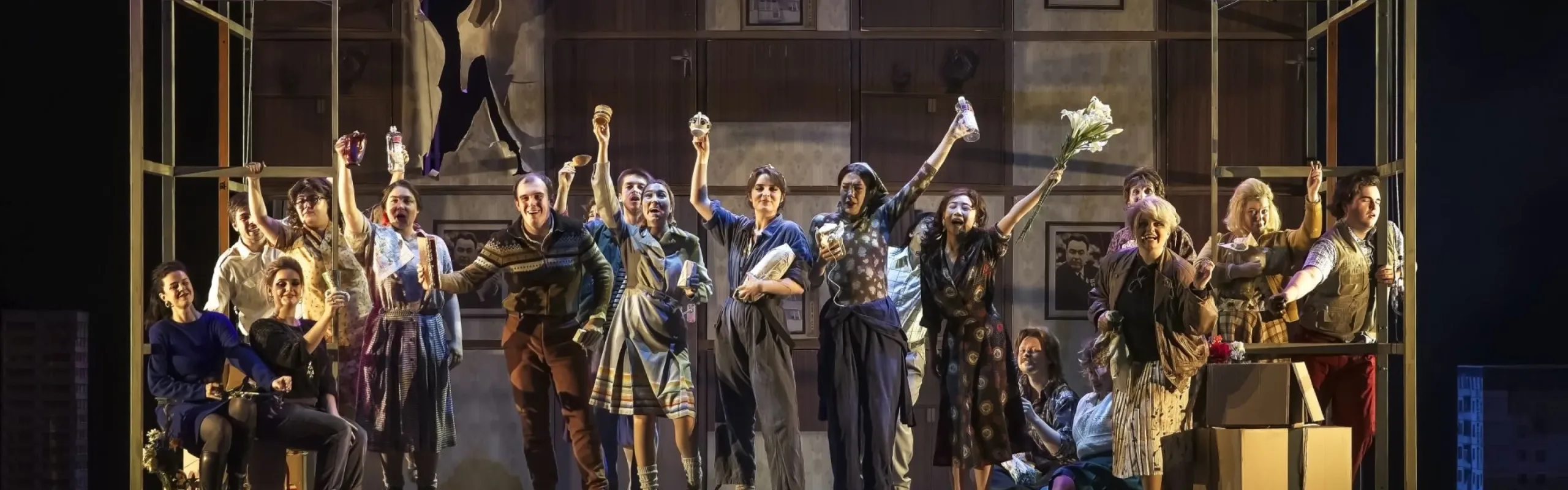
Welsh National Opera, founded in 1943, has become a cultural cornerstone, marrying classic repertoire with community‑focused initiatives as it marks eight decades of performance.
Idloes Owen, the son of a Merthyr Vale coal miner, convened a diverse chorus of butchers, pub landlords and railway workers for the company’s first rehearsal in January 1944.
Two years later the troupe staged its inaugural double bill of Mascagni’s Cavalleria Rusticana and Leoncavallo’s Pagliacci at Cardiff’s Prince of Wales Theatre, with actors in self‑made costumes and sets assembled up to opening night.
From those modest beginnings the ensemble grew into a year‑round institution, becoming the first opera company outside London to tour the English provinces and achieving full professional status in 1976.
In 2004 the company settled into its permanent home at the Wales Millennium Centre, where it now draws sell‑out audiences for a regular season of productions.
Classic works such as La bohème, The Barber of Seville and Carmen continue to feature prominently, while the company has also championed lesser‑known pieces, including the UK premiere of Berg’s Lulu in 1971 and a new staging of Prokofiev’s War and Peace in 2018.
Recent commissions reflect a distinctly Welsh perspective, exemplified by Rhondda Rips It Up!, a production centred on suffragette Margaret Haig Thomas.
Welsh National Opera’s commitment to relevance extends beyond the stage; the 2019 season was dedicated to human‑rights themes in partnership with the Welsh Refugee Council.
Prominent Welsh artists have long been associated with the company, from baritone Sir Geraint Llewellyn Evans to bass‑baritone Bryn Terfel, who performed at the coronation of King Charles III.
The organisation’s outreach includes WNO Youth Opera, an award‑winning programme offering training and performance opportunities to singers aged eight to twenty‑five.
We’re a nation of singers in Wales.
This tradition of communal singing, rooted in eisteddfodau festivals dating back to the 12th century and the choral culture of former mining communities, has provided fertile ground for opera’s growth across the nation.
Today the company tours venues throughout Wales and England and has taken its productions to audiences in the United States, Japan and Oman, reinforcing its reputation as an internationally recognised Welsh institution.
Through a blend of beloved classics, daring new works and extensive community programmes, Welsh National Opera continues to embody the nation’s “Land of Song” moniker while expanding the reach of the operatic art form.