
Ben Lake pushes Burnham to consider EU re‑join options
Plaid Cymru MP urges the prime minister to keep customs union, single market and EU membership on the agenda ahead of the November UK‑EU summit.
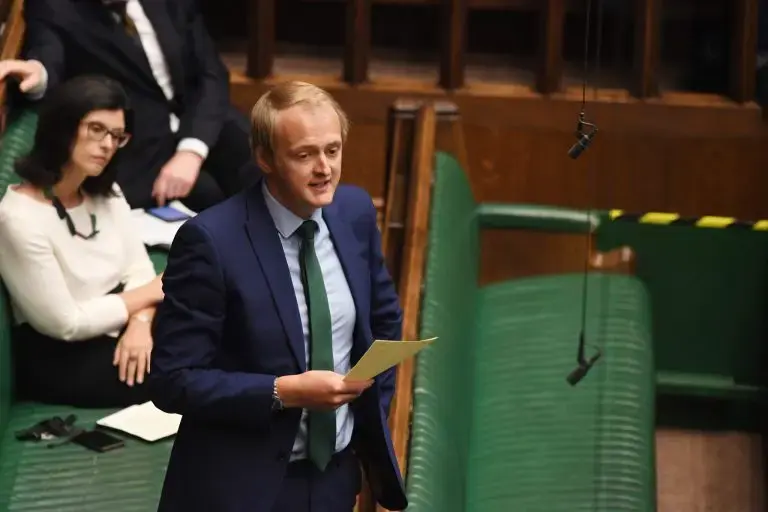
Plaid Cymru MP Ben Lake called on Prime Minister Andy Burnham on Monday to ensure that any future discussion of Britain’s relationship with Europe includes the full range of options, from re‑joining the customs union to potentially re‑entering the European Union.
Lake raised the issue during the Prime Minister’s statement on international affairs in the House of Commons, a speech that also set the scene for the UK’s next summit with European leaders in Brussels on 20 November.
“I commend the Prime Minister for his statement and specifically for his acknowledgment of the significant harm that Brexit has wrought on our communities,” Lake said, before asking whether “the full range of options” – customs union, single market and “possibly the European Union” – should be on the table.
Burnham did not endorse any of the options, but he stopped short of dismissing them, telling MPs that Britain needed a clearer sense of direction after a “difficult decade”.
“I am not going to turn away from questions just because they might be awkward or difficult,” the Prime Minister replied, adding that Parliament should debate the country’s long‑term trajectory over the coming decade.
The exchange came as Burnham confirmed that the second UK‑EU summit will be held in Brussels, where he will meet European Council President António Costa and European Commission President Ursula von der Leyen.
The government has framed the summit as a chance to deepen practical cooperation, citing a proposed food and drink trade deal, tighter links between emissions‑trading systems, energy collaboration, a youth‑experience scheme and enhanced migration cooperation.
Burnham has estimated that the package of agreements could add the equivalent of more than £10 billion a year to the UK economy by 2040.
Lake’s intervention pushed the debate beyond the measures listed for the November talks. Membership of the customs union would remove many customs barriers but would limit the UK’s ability to set an independent trade policy.
Joining the single market would require closer regulatory alignment and acceptance of EU rules governing the European Economic Area, while full EU membership would demand a separate political and legal process.
None of those options feature in the government’s current programme for the summit, yet Burnham’s refusal to rule them out signals that the political boundaries around the Brexit debate may be shifting.
The issue resonates strongly in west Wales, where farming, food production, tourism and small businesses are heavily dependent on smooth UK‑EU trade arrangements.
Ceredigion Preseli, Lake’s constituency, is a largely rural economy where exporters and agricultural firms have repeatedly highlighted the burden of post‑Brexit paperwork and limited access to European markets.
For Lake, the question is not merely constitutional but economic, placing the impact of Brexit on Welsh communities at the heart of the national conversation.
The government’s immediate priority remains securing agreements at the November summit, but the Commons exchange suggests that calls to revisit the settlement itself are gaining traction.
Since the UK left the EU, Westminster debate has largely focused on making the existing settlement work; Lake’s challenge marks a move towards questioning whether the settlement should be revisited in full.