
How many castles are there in Wales?
Wales holds roughly 600 castle sites, the densest concentration on the planet, reflecting centuries of conquest and heritage.
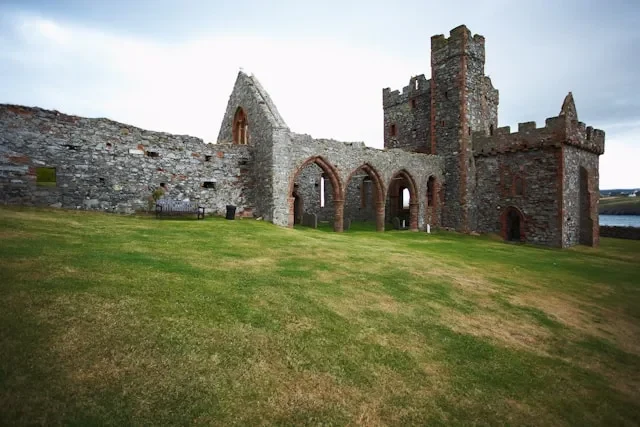
Wales can lay claim to roughly 600 castle sites, giving it the world’s highest density of castles per square mile. The figure comes from Cadw, the Welsh Government’s heritage service, which counts standing castles, ruins and earthwork remains together.
If the tally is narrowed to formally protected castles and fortified manors, the number falls to 293. Either way, the concentration outstrips any other nation, even though Wales is smaller than the US state of New Jersey.
The sheer volume is a direct legacy of conquest, a pattern that began after the Norman invasion of 1066. Norman lords were granted the Welsh borderlands and set about carving out territories, fortifying each parcel with motte‑and‑bailey strongholds.
These early defences were quickly rebuilt in stone as the Marcher lords entrenched their power against both Welsh resistance and rival nobles. When Edward I finally subdued the last independent Welsh princes in the 1280s, he ordered a massive ring of stone castles across the north.
The king’s programme was unprecedented, with expenditures in the early 1290s running into tens of thousands of pounds – far exceeding the contemporary work at the Tower of London. Edward’s castles were built to dominate the landscape, a stark contrast to the smaller, more rugged fortifications erected by Welsh princes.
Dolwyddelan in Snowdonia, for example, was the birthplace of Llywelyn the Great and its square tower still watches a high mountain pass. Castell‑y‑Bere, perched below Cader Idris, was a princely seat built by Llywelyn in the 1220s, its narrow plan hugging the rock.
These native castles were designed to defend Welsh land, whereas the later conquest castles were intended to hold conquered territory. Caernarfon, begun in 1283, is the most recognisable of Edward’s works, its polygonal towers deliberately echoing the walls of Constantinople.
Conwy rose alongside it in just six years and retains a 1.3 km circuit of medieval town walls with 21 towers – the most complete of its kind in Britain. Harlech clings to a crag above Cardigan Bay and endured the longest siege in English history, an eight‑year ordeal during the Civil War.
Beaumaris on Anglesey is celebrated as the most perfect concentric castle ever designed, its flawless symmetry remaining unfinished when funds ran out. These four castles – Caernarfon, Conwy, Harlech and Beaumaris – share a UNESCO World Heritage listing.
South Wales’s Caerphilly, the second‑largest castle in Britain after Windsor, spreads across some 30 acres and is famed for its leaning south‑east tower. Cardiff Castle, situated in the capital, layers a Norman keep on Roman foundations with lavish Victorian Gothic interiors commissioned by the 3rd Marquess of Bute.
All six of the most famous castles, together with the two native princely sites, are managed by Cadw and open to the public. Cardiff Castle is run by the city council, ensuring free access to its rich historical tapestry.
Beyond the public realm, a surprising number of Welsh castles remain in private hands. Wales has recorded the highest verified castle sale in the United Kingdom, underscoring the continued market for historic fortified properties.
Smaller castles and fortified houses change ownership more often than many realise, reflecting a niche but active heritage market. Despite the impressive count, Wales does not hold the absolute global total of castles; it simply boasts the greatest density.
The distinction highlights how centuries of conflict and successive waves of conquest have left an indelible mark on the Welsh landscape. For visitors and scholars alike, the concentration of fortifications offers a unique window into medieval power dynamics.
Each stone, ruin and earthwork tells a fragment of the story of a land repeatedly contested and reshaped by war. As the numbers attest, Wales remains a living museum of medieval military architecture, unrivalled in its compactness.