
What is the highest mountain in Wales?
Discover Wales’ three highest summits, their classifications and the challenges they present to walkers and climbers alike.
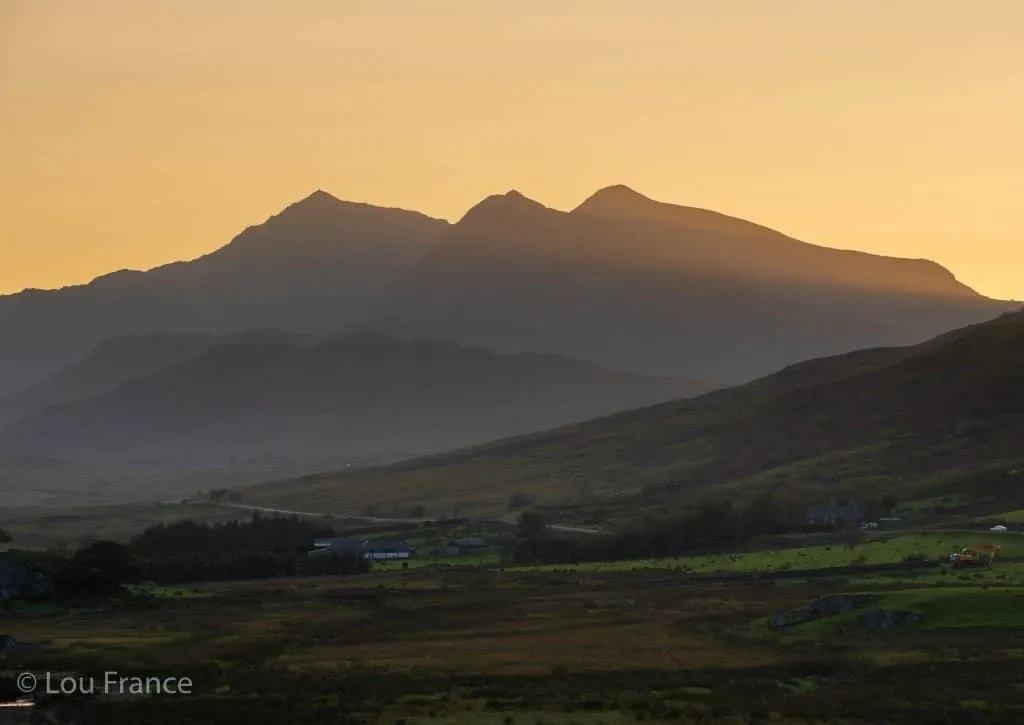
Snowdon, known in Welsh as Yr Wyddfa, remains the undisputed highest summit in Wales at 1 085 metres, a fact reaffirmed by the latest Ordnance Survey data released this week.
Just 1 200 metres to the south, Garnedd Ugain claims the second spot, its summit marked on OS maps beside the ridge of Crib y Ddysgl.
Completing the trio, Carnedd Llywelyn rises to 1 064 metres, making it the third‑highest peak and the loftiest point in the Carneddau range.
The three mountains sit within Snowdonia National Park, the region that houses the majority of Wales’ loftiest terrain.
According to the Nuttall classification, which defines a mountain as over 610 metres with a 15‑metre prominence, Wales boasts 190 such peaks.
By contrast, the stricter Hewitt standard—requiring a 30‑metre drop—recognises 136 summits, including the celebrated Welsh 3000s.
The Welsh 3000s comprise the fifteen peaks that exceed 914 metres, a challenge that sees elite walkers aim to traverse all in under 24 hours.
The current record, set in 2022, stands at four hours and ten minutes for the 50‑kilometre circuit, involving nearly 4 000 metres of ascent.
Although Castell y Gwynt reaches 1 001 metres, it is classified only as a Nuttall and therefore does not feature among the official Welsh 3000s.
Snowdon’s popularity is reflected in the multiple ascent routes, from the well‑trodden Llanberis Path to the exposed Crib Goch ridge.
During summer months, a heritage railway offers a summit‑top train service, easing access for visitors unable to tackle the climbs on foot.
Garnedd Ugain, often tackled as part of the Snowdon Horseshoe, presents a grade‑1 scramble along the knife‑edge ridge of Crib y Ddysgl.
Its proximity to Crib Goch and Y Lliwedd makes it a favourite for seasoned hillwalkers seeking a full‑day mountain circuit.
Carnedd Llywelyn, the highest point in the Carneddau, provides panoramic views across the Snowdonia landscape and beyond.
The adjoining summit of Carnedd Dafydd, slightly lower at 1 044 metres, is frequently combined with Llywelyn for a classic ridge walk.
Glyder Fawr, re‑measured in 2010 with GPS technology, now exceeds 1 000 metres and joins the elite “Super‑mountain” list.
Its dramatic rock formations, including the famed Devil’s Kitchen, attract climbers and photographers alike.
Neighbouring Glyder Fach, though marginally lower, offers the iconic Cantilever Stone, a natural rock balance that draws crowds each summer.
Pen yr Ole Wen, translating to “Head of the White Slope”, serves as a gateway to the wider Carneddau range from the Ogwen Valley.
Foel Grach, known locally as “Scabby Hill”, often retains winter snow and features a modest bothy near its summit for emergency shelter.
These highland areas, characterised by volcanic rock in Snowdonia and glacially‑carved plateaux in the Brecon Beacons, illustrate Wales’ geological diversity.
While Snowdon dominates the north, Pen y Fan remains the highest summit in the south, standing at 886 metres within the Brecon Beacons.
The contrast between the rugged, craggy peaks of Eryri and the smoother, rounded summits of Bannau Brycheiniog underscores the country’s varied mountain scenery.
Local tourism bodies report a steady rise in mountain‑related visits, with guided walks and challenge events contributing to rural economies.
Safety officials continue to stress the importance of proper preparation, noting that weather in the highlands can shift rapidly.
Recent data from the Met Office shows that winter storms have increased the frequency of sudden temperature drops on the higher summits.
Mountain rescue teams in Snowdonia logged 112 call‑outs last year, a figure that remains stable despite growing visitor numbers.
Authorities advise walkers to carry appropriate clothing, navigation tools and to inform someone of their intended route.
For those seeking to complete the Welsh 3000s, the official challenge route begins at Pen y Pass and finishes at the summit of Snowdon.
Guided groups often incorporate lesser‑known peaks such as Yr Elen, a quiet spur west of Carnedd Llywelyn that offers solitude away from the main ridge.
The comprehensive list of the 50 tallest Welsh mountains, now available online, provides detailed heights, grid references and recommended ascent paths.
It serves as a valuable resource for both seasoned mountaineers and newcomers eager to explore the country’s high places.
With the latest measurements and classifications confirmed, Wales’ mountain heritage continues to inspire outdoor enthusiasts across the UK and beyond.