

A report into Betsi Cadwaladr University Health Board’s culture and leadership, published on Tuesday, identified ongoing “fundamental weaknesses” and evidence that money and targets were prioritised over patient care. The review was commissioned by the Welsh government in the summer after the north Wales health board was given a “final chance” to improve following nine years in special measures.
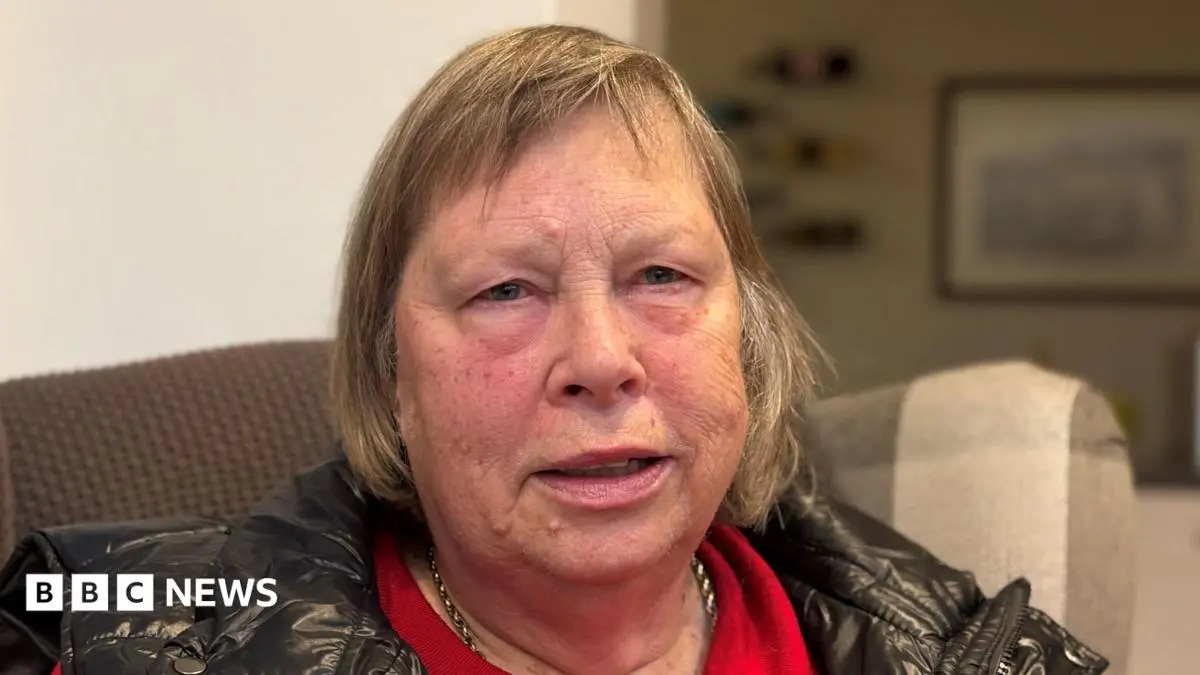
Jo Hughes, 72, who is in remission from cancer, spent 48 hours desperately unwell in an emergency department corridor at Ysbyty Glan Clwyd in Denbighshire. She was admitted on her doctor’s advice last month suffering from Covid, pneumonia, and a kidney infection, describing the experience as a “nightmare that I’d like to forget.
Hughes, from Abergele, Conwy, stated she did not know what was happening to her or what she had contracted. “I felt awful,” she said. “The best way I can describe it – it was a nightmare that I’d like to forget.
She described looking around the corridor to see if there was something spare that she could lie on during the long wait.
The health board’s chief executive, Carol Shillabeer, announced earlier this month that she is leaving in the new year to take up an NHS role in England. Her departure follows a string of other senior leaders who have left the organisation in recent months, including the chief operating officer and the executive director of finance.
Patients have blamed senior managers for repeated failures, with Hughes arguing that the top people have lost interest in frontline care. “I think it’s the higher-ups,” she said. “It’s not the people on the ground, it’s the chief executives, it’s the bosses in my opinion.
They’re not doing their jobs.
Hughes said she would refuse to return to A&E in the future, stating: “I would, honestly. I would say ‘I’m not going, give me something here and now… I’m not going back to that after what I’ve been through’.
She expressed deep concern for older patients, adding: “They wouldn’t stand a chance.
She questioned how an 80 or 90-year-old could sit in a chair for 48 hours, describing the conditions as ridiculous with no blankets or support. “You’re just plonked,” she said. “How could you have an 80 or 90-year-old sitting in a chair for 48 hours?
It’s ridiculous. No blankets, nothing like that.
John Cooke, 78, a retired assistant chief constable with North Wales Police, has been treated at the same hospital for 30 years. Diagnosed with Crohn’s disease in 1995 and first hospitalised in 1996, he has been admitted to Ysbyty Glan Clwyd two to three times every year over the past three decades due to regular flare-ups.
Cooke believes the health board is “completely leaderless” and has declined “beyond redemption. While he acknowledges frontline staff continue to do their best, he noted that conditions had deteriorated overall. “I suppose the most obvious thing is the time it takes to be seen, and certainly the time it takes to be allocated to a ward and to a bed,” he said.
He recalled that when he first started on this road, he could certainly be in a ward, in a bed within an hour. “Now, more recently, it can be very lengthy waits, despite the pain, and I recently had a 47-hour wait in A&E before I was even seen by a doctor,” Cooke explained.
Cooke said he knows of people who have waited almost a week to be allocated a bed, noting that very seriously ill people are not exempt from these waits at all. He added that the treatment he is getting now as an outpatient is almost non-existent, despite once being guaranteed quarterly appointments.
He stated he does not believe things will improve without a “complete restructuring of the organisation. “I blame the management,” he said. “Not necessarily the board because they don’t have direct access to the workforce…
but the management, the senior management, the executives, they are to blame.
Cooke emphasised that the organisation is “completely leaderless,” while acknowledging that frontline staff “work so hard and continue to labour under these conditions. The report highlights the severe disconnect between leadership decisions and the daily reality faced by patients and staff at Ysbyty Glan Clwyd.
The Welsh government’s intervention comes after years of criticism regarding the health board’s performance and culture. The findings of the review underscore the urgent need for structural changes to restore confidence in the service provided to residents across north Wales.
As the new year approaches, the departure of key executives leaves a significant leadership vacuum at a critical time for the health board. Patients and staff alike are left waiting for concrete actions that will address the fundamental weaknesses identified in the recently published report.








Reader Discussion & Comments (0)
Join the conversation. All comments are moderated in accordance with our editorial standards.