
Ken Skates Rejects Plaid Cymru Claim UK Budget Cuts Welsh Real-Terms Funding
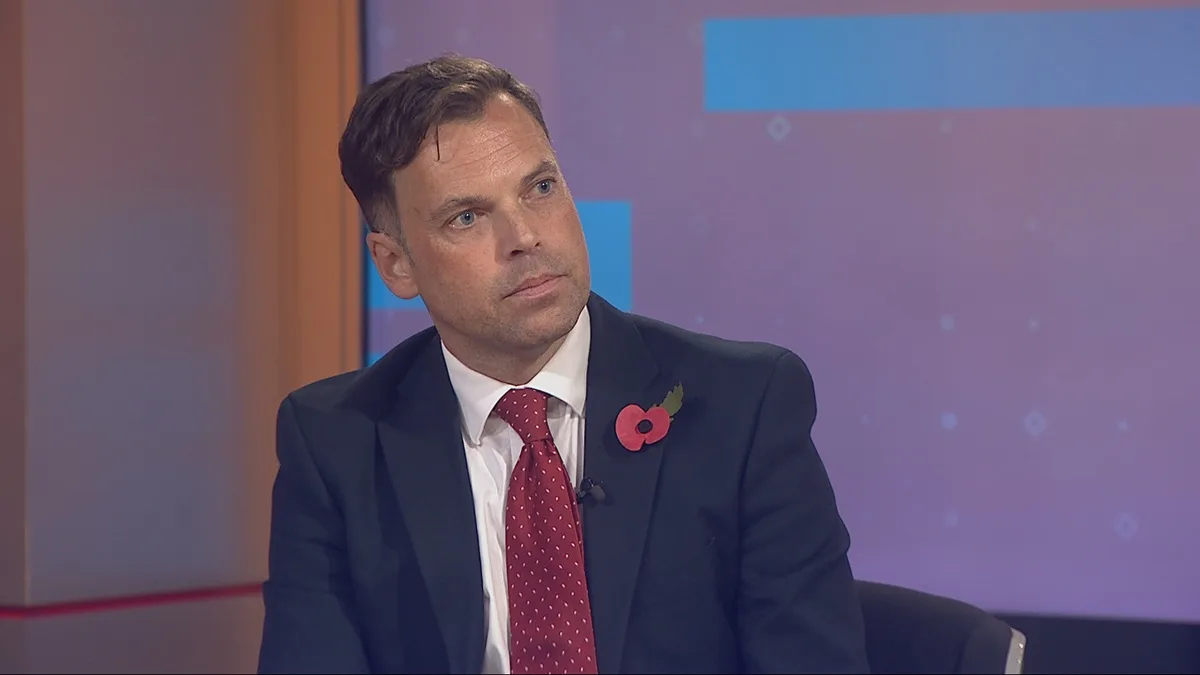
Welsh Labour leader Ken Skates has rejected the Welsh Government’s assertion that the UK Budget constitutes a real-terms funding cut, accusing Plaid Cymru ministers of manufacturing excuses for impending spending reductions. The dispute centres on the financial settlement announced by Chancellor John Healey, which included approximately £450 million in additional funding for Wales over three years.
Speaking on ITV Cymru Wales’ *Sharp End* on Tuesday evening, Mr Skates directly challenged Finance Minister Elin Jones to substantiate her assessment of the fiscal position. He demanded she lay out the specific details supporting her claim that the settlement represents a reduction in real-terms value.
Ms Jones had previously told ITV Wales Political Editor Adrian Masters that the UK Budget had “the most defining impact” on her own spending plans. She characterised the outcome as a “definite real terms cut” for Wales, rejecting the narrative of a financial windfall.
Mr Skates responded firmly: “The Finance Minister would have to lay out the detail of why she assesses it as a real terms cut because I don’t believe it is.” He described the current position as “broadly cash flat” for the next financial year, with an expected increase in the following year.
He contrasted the current economic stability with the austerity era, stating: “When I was a minister during the Tory austerity years, I was having to look at cuts of between 10 and 20% for certain organisations.” He argued that the UK Labour government has delivered a period of economic stability, fundamentally altering the fiscal landscape for Welsh public services.
Mr Skates accused the minority government of deflection, claiming they never costed their manifesto. He stated: “But I think this is fundamentally a deflection by the Plaid Cymru minority government because they never costed their manifesto.” They’re looking for excuses already for the cuts that they’re going to make.
Ms Jones had previously described the settlement as “a real-terms cut dressed up as a windfall.” She argued that the UK Government would attempt to present the budget as a victory for Wales, but insisted it was not.
She elaborated: “The UK Government will try to present today’s budget as a win for Wales.” It isn’t. Once you account for inflation, this is still a real-terms cut to our funding, not new money that improves our position.
She warned that the fiscal position was worse than before the Chancellor’s announcement, with direct consequences for the Welsh Budget.
Independent analysis by Cardiff University’s Wales Fiscal Analysis team offered a nuanced perspective, warning that the Chancellor had done little to protect services against higher inflation. However, their assessment includes devolved taxes alongside Westminster funding, providing a broader measure of overall resources.
The researchers project that total Welsh day-to-day financing, including non-domestic rates revenues, will remain broadly flat in real terms in 2027–28. Improved devolved tax forecasts have helped cushion the pressures, with the expected net contribution increasing by £184 million compared with March forecasts.
This increase exceeds the £165 million in additional day-to-day funding arising from UK spending decisions that year. The distinction is critical, as a broadly flat overall budget does not necessarily mean the UK settlement has kept pace with inflation.
Authors Owain Cynfab and Ed Poole warned that even with overall resources holding steady, increasing NHS spending would require cuts elsewhere. They calculated that matching the NHS’s historical average annual real-terms growth of 3.6% would require reductions averaging around 3.8% across the rest of the Welsh budget.
The Office for Budget Responsibility now expects inflation to average 3.4% in 2027, a significant shift from its March forecast that it would fall to 2% from that year onwards. This revised outlook complicates the financial planning for Welsh public services and infrastructure projects.
The Welsh Government has confirmed it will extend the Chancellor’s £100 payment for households in council tax bands A–D to Wales. Wales Fiscal Analysis estimated that this measure would absorb around £120 million of the £199 million added to Welsh day-to-day funding for the current financial year.
This leaves approximately £80 million for other priorities within the budget. Ms Jones is due to publish the Welsh Government’s draft budget on November 17, where these competing financial pressures and policy choices will be formally detailed.

Eli Nathan
Eli Nathan covers Wales news, politics, community stories, and sports for The National Wales (thenational.wales).
Follow real-time news and explainers on X at @elinathan1122. Reports are verified from official public announcements, emergency authorities, the Met Office, NHS Wales, and established news outlets across Wales.
Corrections and tips: if you spot an error in one of our reports, or have a story you think we should cover, contact the desk at [email protected] or via the contact page.