
Senedd backs family drug courts in Wales
The Welsh parliament votes to back new family drug and alcohol courts, citing evidence of reduced substance misuse and calls for justice devolution.
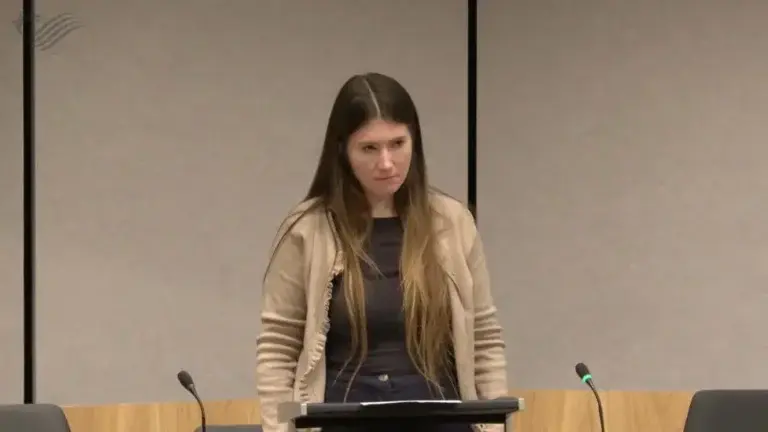
The Senedd voted on Wednesday to endorse calls for a new family drug and alcohol court system across Wales.
Plaid Cymru MS Sarah Cooper‑Lesadd, who grew up in the care system, urged members to act, saying: “When the Senedd talks about children whose parents cannot look after them, I am not talking about a policy area, I’m talking about the thing that decided my life before I could speak.”
Cooper‑Lesadd highlighted a pilot family drug and alcohol court that operated in Cardiff and the Vale from December 2021 until November 2023 before closing for lack of funding.
“Researchers at Cardiff University looked at it and found that it worked here, that parents were getting better, that children’s lives were changing.” They said that Wales should keep it and build on it,” she said.
The former judge of the pilot added his regret, noting the court’s demise was purely financial: “The judge who sat in it wrote down his regret in the judgment.” He could see what it meant for the families still in front of him.
It closed because the money ran out.”
Cooper‑Lesadd argued that Wales’ limited control over justice prevented the court from being enshrined in law.
“Wales could pay for a pilot; what Wales could not do was put it on a statutory footing, because that at the moment is not ours to build,” she explained.
She added that even sustained funding would not guarantee permanence: “Wales could fund the team year after year and still never make the court itself a permanent part of the justice system.”
“When the money ran out, there was nothing underneath it – it wasn’t on a statutory footing.” So, this is what happened – not a decision anyone took, not a judgment that this was wrong for Wales, just a court that existed on borrowed time and stopped existing.”
Reform UK MS Tom Montgomery warned that Wales’ child‑care figures far exceed England’s.
He cited 2025 data showing 114 children per 10,000 in Welsh local authority care compared with 67 per 10,000 in England, describing the gap as “deeply concerned”.
“These figures are alarming, but they are not just numbers; they’re human beings whose lives can be seriously impacted by their experience,” he said.
Montgomery recounted a parent’s testimony that the standard court process left families feeling powerless.
In contrast, the family drug and alcohol court gave them a voice: “It feels like we have the power to actually have our say, get things done, have our side heard, and then they try to work with us to improve things and meet in the middle.”
He pointed to the pilot’s evaluation, which showed substance‑misuse rates falling dramatically.
Parents misusing drugs dropped from 83 % at the start to 54 %, while alcohol misuse fell from 91 % to 60 %.
Montgomery concluded: “Let us together create a care system that builds, not breaks families.”
Deputy Social Care Minister Delyth Jewell welcomed the strong evidence supporting the model but cautioned that the evaluation also uncovered “many barriers and complications”.
She stressed that devolving justice would “create opportunities to plan services around the needs of Wales, rather than just reproducing arrangements that have been developed elsewhere.”
Jewell reiterated Plaid Cymru’s commitment to prevention and early intervention, noting that the Welsh government’s programme places these at the centre of all policy development.
She assured members that the family justice system will continue to “focus on keeping children safe with their families wherever possible”.
“Services will work together to prevent needs from escalating and to help families make sustainable changes,” she said.
“When families come into contact with the courts, we want a more empathetic experience that focuses on the best outcomes for the child.”
The motion passed with 71 votes in favour, none against and 16 abstentions, signalling broad Senedd support for reviving and expanding the family drug and alcohol court model.