Scientists Crack Code of 400-Year-Old Lock Found on Welsh Shipwreck Off Port Talbot
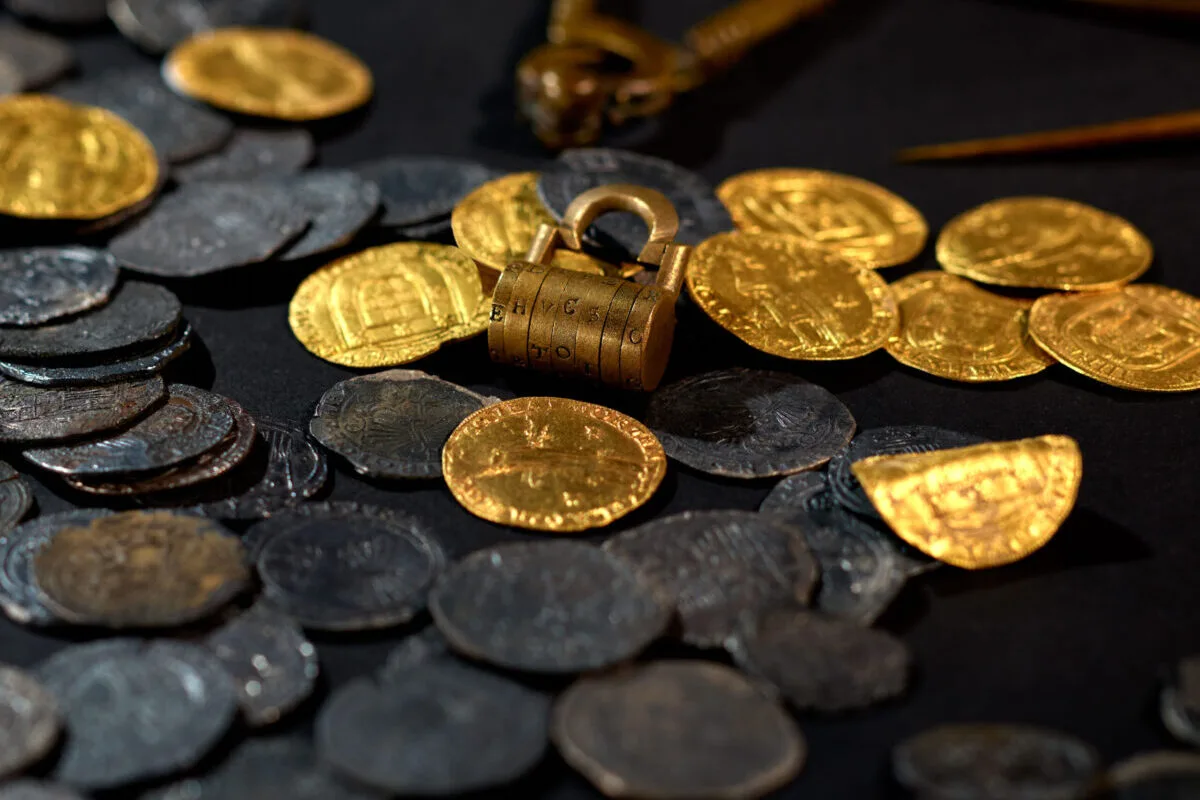
Experts from Amgueddfa Cymru and Cardiff University have cracked the 440-year-old combination of an Elizabethan brass padlock recovered from the Ann Francis shipwreck off Margam Beach near Port Talbot. The rare maritime artefact was lost on 28 December 1583 when the Spanish trading vessel foundered in heavy storms on the South Wales coastline.
Experts from Amgueddfa Cymru and Cardiff University utilised CT scanning technology. This non-invasive method allowed them to examine the internal mechanism without causing damage.
The scans revealed the four-letter combination required to open the lock: ANCE. This breakthrough solves a historical mystery surrounding the object’s security features.
The lock originated from the Ann Francis, a vessel wrecked on the evening of December 28, 1583. The ship was returning from Spain when a severe storm blew it off course.
It ultimately struck the rocks at Margam Beach, near Port Talbot, in South Wales. The cargo remained buried beneath the sand for several centuries.
Metal detectorists eventually began uncovering coins and other artefacts from the site. The lock was found near Spanish silver coins and two coin weights.
Dr David Williams, a research associate at Cardiff University’s School of Engineering, led the analysis. He used micro-CT scanning to create a detailed three-dimensional image of the lock’s interior.
“By creating a detailed 3D image of the internal mechanism, I could see how the notches lined up with the letters and identify the exact combination,” he said.
“We normally use this technology to study bones and other biological structures, so investigating a 400-year-old padlock was certainly a first for us!” Dr Williams added.
“I had to wait until later that evening for the museum team to test the combination, so getting the message that we’d cracked it was incredibly satisfying.”
The lock is believed to have secured a small chest containing valuable personal possessions. Alternatively, it may have protected materials that have not survived, such as documents or textiles.
Alastair Willis, senior curator for numismatics and the Welsh economy at Amgueddfa Cymru, highlighted the find’s significance. He noted that Elizabethan combination locks are known in Britain but rarely in such condition.
“Of course, now we’ve solved it, we are left wondering if the code meant something to its owner.”
Metal detectorist Peter Hughes discovered most of the hoard between 1996 and 2017. Dredging and storms had exposed objects beneath the sand over that period.
He recalled the lettered rings still turned easily when he first found the lock. “When I found the lock I was immediately astonished by the incredible workmanship and its astonishing condition,” he said.
“I also remember being left excited at the prospect of finding wonderful things from the treasure chest it once locked.”

Eli Nathan
Eli Nathan covers Wales news, politics, community stories, and sports for The National Wales (thenational.wales).
Follow real-time news and explainers on X at @elinathan1122. Reports are verified from official public announcements, emergency authorities, the Met Office, NHS Wales, and established news outlets across Wales.
Corrections and tips: if you spot an error in one of our reports, or have a story you think we should cover, contact the desk at [email protected] or via the contact page.