
Drakeford urges abolition of Wales Office after 25 years of devolution
First Minister Mark Drakeford says it’s time to scrap the Wales Office, citing decades of devolution and existing evidence for further powers transfer.
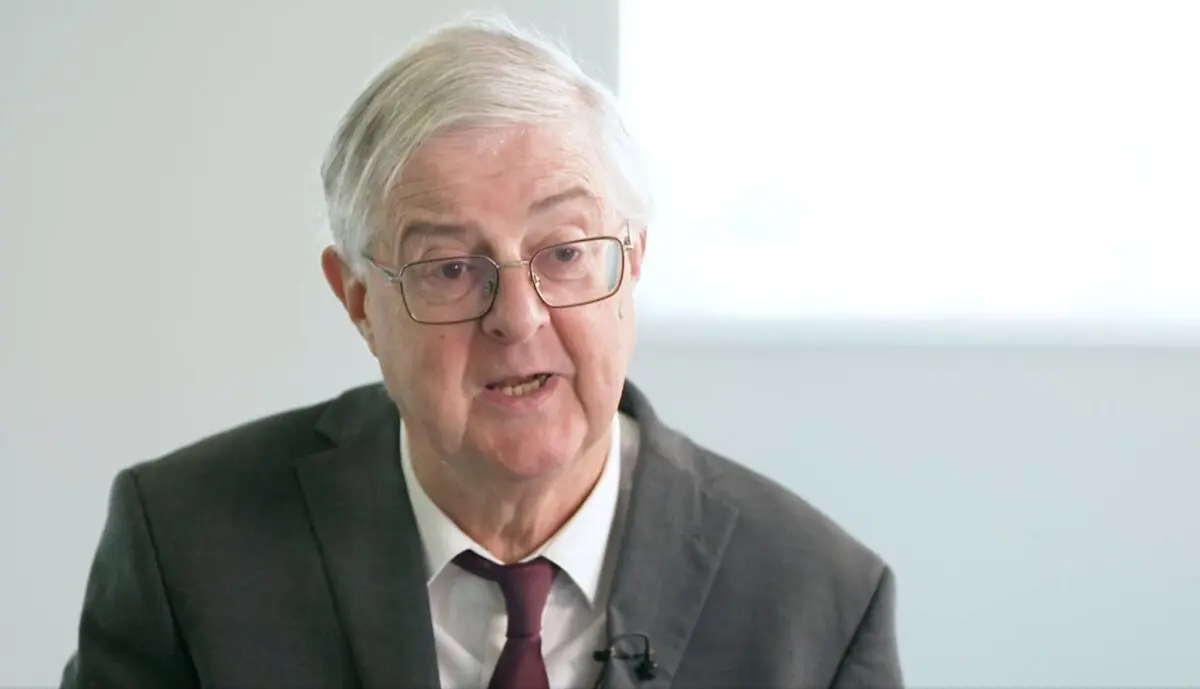
First Minister Mark Drakeford has urged Westminster to consider abolishing the Wales Office, arguing that the structure no longer reflects the realities of a devolved United Kingdom.
Speaking on S4C’s current affairs programme Y Byd yn ei Le, Drakeford said a quarter of a century of devolution demands a change in how the UK government engages with Wales.
“After a quarter of a century of devolution it’s important that things change in Westminster as well.” [In terms of] having people who are responsible specifically for Wales, Scotland and Northern Ireland, we have moved past that point in my opinion,” he told the audience.
When asked whether he would welcome the removal of the Wales Office, the former first minister replied unequivocally.
“Yes, I think the time has come for us to think about that.” Of course, Tony Blair thought of this too.
This has been part of discussions in Westminster not only now but for more than a decade,” Drakeford said.
The Wales Office, created in 1999 to act as a liaison between the UK government and the Senedd, has long been a point of contention among Welsh Labour politicians.
Welsh Secretary Stephen Kinnock, who took up the post in July, has signalled reservations over devolving policing powers – a policy championed by Welsh Labour throughout its time in government.
Drakeford countered that the evidence needed for a decision on policing is already in place.
“Well, a lot of the material is already there; the Secretary of State can draw on various reports—from Gordon Brown, Lord Thomas, and so on—so we already have plenty of things.” Of course, it is important to consider that evidence within the current context, but that need not take a long time because the case has already been made,” he asserted.
Prime Minister Andy Burnham has described himself as “open” to discussions about transferring policing powers, adding another layer to the intra‑party debate.
Kinnock’s recent comments have also sparked controversy. At Labour’s conference in Liverpool he described Plaid Cymru and Reform UK as offering Wales the “same poison”, a remark that provoked a sharp rebuke from Plaid’s Westminster leader Liz Saville Roberts.
Roberts said the comparison insulted former Labour voters who switched allegiance at the May Senedd election, urging Labour to reflect on why “so many people chose positive change after 27 years of Welsh Labour rule”.
The election saw Labour’s vote share fall to 11.1 per cent, securing nine of the 96 Senedd seats – its poorest performance to date.
By contrast, Plaid Cymru captured 35.4 per cent of the vote and 43 seats, while Reform UK achieved 29.3 per cent and 34 seats.
Drakeford’s call for the Wales Office’s removal arrives against this backdrop of shifting political allegiances and a growing appetite for further devolution.
He reminded listeners that discussions about the office’s future have been ongoing for more than a decade, echoing sentiments first voiced by former Prime Minister Tony Blair.