
Health minister rejects Reform claims over NHS waiting lists
Plaid Cymru’s health minister defends funding plan and GP recruitment after Reform UK accuses the government of moving goalposts on two‑year NHS waits.
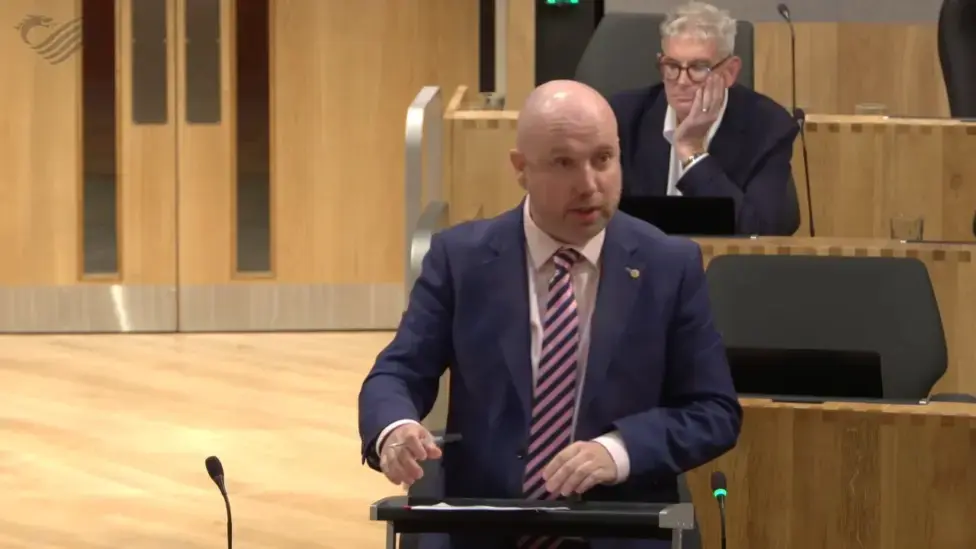
Health minister Mabon ap Gwynfor rebuffed Reform UK accusations that his government was shifting targets on NHS waiting times during a Senedd debate on Tuesday. Reform shadow health minister Benjamin Hodge McKenna pressed the minister on Plaid Cymru’s promise to eliminate two‑year waits, arguing the timetable had been repeatedly altered.
“I acknowledge you received a terrible inheritance from Welsh Labour, but we’re past the first 100 days of your government now – we’re closing in on six months, and we’re heading into the winter, where we all know pressures are going to be worse,” Hodge McKenna said. He quoted First Minister Rhun ap Iorwerth as having pledged that two‑year waits would be eradicated within months of a Plaid government, before the deadline was shifted to “within the first year of government”.
The Reform MS demanded a firm commitment to eradicate two‑year waits by next May, warning that the goalposts might be moved again. Ap Gwynfor accepted that waiting‑list figures were rising, describing them as “part of the legacy” inherited from the previous administration.
He pointed to Plaid Cymru’s summer announcement of £145 million – £45 million in capital and £100 million in revenue funding – earmarked for tackling waiting lists. “During the recess period, we had conversations with the health boards and clinicians to draw up the plans of how that funding was going to go into the system, what the plans were to look like,” he told the chamber.
“Health boards provided the final plans to me at the beginning of this month, and that’s when the money started to be pumped into the system.” Health boards will be paid on delivery of outcomes, not paid up front.”
He added that waiting‑list numbers might rise when the latest figures are published for August, but expected a decline once the funding is fully deployed.
Hodge McKenna shifted focus to GP capacity, noting a drop of 106 GPs in Wales over recent years while patient‑to‑GP ratios had risen by 30 per cent. “I spoke with the BMA last week, who launched the Save our Surgeries campaign,” he said.
He cited a statement of opinion launched by Conservative spokeswoman Natasha Ashgar, which had been backed by Reform, Welsh Labour and the Liberal Democrats but, he claimed, not by any Plaid Cymru representative. “Why not?” he asked the minister.
Ap Gwynfor replied, “Because we’re taking action on this.”
The minister outlined a programme to recruit 100 new GPs before the end of the current Senedd term. “We have a programme where we will be supporting GPs and ensuring that we build on the current structures that we’ve got in order to have more co‑operative models so that we can help take the back‑room costs away from them and allow them to invest in the medical services that they want to provide,” he said.
He said the initiative would complement the £145 million package, aiming to reduce pressure on hospital queues by bolstering primary‑care capacity. The debate concluded without a definitive timetable for eradicating two‑year waits, but both sides agreed that the winter period would test the resilience of the health system.
Observers noted that the funding model – paying health boards on outcomes – marks a shift from previous approaches, though its impact on waiting‑list trends will only become clear in the coming months.