
Vaughan warns cuts to Powys beds risk crisis
With roughly 26 percent of Powys residents now aged over 65, the proportion is projected to climb to 38 percent within ten years, according to demographic data.
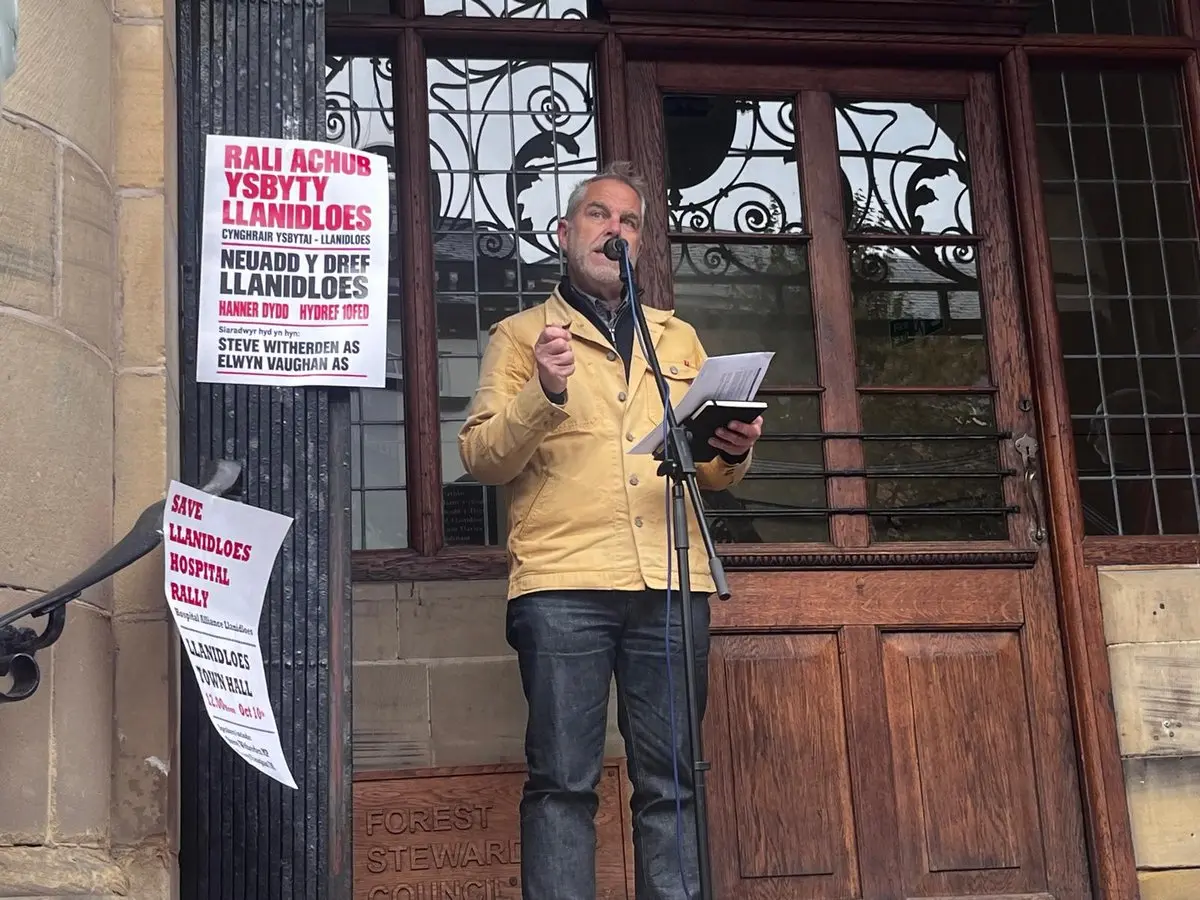
Elwyn Vaughan MS has warned that proposed cuts to community hospital beds in Powys could deepen an already strained rural health system.
With roughly 26 percent of Powys residents now aged over 65, the proportion is projected to climb to 38 percent within ten years, according to demographic data.
Vaughan said the trajectory “makes little sense” given the ageing population and the need for more, not fewer, care places.
“I just can’t see where they are going to get the extra carers to make up for that,” he told the Cambrian News.
The MS fears that reducing beds will push pressure onto neighbouring facilities such as Bronglais Hospital in Aberystwyth and the Shrewsbury site across the England‑Wales border.
His concerns are personal: a relative was confined to Shrewsbury Hospital this summer until Vaughan intervened to secure a transfer to Llanidloes, where “her care rejuvenated her”.
Vaughan stressed he is not merely a politician promising to halt change.
He added that a “focus on positive alternatives” is essential.
Recent legislation introduced in May 2023 altered the handling of service‑change disputes, assigning the representation role to Llais.
Under the new rules, Welsh ministers “cannot become directly involved in a dispute that could later reach them for determination” because it could prejudice the process.
Vaughan likened the restriction to his former experience on Powys’s planning committee, where a councillor already involved in an application could not later vote on it.
His alternative vision does not simply aim to preserve existing beds but to reinforce rural healthcare around community hospitals.
Vaughan proposes developing Bronglais as a “Centre of Rural Health excellence”, with close integration of services at Llanidloes and Machynlleth.
He also calls for the revival of recommendations from the 2014 Longley report, including a dedicated cancer diagnostic centre and a surgical hub within Powys.
A long‑term solution for cross‑border treatment, he says, must be part of any sustainable plan.
For the time being, Vaughan urges residents to engage with the formal consultation process and to press Llais for a different approach.
He expressed deep scepticism about the current consultation, describing it as “a great deal of cynicism”.
Vaughan warned that a perceived “done deal” discourages participation, and that even when people do engage they may end up ratifying the same limited options.
He called this “not a healthy thing for democracy”.
Beyond the immediate battle over beds, Vaughan argues that the whole structure of NHS Wales requires fundamental reform.
He asked, “Where is the vision for the future?” and suggested that if other rural areas can innovate, Powys can too.
The MS’s appeal comes as the Welsh Government prepares to finalise its health service transformation plan, a process that will shape the delivery of care across the nation for years to come.
Vaughan’s message is clear: saying “no” to bed cuts is insufficient without a concrete, community‑led alternative that safeguards the health of an ageing Powys.