
Pembrokeshire turf shows just four species against London’s 39
Mike Perry’s swap finds a Pembrokeshire pasture with four plant species versus 39 in a Hackney park, highlighting decline of Wales’ grassland biodiversity.
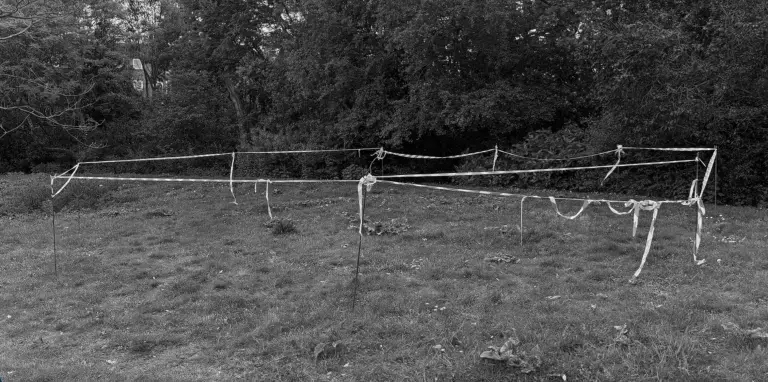
A patch of sheep‑grazed turf from Pembrokeshire has been found to contain just four visible plant species, while a single square metre from Hackney’s Springfield Park in east London supports 39, a stark illustration of the biodiversity gap emerging between rural Wales and urban green spaces.
The contrast emerged from Reverse Sod Swap, a land‑art and ecology project by photographic artist Mike Perry, who lives and works at Ffynnonofi in Pembrokeshire.
In 2024 Perry exchanged a strip of pasture from his West Wales farm with a slab of turf from the London park, recreating an experiment first carried out by sculptor David Nash more than four decades earlier.
Botanists later counted the species: the Pembrokeshire turf yielded four, the Hackney turf 39.
The swap was not intended as a scientific survey of Pembrokeshire’s countryside, but the reversal of fortunes mirrors wider trends documented by environmental agencies across Wales.
When Nash performed his original Sod Swap in 1983, his catalogue recorded 28 plant species in the Welsh sod from Cae’n y Coed in the Ffestiniog valley, against just three in the Kensington Gardens lawn.
Perry’s version, produced with Nash’s support, produced almost the exact opposite result, prompting questions about the assumptions surrounding “wild” countryside.
Natural Resources Wales (NRW) notes that semi‑natural grasslands once dominated the Welsh lowlands but have declined by more than 90 % since the mid‑20th century.
Its latest State of Natural Resources assessment confirms that grassland diversity continues to fall, driven by agricultural intensification, under‑management, nitrogen pollution and climate change.
NRW also warns that semi‑natural grasslands remain the most fragmented of all Welsh ecosystems, with only a small proportion of protected grassland features deemed to be in favourable condition.
The national State of Nature assessment paints a similarly stark picture: since monitoring began in 1994, Welsh wildlife abundance has dropped by an average of 20 %, and 18 % of species are now considered at risk of extinction.
For flowering plants, 42 % are found in fewer locations than in 1970.
Improved grassland, designed for reliable, nutritious grazing, often relies on fertiliser inputs, reseeding and intensive grazing, which can favour a handful of productive grasses while suppressing wildflowers and other plants.
By contrast, species‑rich hay meadows and low‑input pastures can support a far wider variety of flora, insects and birds.
The Pembrokeshire Coast National Park Authority acknowledges that the drive to improve farmland for livestock has contributed to the loss of traditional hay meadows and wet pastures.
Its latest annual report shows that local land‑management schemes now support 45 ha of hay meadow and 60 ha of species‑rich permanent pasture, alongside coastal slopes, ponds, set‑aside land and unsprayed arable margins.
These initiatives aim to create more space for pollinators, birds and other wildlife while keeping productive farming at the heart of the landscape.
NRW’s assessments stress that semi‑natural grasslands, though part of farmed landscapes, can store carbon, reduce erosion, support pollinators and improve water quality alongside food production.
A new book, Reverse Sod Swap, brings together Perry’s and Nash’s projects, featuring previously unseen photographs, drawings and essays on changing landscapes, plus an interview with Nash.
For Perry, the reversal between 1983 and today is intended to challenge assumptions about where biodiversity now survives.
The irony is difficult to miss: the original experiment presented the Welsh countryside as ecologically rich and the London lawn as simple; four decades later, a single urban park hosts almost ten times as many plant species as a patch of sheep‑grazed Pembrokeshire field.
While the findings do not imply that every London park is richer than every Welsh field, they raise an uncomfortable question about the meaning of “natural” when a piece of urban land can out‑perform a seemingly verdant rural pasture.