
Boulders returned to River Wye to aid salmon survival
Natural Resources Wales re‑introduces boulders along a seven‑kilometre stretch of the Upper Wye, aiming to boost salmon and trout habitats.
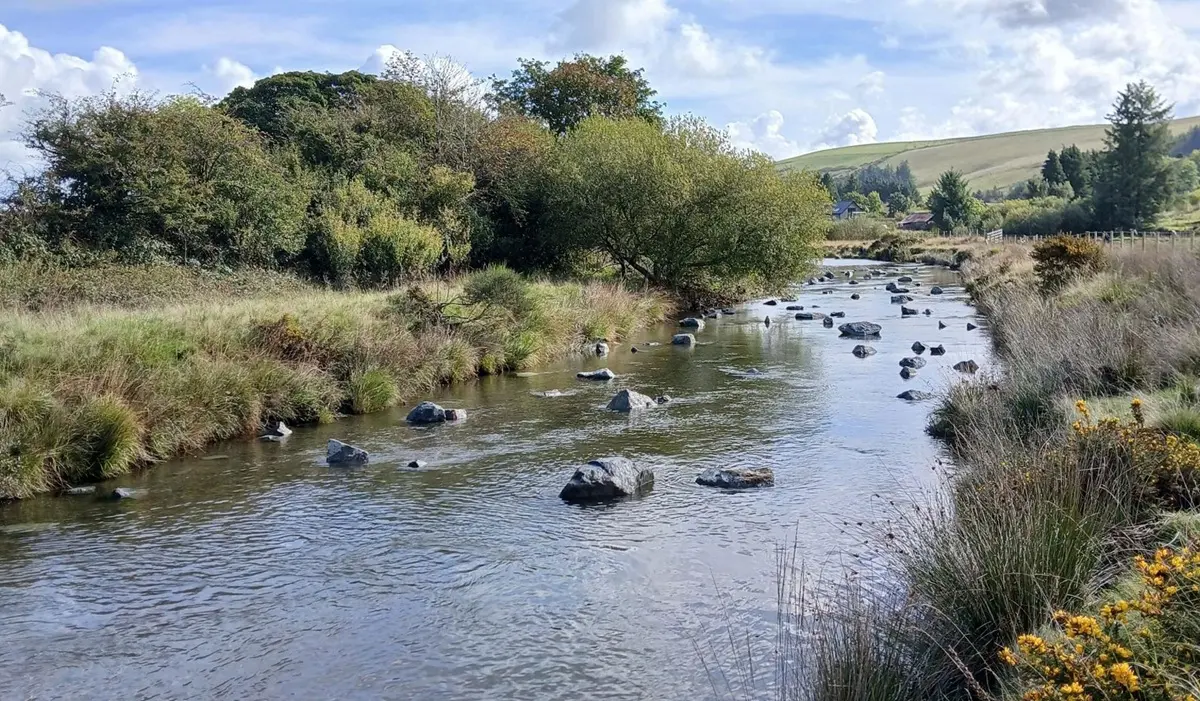
Boulders are being re‑installed along a seven‑kilometre stretch of the River Wye in a bid to improve survival rates for young salmon.
The work forms part of Natural Resources Wales’ Upper Wye Catchment Restoration Project, centred on the Llangurig valley where historic removal of stones has left the riverbed relatively uniform.
Baseline surveys over two years revealed a healthy abundance of salmon fry, yet a sharp drop in numbers once the fish should develop into parr.
Project managers Brendan and Henry explained that the lack of boulder cover limits feeding opportunities, shelter and the range of flow conditions needed for growth.
“Boulders are a natural feature of upland rivers such as the Upper Wye.”
Following the surveys, the team mapped sections of the channel where strategically placed stones could create a mosaic of habitats.
Large rocks have been set in an irregular pattern to mimic natural conditions, producing a mix of faster currents, slower pools, shallow turbulent runs and quieter backwaters.
The varied riverbed is expected to benefit not only Atlantic salmon, for which the Wye holds Special Area of Conservation status, but also brown trout and a host of aquatic invertebrates.
Invertebrates such as mayflies and caddisflies, which form a vital food source for fish, thrive in the micro‑habitats created by the stonework.
Alongside the physical alterations, the project has engaged local farmers and landowners to install riverside fencing, establish buffer strips and plant trees.
These measures aim to stabilise banks, reduce sediment and nutrient runoff, and eventually provide shade that moderates water temperature.
At nearby Tarenig Forest, forestry offcuts are being repurposed in drainage channels to slow water flow during heavy rain, further protecting the river’s health.
Monitoring will continue throughout the Upper Wye, from its source to Hay‑on‑Wye, tracking changes in fish populations, invertebrate communities and channel morphology.
Special attention will be given to whether a higher proportion of salmon fry survive to the parr stage, a key indicator of the habitat’s suitability.
The Upper Wye Catchment Restoration Project is funded by the Welsh Government’s Nature and Climate Emergency Fund, delivered under the Water Capital Programme.
Funding supports both the physical work of placing boulders and the wider catchment‑wide initiatives that aim to enhance water quality and biodiversity.
Local anglers have welcomed the intervention, noting that the Upper Wye has long been prized for its salmon runs but has faced challenges from habitat simplification.
NRW officials stress that the boulder scheme is one element of a broader strategy to restore natural river dynamics across Wales.
By re‑creating the structural complexity that once characterised upland streams, the project hopes to set a benchmark for future river restoration efforts.
Early observations suggest that the newly formed pools are already attracting juvenile fish, though definitive conclusions will await the next monitoring cycle.
Stakeholders, including community groups and environmental charities, will receive regular updates as data on fish survival and habitat health become available.
The initiative reflects a growing emphasis on nature‑based solutions to address climate pressures and biodiversity loss in Welsh waterways.
As the stones settle into the riverbed, the Upper Wye may soon see a resurgence of its iconic salmon, bolstering both the ecosystem and the cultural heritage tied to the river.