
Best Castles in Wales
Wales boasts more than 400 castles, a legacy that stretches from early stone fortifications to grand Victorian restorations. Twelve of these historic strongholds stand out for their architectural ambition, dramatic settings and the stories they embody, offering visitors a vivid journey through the nation’s turbulent past and cultural renaissance. Royal Foundations and Medieval Powerhouses Cardigan…
Wales boasts more than 400 castles, a legacy that stretches from early stone fortifications to grand Victorian restorations. Twelve of these historic strongholds stand out for their architectural ambition, dramatic settings and the stories they embody, offering visitors a vivid journey through the nation’s turbulent past and cultural renaissance.
Royal Foundations and Medieval Powerhouses
Cardigan Castle, the first stone castle erected by the Lord Rhys in the 12th century, marked a cultural milestone when its 1176 completion was celebrated with a gathering of musicians and poets – the inaugural National Eisteddfod that endures today. Its original stone walls now enclose a Georgian mansion housing interactive exhibitions, event space, accommodation and a restaurant overlooking the River Teifi, while Grade II‑listed gardens showcase 130 plant varieties and contemporary art sculptures.
Dinefwr Castle, once the power‑base of the Kingdom of Deheubarth, served as the main seat of Hywel Dda, the law‑giver who codified native Welsh law. The ruins perch within a wooded nature reserve, granting sweeping views of the Tywi Valley, and a 17th‑century “new” castle nearby is managed by the National Trust, reachable via a circular walk from Llandeilo.
Castell y Bere, built by Llywelyn the Great in the 1220s, guarded the southern frontier of Gwynedd and his cattle range. After its capture by the Normans in 1283, the site was abandoned; today its circular towers and a large well dominate a tranquil valley at the foot of Cader Idris in Snowdonia.
Powis Castle, originally constructed by Welsh prince Gruffydd ap Gwenwynwyn in the 1280s, achieved its present splendour under the Herbert family, who acquired it in 1587. The family’s 17th‑century remodelling introduced lush gardens and restored interiors adorned with paintings, tapestries, furniture and sculptures, all open for public exploration.
Coastal Fortresses and Scenic Strongholds
Carew Castle, set on the banks of an old tidal mill in Pembrokeshire, features round turreted towers and spacious courtyards. Its lands were once held by Princess Nest, a 11th‑century figure whose descendants are claimed by families ranging from George Washington to Princess Diana.
Laugharne Castle, overlooking the Tâf estuary, has changed hands repeatedly since its Norman origins. Captured and destroyed by Rhys ap Gruffudd in 1189, rebuilt and seized by Llywelyn the Great in 1215, it later endured Civil War sieges before partial demolition by Royalist forces. The ruins inspired J.
M. W. Turner, and poet Dylan Thomas wrote within its Victorian garden.
Cardiff Castle, the historic heart of Wales’s capital, combines Roman foundations, an 11th‑century Norman keep and a Victorian‑era interior created by the 3rd Marquess of Bute, once among the world’s richest men. Nearby, the fairy‑tale Castell Coch, also transformed by Bute, adds a whimsical counterpart to the city’s medieval landscape.
Caerphilly Castle, the largest medieval fortress in Wales and the second‑largest in Britain, was erected by Anglo‑Norman lord Gilbert de Clare in the 13th century. Its extensive water defences, once cutting‑edge, reflect in tranquil lakes, while modern attractions include a renovated Great Hall, siege‑weapon replicas and an animatronic Dragons’ Lair that delights younger visitors.
Victorian Revivals and UNESCO Heritage
Chepstow Castle, whose construction began in 1067 under Earl William fitz Osbern, stands as one of the first Norman strongholds in Wales. Its Great Tower mirrors the Norman keep at Falaise, and its doors are the oldest castle doors in Europe, now displayed within the interior.
Conwy Castle, a 13th‑century masterpiece designed by Master James of St George, remains exceptionally well preserved. It houses the most complete set of residential rooms ever used by medieval monarchs in England or Wales, complete with kingly bedchambers, spiralling servant passages and lavish latrines.
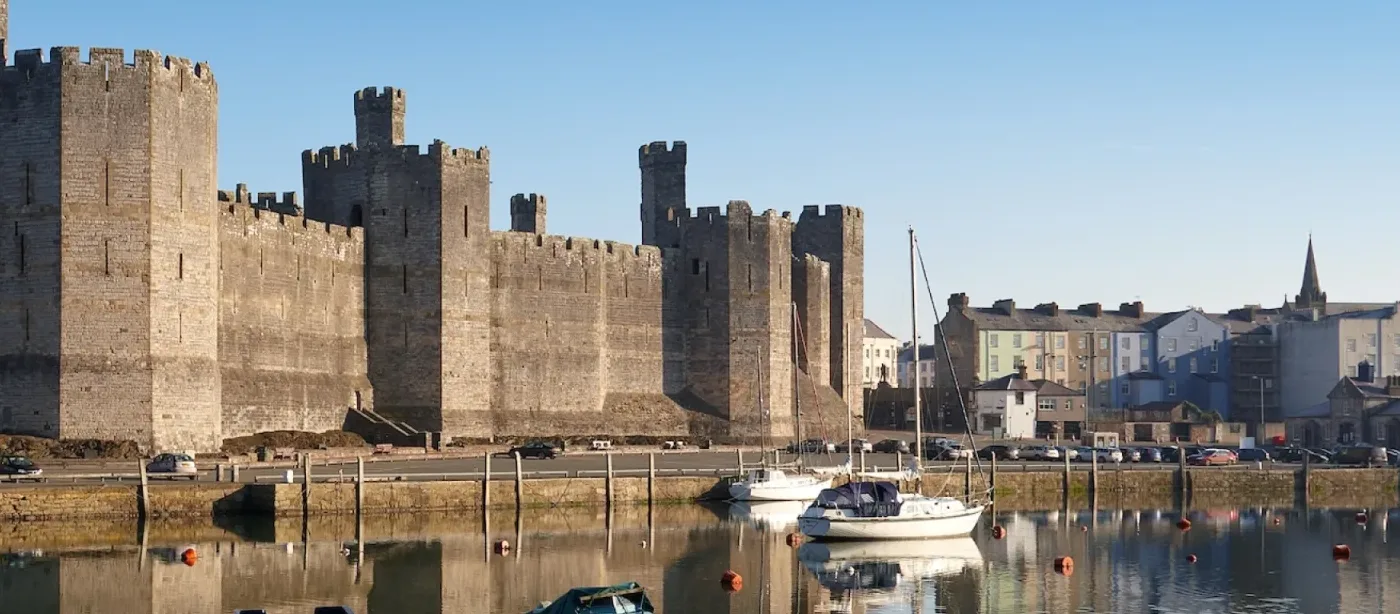
Caernarfon Castle, the apex of Edward I’s castle‑building programme, required 47 years and a near‑bankrupting £25,000 (about £23.5 million today) to complete. Its polygonal towers and colour‑banded stonework convey both military might and royal comfort; Edward II, the first English Prince of Wales, was born here in 1284.
Harlech Castle, dominating Cardigan Bay, played a pivotal role in Owain Glyndŵr’s uprising, serving as his headquarters after its 1404 capture. It later withstood a seven‑year siege – the longest in British history – during the Wars of the Roses, a feat commemorated in the famous song “Men of Harlech.” Together with Conwy, Caernarfon and Beaumaris, Harlech forms part of the UNESCO World Heritage Site that celebrates Edward I’s coastal fortifications.
Beaumaris Castle on Anglesey remains an unfinished masterpiece; construction halted in the 1320s due to financial constraints and Scottish unrest. Its south gatehouse and six great towers never reached full height, and the Llanfaes gate was barely begun before abandonment. Managed by Cadw, the site offers a poignant glimpse of what might have been the greatest castle in the world.