
Welsh Government and councils renew Strategic Partnership
Welsh Government and WLGA sign a refreshed partnership pledging fair funding, reduced bureaucracy and new commitments for Welsh‑speaking communities and health equity.
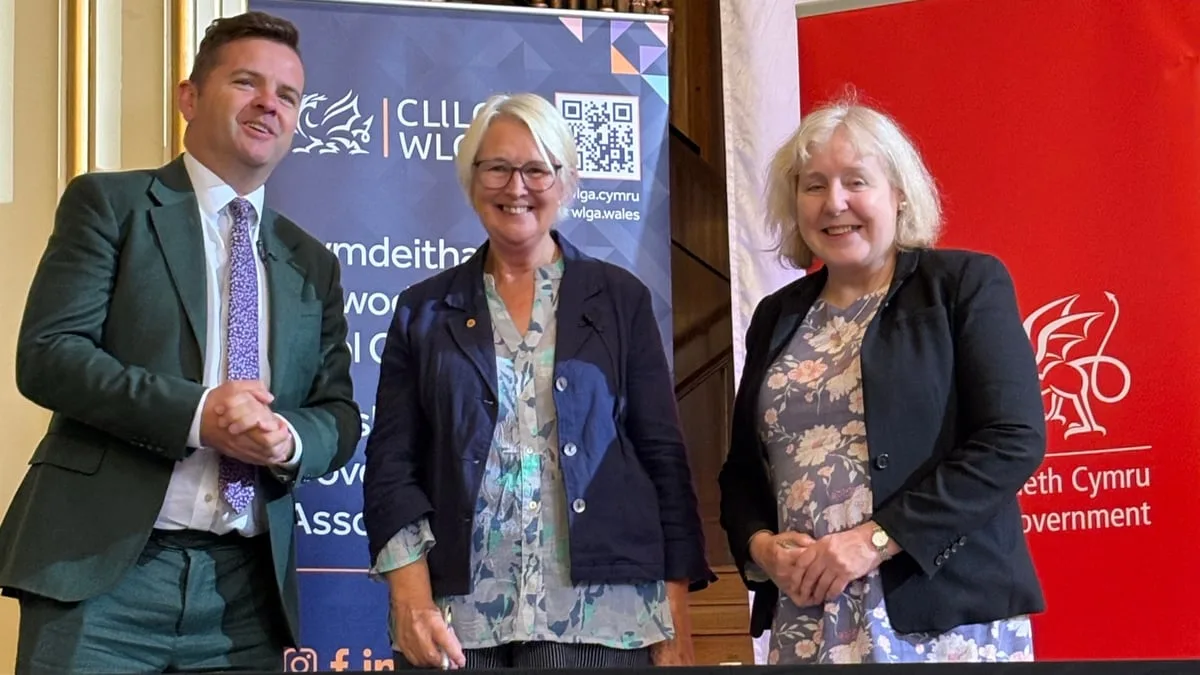
The Welsh Government and the Welsh Local Government Association have signed a fresh Strategic Partnership Agreement, reaffirming a joint pledge to work together for the benefit of communities across Wales.
The renewed pact was unveiled at the WLGA’s annual conference, where senior officials from both sides highlighted “reasserting the underpinning principles of trusted partnership”.
Central to the agreement is a commitment to fair funding, a long‑standing demand from councils that the Welsh Government has struggled to meet.
Both parties say the new framework will curb unnecessary bureaucracy, allowing local authorities to focus on delivering services rather than navigating paperwork.
Sector‑led improvement features prominently, with local councils given greater autonomy to design and implement reforms that suit their unique circumstances.
For the first time, the agreement sets out collective commitments aimed specifically at Welsh‑speaking communities, promising enhanced support for bilingual services.
Economic development and regeneration also feature, with a pledge to coordinate investment in deprived areas and to back projects that create sustainable jobs.
Equity, inclusivity and participation have been refreshed, reflecting the Welsh Government’s ambition to embed these values in every level of public service.
Health inequalities will be tackled through joint initiatives, recognising that poorer health outcomes often cluster in the most disadvantaged locales.
The pact also addresses poverty, with both sides agreeing to share data and resources to better target assistance where it is needed most.
In a notable addition, the agreement calls for a concerted effort to curb abuse in politics, aiming to protect public officials from intimidation and harassment.
These commitments are designed to dovetail with the new Welsh Government Programme for Government, ensuring that policy ambitions translate into tangible outcomes on the ground.
Welsh Government officials stress that the partnership will be monitored through regular reviews, allowing adjustments as circumstances evolve.
Local authority leaders have welcomed the renewed focus on fair funding, noting that predictable budgets are essential for long‑term planning.
One council chief remarked that “the promise of reduced red tape will free up valuable time for frontline services”.
Experts warn, however, that the success of the agreement will hinge on the Welsh Government’s willingness to deliver the promised funding levels.
Recent reports have highlighted gaps between central allocations and the actual costs faced by councils, especially in rural and post‑industrial areas.
Analysts also point out that the ambition to improve Welsh‑language provision must be matched by concrete investment in training and resources.
Economic regeneration pledges are likely to focus on sectors such as renewable energy, tourism and digital infrastructure, which have shown growth potential.
Local enterprises stand to benefit from coordinated support, potentially attracting further private investment to the region.
Health inequality measures will require close collaboration between NHS Wales and local authorities, particularly in tackling lifestyle‑related conditions.
By sharing data on poverty and health outcomes, the partnership hopes to create more targeted interventions that address root causes.
The commitment to combat political abuse reflects growing concerns over the safety of elected representatives and public servants.
Measures under the agreement include enhanced reporting mechanisms and stronger penalties for offenders.
While the renewed Strategic Partnership Agreement marks a positive step, critics argue that past agreements have often faltered at the implementation stage.
They call for clear, measurable targets and transparent reporting to hold both governments accountable.
In response, the Welsh Government has pledged to publish annual progress reports, detailing achievements and areas where further work is needed.
Local authorities will be invited to contribute to these reports, ensuring that frontline perspectives shape the narrative.
The partnership also seeks to involve community groups, recognising that public engagement is vital for the success of any policy.
By embedding participation at the heart of the agreement, both sides aim to rebuild public trust after a period of perceived disengagement.
Overall, the renewed Strategic Partnership Agreement signals a renewed willingness to collaborate, but its impact will ultimately be judged by the resources allocated and the results delivered on the ground.