
New access road approved for Sarnau Mansion despite heritage concerns
Carmarthenshire councillors back a shorter access road to the Georgian Sarnau Mansion, overruling heritage officers who warned it would alter the historic setting.
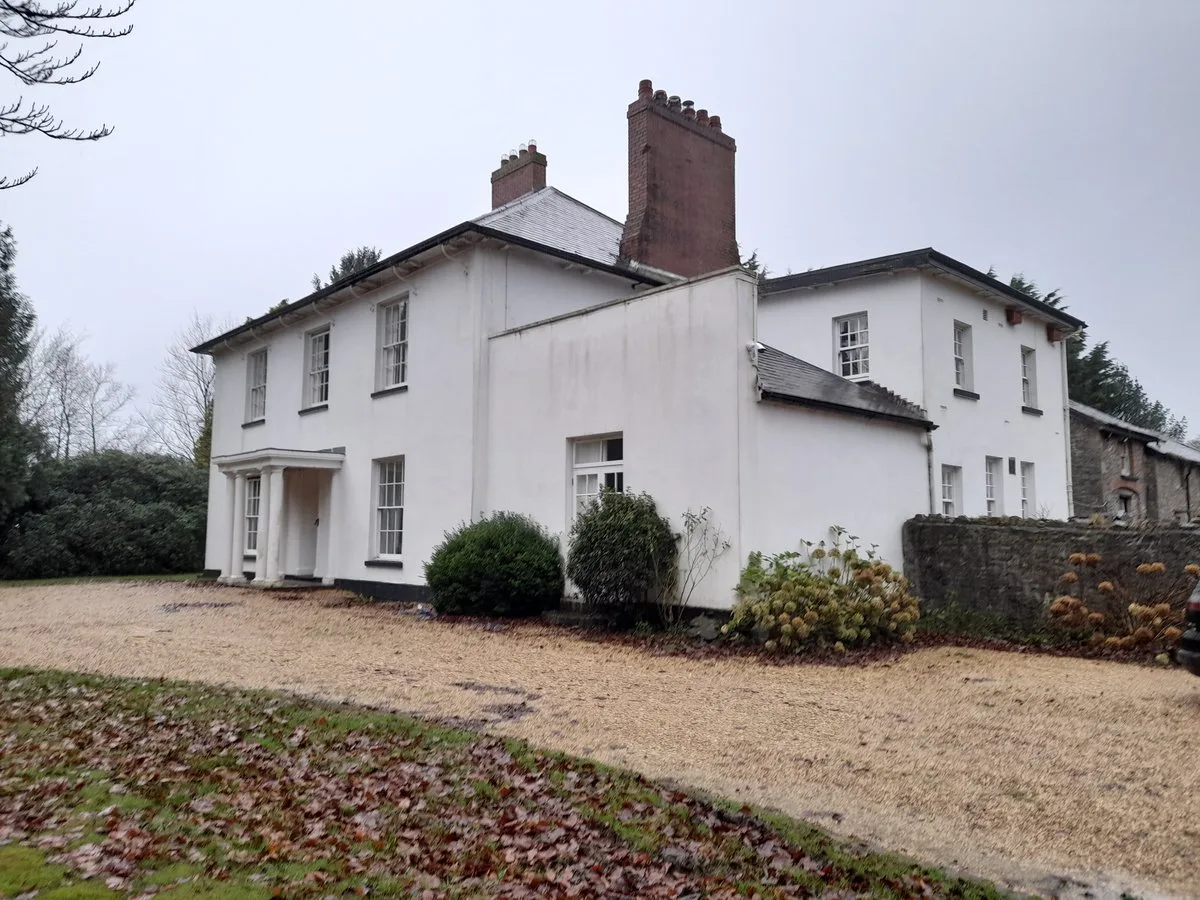
Carmarthenshire County Council’s planning committee has given the green light to a new access road for the Georgian Sarnau Mansion, overruling the recommendation of planning officers who warned the scheme would damage the historic setting of the grade‑II‑listed house.
The decision, taken at the committee’s meeting on Tuesday, will see the existing carriageway between Carmarthen and Bancyfelin closed and a shorter, narrower route built off Llysonnen Road.
Applicant Aled Evans, who owns the smallholding that includes the mansion’s equestrian facilities, argues the current access is unsuitable for modern use and cannot be upgraded because of land‑ownership constraints.
He has reduced the planned width of the new road from six metres to four metres, apart from the entrance, and pledged to plant additional greenery to soften its visual impact.
Sarnau Mansion, set back from Llysonnen Road, was erected in 1820 for banker John Waters and was listed in 2002 for its special architectural interest as a compact late‑Georgian country house.
Heritage body Cadw describes the property as a significant example of its period, while the council’s built‑heritage officer highlighted that the existing drive is flanked by stone pillars and frames a view of the mansion’s façade.
The proposed route, by contrast, would approach the stables rather than the house itself, prompting concerns that the loss of the original approach would “fundamentally alter the manner in which the heritage asset is experienced and appreciated”, according to the planning report.
Despite those reservations, the majority of councillors voted in favour of the new road, citing safety improvements for vehicles and horses using the smallholding.
“We have to look to the future, not the past,” said Cllr Gareth Thomas, who argued that the community’s needs must take precedence over preserving a single historic viewpoint.
Cllr Thomas added that “we have to remember we have a living society”, warning that an over‑emphasis on preservation could hinder necessary development.
Supporting the motion, Cllr Jean Lewis, who represents the area surrounding Sarnau Mansion, said highways officers had not objected to the scheme and that she did not consider the planning department’s recommendation for refusal “reasonable”.
She urged the committee to “go against the recommendation” and approve the application, stressing the importance of modernising rural infrastructure.
Other members raised alternative options. Cllr Terry Davies suggested a one‑way arrangement that would keep the existing access open alongside the new road, potentially preserving the historic view while still delivering the safety benefits.
Planning officer Helen Rice, who noted that horse‑race training takes place on the smallholding, reminded the committee that a decision could only be taken after the applicant addressed enforcement notices relating to unauthorised tracks on the land.
She also pointed out that the new road’s reduced width and added planting were intended to mitigate visual intrusion, but warned that the loss of the stone‑pillared approach would still be felt by visitors.
The council’s Public Notice Portal now lists the approved scheme, and residents are invited to view the details online.
With the decision finalised, work on the new access is expected to begin early next year, pending the usual statutory checks and the completion of any remaining enforcement matters.