
£40,000 boost for historic Ystradgynlais Welfare hall
Arts Council Wales funds a £40,000 project to modernise the historic Ystradgynlais Welfare hall while preserving its community legacy.
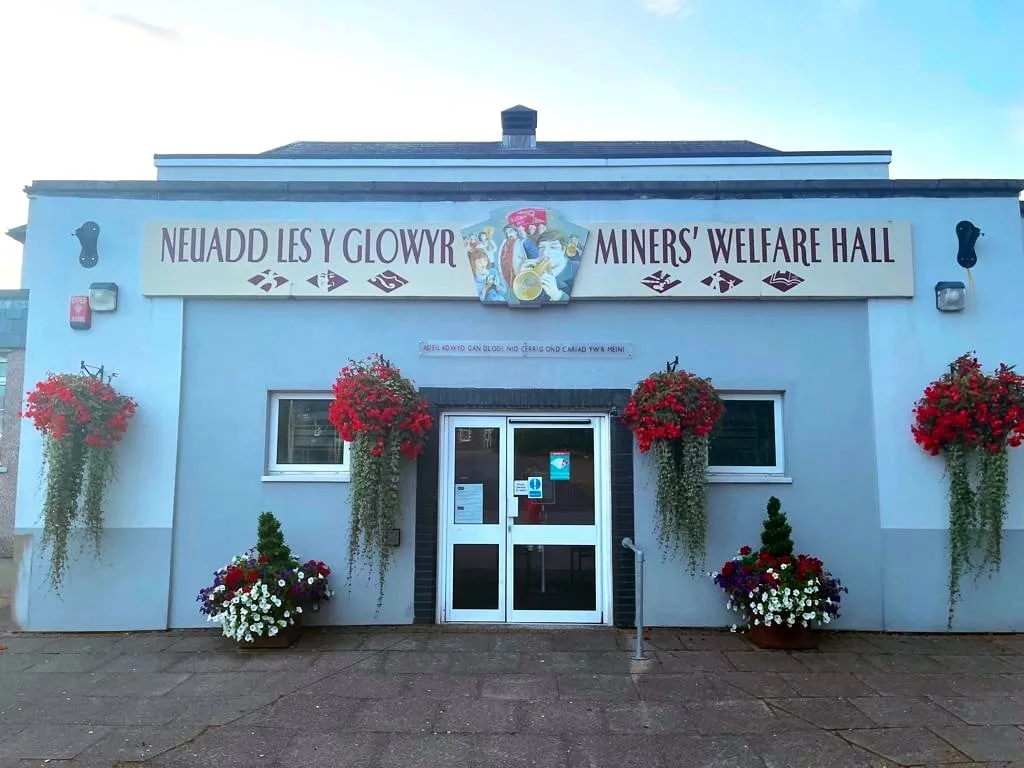
The Welfare in Ystradgynlais has secured a £40,000 grant from the Arts Council of Wales to chart its future. The funding, delivered through the Arts Capital Investment Fund, will enable the hall to appoint a specialist design team and develop detailed community‑led proposals.
Opened on 7 July 1934, the miners’ welfare hall was built at a cost of £9,000 – roughly £1 million in today’s terms. Its inauguration was attended by Jim Griffiths, then chairman of the Welfare and president of the South Wales Miners’ Federation.
From its inception the building was envisaged as “a centre from which will radiate fellowship that will enrich the community”. For more than nine decades the hall has lived up to that ambition, hosting performances, film screenings, dances and a host of community classes.
Local clubs and organisations have long relied on its versatile spaces for meetings, rehearsals and private celebrations. During the 1984‑85 miners’ strike the Welfare became a vital food‑parcel distribution hub for mining families.
Support also arrived from Lesbians and Gay Men Support the Miners, a group whose story later inspired the film and musical Pride. After the war, the hall welcomed refugee artist Josef Herman, whose legacy endures through the Josef Herman Art Foundation Cymru.
The foundation now houses an archive of Herman’s work, donated by his widow Nini Herman, and remains linked to the Welfare. Today the venue remains one of the few independently run miners’ welfare halls still operating for cultural, educational and community purposes.
It welcomes around 45 000 visitors each year, drawing audiences from across South Wales and beyond. During the 2025‑26 financial year the Welfare hosted 45 community groups, 58 live productions and more than 100 film screenings.
It also delivered 30 live‑broadcast screenings and 269 participatory events ranging from dance to musical theatre. The building is in constant use, with classes, creative workshops and room hire filling both day and evening slots.
Despite its busy programme, the hall has not received a capital investment for 35 years until now. The new grant will focus on improving accessibility, enhancing welcoming facilities and future‑proofing the structure.
At the same time, the project aims to safeguard the hall’s historic character and its deep community roots. Wynne Roberts, Executive Director of The Welfare Ystradgynlais, said: “The Welfare has always belonged to its community.”
It was built through the contributions of local miners because they believed people here deserved access to culture, education, recreation and somewhere to come together. More than 90 years later, that community purpose is still at the heart of everything we do.”
Local residents have welcomed the announcement, noting the hall’s role as a cultural anchor in the Upper Swansea Valley.
“It’s more than a building; it’s where generations have celebrated, learned and supported each other,” one long‑time volunteer remarked. The design team appointed under the grant will conduct a thorough assessment of the hall’s fabric, seeking ways to improve step‑free access and modernise facilities without compromising heritage features.
Community consultations are slated to begin in the coming months, ensuring that proposals reflect the wishes of the many groups that use the space. Stakeholders hope the project will also open doors to new funding streams, allowing the Welfare to expand its programme of arts and education.
With the Arts Council’s backing, the hall is poised to continue its legacy of community‑driven cultural provision for decades to come. As the Welfare looks ahead, its leaders stress that the spirit of the miners who funded its birth remains the guiding force behind every plan.
“We are building on a foundation of solidarity and shared purpose,” Roberts added, underscoring the hall’s enduring mission. The £40,000 boost marks a pivotal moment for a historic venue that has long stood as a testament to collective effort and cultural resilience in Ystradgynlais.