
Welsh Government flood plans criticised as insufficient
Reform MS says winter flood preparations fall short, while ministers defend £85m scheme and call for coordinated emergency response.
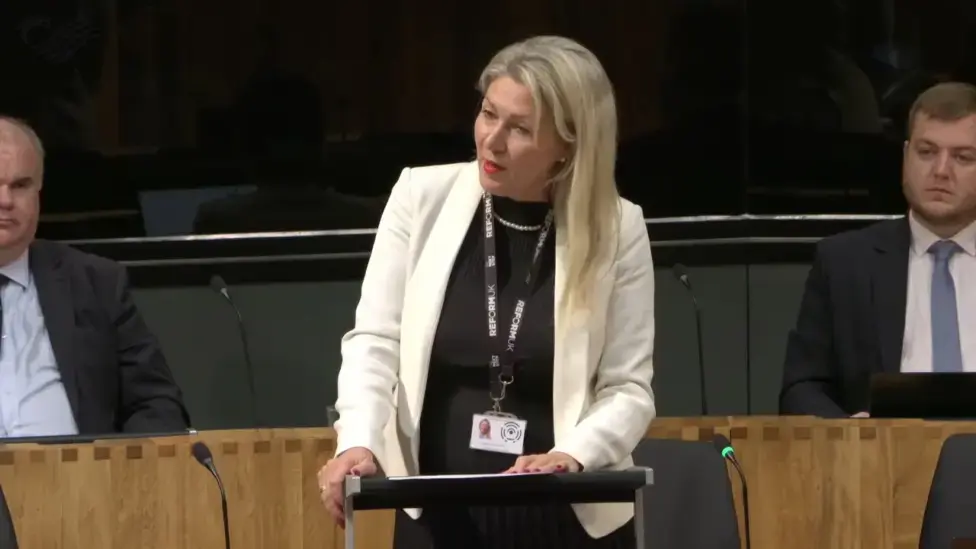
Welsh Government plans to brace the nation for wetter winters have been slammed as inadequate by Reform Party members in the Senedd.
Rural Resilience Minister Llyr Gruffydd outlined a £85 million package for flood‑defence schemes on Tuesday, October 13, warning of “wetter winters” linked to climate change.
Reform’s shadow agriculture minister, Laura Anne Jones, countered that the proposals “don’t cut it”, arguing they fail to reassure communities hit by flooding year on year.
Jones warned that “it will be no surprise to anyone there will be a lot of rain in Wales this winter”.
She also highlighted the lingering impact of this summer’s wildfires, saying the damage to mountain landscapes could channel water downhill towards towns such as Blaenavon.
According to Jones, residents of Blaenavon have yet to receive any financial assistance from the Welsh Government to mitigate flood risk.
“Yet in Blaenavon, the commoners there have not seen a penny from Welsh Government to reduce the flood risk.”
She questioned the promised partnership with farmers and landowners, asking where the financial help was.
“So, you say in your statement that ‘natural flood management can only succeed through strong partnership working with farmers and landowners’ but where is that partnership now?”
Gruffydd, a Plaid Cymru MS, replied that Jones “doesn’t appreciate what is already happening”.
Welsh Conservative environment spokesperson Andrew RT Davies stressed that the same emergency services called upon during summer will be stretched again in winter.
Davies, the Pen‑y‑Bont Bro Morgannwg MS, underlined the need for coordinated action among local authorities, the fire service and Natural Resources Wales.
He noted that responsibilities are split across ministerial portfolios, with the fire service overseen by the local government minister and NRW under the rural minister’s remit.
Davies asked for clarification on how the government will ensure timely coordination when financial or logistical help is required.
Gruffydd affirmed that the First Minister bears ultimate responsibility for national resilience and that inter‑ministerial cooperation is ongoing.
“The First Minister himself, of course, has an overarching responsibility for national resilience.”
The debate highlighted a split between the government’s £85 million investment and the perception on the ground that funding and guidance remain insufficient.
As winter approaches, the pressure mounts on Welsh officials to translate pledges into tangible flood‑mitigation actions for vulnerable communities.