
Wales seeks UK green light for child poverty payment
Plaid Cymru urges Westminster to confirm that the £10‑a‑week Cynnal payment will be disregarded for benefit purposes.
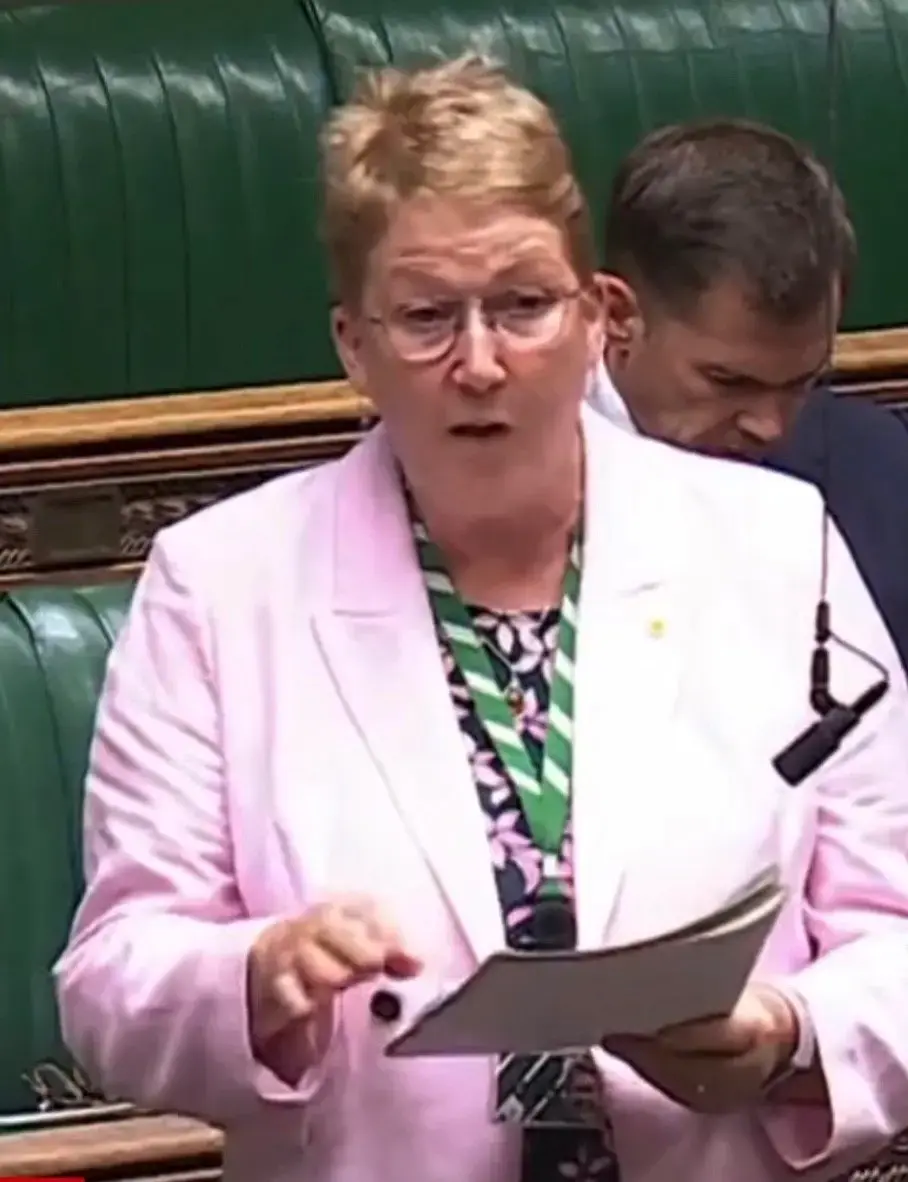
Plaid Cymru has pressed the UK Government for a definitive answer on whether Wales’ proposed Cynnal child payment will be ignored for benefit‑deduction purposes.
Caerfyrddin MP Ann Davies raised the issue in the House of Commons, asking the Secretary of State for Work and Pensions if the £10‑a‑week payment for children in Universal Credit households would be treated as a disregarded amount.
The question follows the Welsh Government’s plan to pilot the Cynnal scheme as part of its broader strategy to tackle child poverty.
Deputy First Minister Sioned Williams has warned that “there is no time to waste” in delivering the pilot, urging Westminster to provide the necessary assurances.
Earlier last month, Prime Minister Andy Burnham signalled openness to the Welsh proposal, stating on 25 September, “I’ll certainly ensure that there’s a proper discussion about the issue.”
Ms Davies warned that without clear support from Labour ministers, the Welsh Government’s practical solutions risk being undermined.
“The Welsh Government is developing practical solutions to child poverty, but those efforts risk being undermined unless Labour ministers in Westminster play their part,” she said after the debate.
She added, “The Deputy First Minister has made clear that urgent assurances are needed.” Today’s exchange showed that, despite warm words, UK ministers still cannot give a straight answer on whether Cynnal payments will be protected.”
Secretary of State Pat McFadden delivered that response, highlighting the Labour government’s recent removal of the two‑child cap.
He argued that the policy shift would reduce child poverty by 500,000 by the close of the current parliamentary term.
Critics, however, note that the change took two years and considerable pressure to achieve, suggesting a risk of similar delays for the Cynnal pilot.
Ms Davies echoed that concern, stating, “The Secretary of State pointed to Labour’s record on child poverty, but it took his government two years, and a lot of kicking and screaming, to scrap the Tory two‑child cap.” Welsh families cannot afford a repeat of that delay.”
The Cynnal payment, if approved, would provide a weekly top‑up of £10 for each child in a household receiving Universal Credit, intended to offset the cost of basic necessities.
Welsh officials say the pilot could deliver vital data on the impact of modest cash injections on child well‑being and educational outcomes.
They also argue that the scheme aligns with the Welsh Government’s commitment to halve child poverty by 2030.
Without a clear guarantee that the payment will be disregarded for benefit calculations, families could see the amount clawed back, eroding its intended benefit.
Industry analysts note that the interaction between devolved welfare initiatives and UK‑wide benefit rules has historically been complex.
They point to previous instances where Welsh pilots required bespoke arrangements with the Department for Work and Pensions and HM Revenue & Customs.
In the meantime, the Welsh Government continues to seek written assurances from both the DWP and HMRC.
Sources within the Welsh administration say that a formal confirmation would allow the pilot to launch in the coming months, pending budget allocation.
Opposition parties have called for greater transparency on the funding and evaluation framework for the Cynnal scheme.
They argue that clear metrics are essential to assess whether the £10 weekly top‑up delivers measurable improvements in child health, education and long‑term prospects.
Labour’s response to the query remains pending, with the department yet to issue a written statement.
Should Westminster provide the green light, the Cynnal pilot could become a template for other devolved administrations seeking targeted anti‑poverty measures.
Until then, Welsh families awaiting the payment face uncertainty over whether the promised support will reach their households in full.