

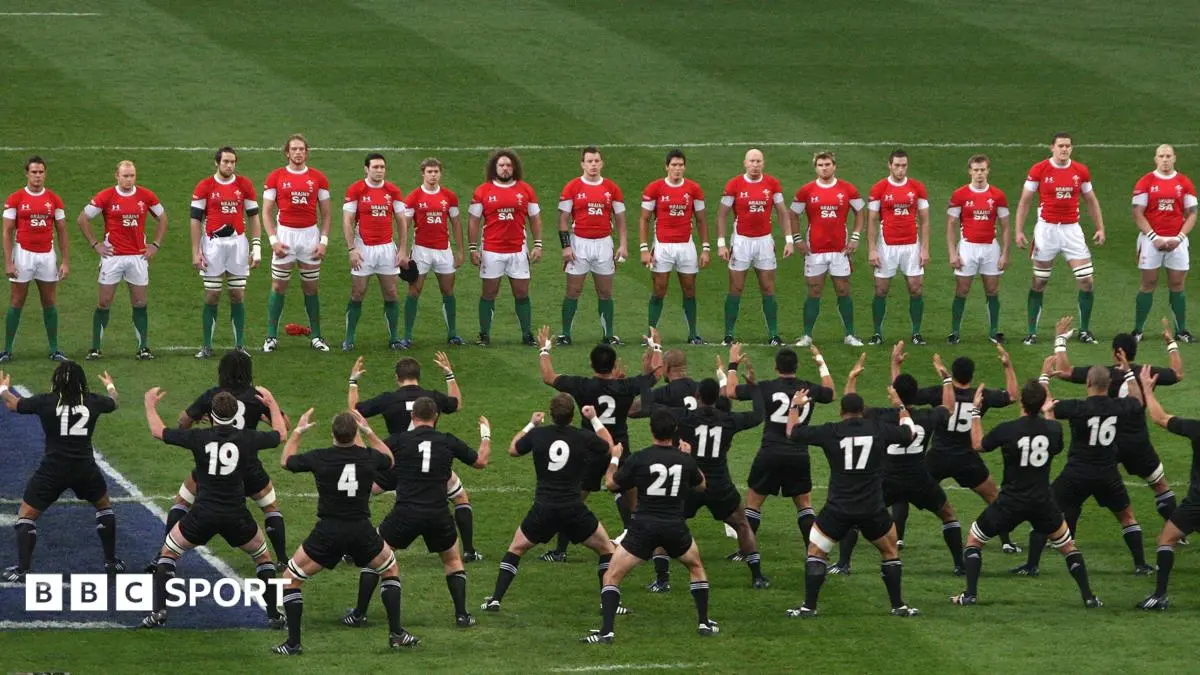
Wales versus New Zealand rugby history spans over a century, defined by cheating scandals, timekeeping disasters, and spine-tingling drama. The rivalry dates back to the 1905 ‘Match of the Century’, which established the tradition of singing national anthems before international sports events. Since a Welsh victory in 1953, a losing run lasting more than 70 years has weighed heavily on generations of players.
Legendary figures including Gareth Edwards, Barry John, JPR Williams, Jonathan Davies, Shane Williams, and Alun Wyn Jones all attempted to break the curse but failed. The bitterness of this prolonged wait is compounded by one of the most talked-about accusations of cheating in rugby history. This incident occurred during a match in Cardiff in 1978, a fixture that served as a de facto World Cup final for the era.
The All Blacks had defeated the British & Irish Lions the previous year, while Wales were reigning Grand Slam champions. It marked the first New Zealand visit to Cardiff since the infamous late-night incident involving Keith Murdoch. Murdoch was sent home in disgrace after punching a hotel doorman, an event that still draws commemorative pints at the Angel Hotel on Westgate Street.
In the 1978 encounter, Graham Mourie’s tourists scored the game’s only try, yet Wales had dominated the contest. The home side led 12-10 as the clock in the old Arms Park ticked towards the final minute. Unbeknownst to the Welsh players, the All Blacks had hatched an escape plan the previous night to secure a crucial victory.
Andy Haden, the All Blacks lock and culprit in chief, later detailed the conspiracy in his autobiography. He recalled telling his locking partner Frank Oliver: “With Wales in front, I knew there could only be a minute or so left. I went to Frank Oliver, my locking partner…
and told him the plan in four words: ‘I’m going to dive’.
Haden catapulted out of the line-out just as Wales hooker Bobby Windsor threw the ball. Welsh players stood bemused as referee Roger Quittenton of England awarded a penalty, allowing Brian McKechnie to land the winning points. Quittenton later claimed he had penalised Geoff Wheel for an infringement, but the Kiwi intent was clear and the apparent injustice rankled.
Windsor described the game as the worst day of his career, noting the deliberate nature of the deception. He stated: “I knew straight away that it was a con job. When we found out later that they had planned it the night before, that really got to me.
I’ll never forget that as long as I live.
It would be 26 years before Wales came as close to ending the losing run as they did in 2004. Few expected much of a young Wales side that had done little to impress, despite scoring a record 37 points in defeat at the World Cup in Australia the previous year. Under new head coach Mike Ruddock, with rising star Gavin Henson in their ranks, Wales played with abandon.
The home side led at half-time through tries by Tom Shanklin and Mefin Davies. New Zealand, jolted into action, relied on Joe Rokocoko, the most potent player on the planet at the time, who scored two wonderful solo tries. However, for once, Wales refused to yield and could have pulled off a shock if not for some disastrous timekeeping.
Wales, back to within a point after Henson’s kick, believed there was injury time to come on the stadium clock. In reality, the stadium display showed the correct time on the referee’s watch, leaving no additional minutes. With seconds to go, Stephen Jones kicked the ball away, and Wales never had another chance to equalise.
Try-scorer Shanklin reflected on the near-miss, stating: “It’s actually more painful and frustrating now, when I look back, than it was at the time. We had been through some tough years so I was actually quite pleased that we hadn’t been hammered and put on a great show.
He added: “But looking back, you realise now just how close we came to making history. However, the pay-off was that autumn campaign set us up for another piece of history with the Grand Slam the following year.
The response to the Haka has troubled opposition teams throughout the history of the game. In 1905, the Welsh crowd’s singing of Hen Wlad Fy Nhadau as a response to the Haka was the first time a national anthem was sung before an international sports event. The tactic had the desired effect on the visiting All Blacks.
New Zealand captain Dave Gallaher wrote later that he had never experienced anything like it in his life. Consequently, the All Blacks lost the only game in their 35-match tour of the British Isles. However, a century later, the Welsh Rugby Union’s attempted response to the Haka backfired disastrously.
In 2005, the WRU asked to play the anthem after the Haka as part of the centenary celebrations of the fixture. New Zealand agreed to this arrangement as a one-off gesture for the historic occasion. The protocol was intended to honour the 100th anniversary of the first meeting between the two nations.
So when the WRU asked to do the same again a year later, the All Blacks were not impressed. Both sides dug in their heels, leading to a tense standoff before the match. The situation created significant confusion for the teams and the large crowd gathered to watch the fixture.
74,000 expectant fans inside what was then the Millennium Stadium, as well as the Welsh players, looked on perplexed. A recording of the All Blacks performing the Haka in their dressing room was shown on the stadium’s giant screens. This unusual spectacle highlighted the breakdown in protocol between the two rugby powerhouses.
One player noted: “Playing against them in 2006 will always stick. The incident underscored the deep-seated tensions and historical grievances that persist in this intense rivalry. The memory of both the 1978 cheating scandal and the 2006 Haka dispute remains vivid for fans and players alike.
The history between Wales and New Zealand is almost a history of the game itself. Two nations that bleed rugby have spilled plenty of the red stuff over the years. The rivalry continues to captivate audiences, with each encounter carrying the weight of decades of past drama and unfulfilled promises.
Martyn Williams admitted the famous haka stand-off was a “surreal” moment, reflecting on the unique pressures of the fixture. The emotional intensity of these matches remains unmatched in international rugby. Fans continue to await a Welsh victory that would finally break the long-standing losing streak.
The narrative of Wales versus All Blacks is one of resilience, heartbreak, and enduring passion. From the singing of anthems in 1905 to the modern-day stadium spectacles, the connection is profound.
Reporting verified from official briefings and primary coverage by www.bbc.co.uk.
















Reader Discussion & Comments (0)
Join the conversation. All comments are moderated in accordance with our editorial standards.