
Paul Davies urges Welsh Government to act on West Wales health services
Senedd member questions the threshold for intervention as Hywel Dda health board remains at Level 4, sparking debate over hospital reconfigurations.
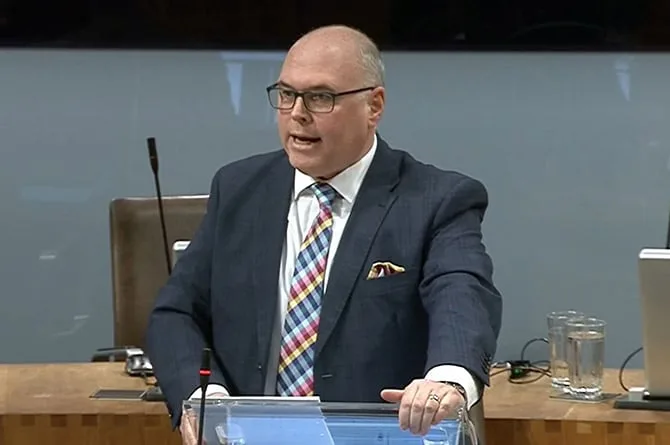
Senedd member Paul Davies has publicly pressed the Welsh Government to explain the threshold that must be crossed before it steps in to halt further reconfiguration of West Wales health services.
His challenge comes as Hywel Dda University Health Board remains under Level 4 escalation – the second‑highest tier – across finance, strategy, planning, urgent and emergency care, healthcare‑associated infections and fragile clinical services.
Level 4 is triggered when an organisation faces serious problems and is unlikely to improve without external support, according to the Government’s own framework.
Davies, who represents Ceredigion‑Penfro, warned that patients are already being forced to travel ever farther for treatment as services at Withybush Hospital and Bronglais Hospital are reduced, relocated or reconfigured.
“What threshold must be crossed before the Welsh Government is prepared to intervene?” he asked during a recent Senedd session.
The health board’s fragile services intervention currently covers nine clinical areas: critical care, dermatology, elective orthopaedics, ophthalmology, urology, emergency general surgery, stroke, endoscopy and radiology.
Davies highlighted that the board’s urgent and emergency care pathways are also under Level 4 scrutiny, raising concerns about patient safety in a predominantly rural region.
He pressed the Counsel General on the legal powers available to Ministers to intervene in health‑board decisions that affect service delivery.
The Counsel General confirmed that Welsh Ministers retain statutory powers to direct health boards and intervene where failures relate to governance, performance or the exercise of their functions.
“There would be a case for intervention by Welsh Ministers,” he said, adding that such powers are safeguards for significant patient‑safety concerns, flawed consultation, breaches of statutory duties or wider governance issues.
However, the Counsel General stopped short of declaring that the current situation met those legal grounds, stating he did not consider them to have been met at this stage.
Davies argued that the continued Level 4 status makes the Government’s inaction difficult to understand, given the board’s recognised fragile services.
“People across west Wales have seen services reduced, relocated and reconfigured over many years, and there is understandable concern that healthcare is being moved further and further away from the communities it is supposed to serve,” he said.
He noted that the Welsh Government itself describes Level 4 as a sign of serious problems that may require external support.
“The Counsel General has now also confirmed that Ministers retain statutory powers to intervene where the relevant legal grounds are met,” Davies added.
“So my question remains: what threshold actually has to be crossed before the Welsh Government is prepared to take further action?”
Davies pledged to keep the issue on the Senedd agenda, promising relentless scrutiny of decisions affecting Withybush and Bronglais hospitals.
“I will continue challenging the Welsh Government, scrutinising decisions affecting Withybush and Bronglais and pressing Ministers to use the powers available to them where the legal grounds for intervention are met,” he asserted.
The health board’s current Level 4 status means Welsh Ministers could, if they deem it necessary, issue directives to improve performance or even take direct control of specific services.
Health officials have warned that any intervention would need to balance the need for rapid improvement with the complexities of delivering care across a dispersed, rural population.
Local campaign groups have welcomed Davies’s pressure, arguing that community voices have been marginalised in the reconfiguration process.
They contend that longer travel times for urgent care could exacerbate health inequalities in West Wales, particularly for older patients and those without private transport.
Welsh Government spokespersons have reiterated their commitment to supporting Hywel Dda but have not indicated any imminent change to the current escalation level.
They stress that any decision to intervene will be based on a thorough assessment of governance, performance data and patient‑safety metrics.
Analysts suggest that the political spotlight on West Wales could accelerate discussions about the sustainability of small‑hospital models in rural Wales.
Should the Government decide to act, it would mark a rare instance of direct ministerial involvement in health‑board service planning.
For now, the debate centres on whether the existing Level 4 designation is sufficient to trigger the statutory powers the Senedd member says are needed.
As the situation develops, patients, clinicians and local leaders will be watching closely for any sign of decisive action.