
META gains Crown Estate funding to boost Wales marine energy
Located in and around the Milford Haven Waterway in Pembrokeshire, META is Wales’ national marine energy test centre. It offers eight pre‑consented sites for at‑sea testing of wave,…
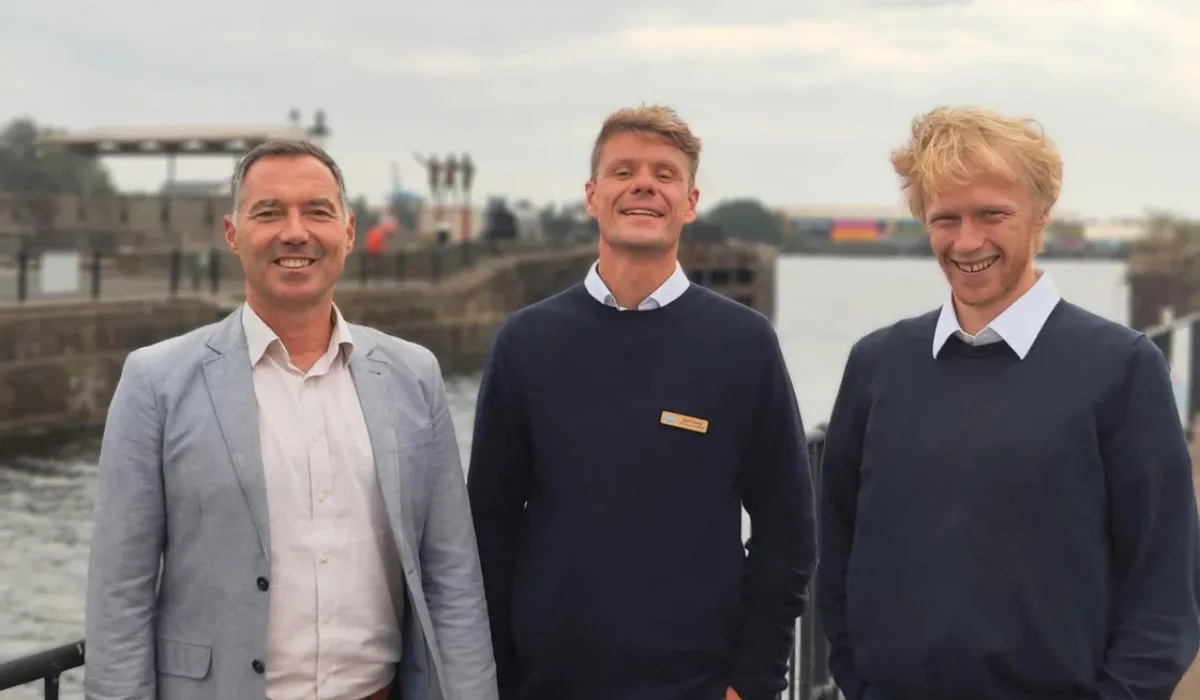
Wales’ Marine Energy Test Area (META) has secured a one‑year investment from The Crown Estate, reinforcing its status as a nationally significant hub for marine renewable technology. The funding, announced this week, will sustain META’s operations and expand its capacity to test the next generation of clean‑energy devices.
Located in and around the Milford Haven Waterway in Pembrokeshire, META is Wales’ national marine energy test centre. It offers eight pre‑consented sites for at‑sea testing of wave, tidal, floating offshore wind and offshore hydrogen components.
Since its launch in 2021, META has supported 16 technology deployments, totalling 76 months of site occupancy by developers and researchers. Developers and researchers have collectively invested more than £10 million across these programmes, the bulk of which has been spent in Wales.
The Crown Estate’s contribution joins existing financial support from the Welsh Government. Together the funds will enable META to host further deployments, enhance marine data collection and boost environmental monitoring capabilities.
They will also help strengthen the supply‑chain ecosystem that underpins the marine energy sector. Community and education outreach across Pembrokeshire will continue as part of META’s broader engagement programme.
Saul Young, META’s Test Site Manager, welcomed the investment. “This investment from The Crown Estate represents a significant vote of confidence in META and the role that real‑sea testing facilities play in accelerating the marine energy sector”.
META is now a well‑established part of the global test centre network, and this long‑term support will allow us to continue providing vital infrastructure for technology developers and researchers. This funding comes at a critical moment for META, Wales and for the whole of the UK, as we accelerate the development and deployment of net zero technologies, helping to meet our climate targets while strengthening energy security.”
Young added that the timing of the funding aligns with a surge in interest from innovators seeking to prove their concepts in real‑world conditions”.
He noted that the dedicated test sites reduce the time, risk and cost associated with moving from laboratory to sea. Sol Anitua, Head of Infrastructure & Energies at The Crown Estate, highlighted the broader economic impact.
“Marine energy is a real opportunity for Wales, helping to bring jobs, investment and new technology to coastal communities like Pembrokeshire, whilst also helping to support UK energy security”. Test centres like META are essential to that success — they give innovators an opportunity to trial new technology, helping speed up its journey from idea to reality.
We’re pleased to be supporting META as it continues this important work.”
Anitua’s comments underscore the Crown Estate’s strategic aim to diversify the UK’s energy mix and reduce reliance on fossil fuels”. Marine energy, still in its infancy compared with offshore wind, promises a reliable source of power from tides and waves that can complement existing renewables.
Experts say that Wales, with its extensive coastline and strong tidal streams, is uniquely positioned to lead the sector. The investment will also fund upgrades to META’s data‑gathering infrastructure, providing developers with high‑resolution wave and current measurements.
Enhanced environmental monitoring will help ensure that testing activities comply with marine protection standards. Industry observers note that the Crown Estate’s backing signals confidence in the commercial viability of marine energy technologies.
It also sends a clear message to investors that the UK government is committed to de‑risking early‑stage projects. Local businesses stand to benefit from increased activity at META, from specialised marine engineering firms to hospitality providers serving visiting researchers.
Schools and colleges in Pembrokeshire will receive additional resources for STEM outreach, aiming to inspire the next generation of engineers. In the coming months META plans to host trials of a tidal turbine prototype and a wave‑energy converter that could double current efficiency levels.
These trials will be closely watched by the Department for Energy Security and Net Zero, which has earmarked marine energy as a priority area in its latest strategy. Stakeholders hope that the momentum generated by the Crown Estate’s investment will attract further private capital into the sector.
With the UK’s net‑zero target looming, the success of facilities like META could prove pivotal in meeting climate commitments. For now, the partnership between META and The Crown Estate marks a significant step forward for Wales’ marine energy ambitions.