Torfaen Council backs Nepalese community after deadly flood
Torfaen County Borough Council passes motion of support for Nepalese residents, thanking the Wales Gurkha Community Association and highlighting climate‑change links.
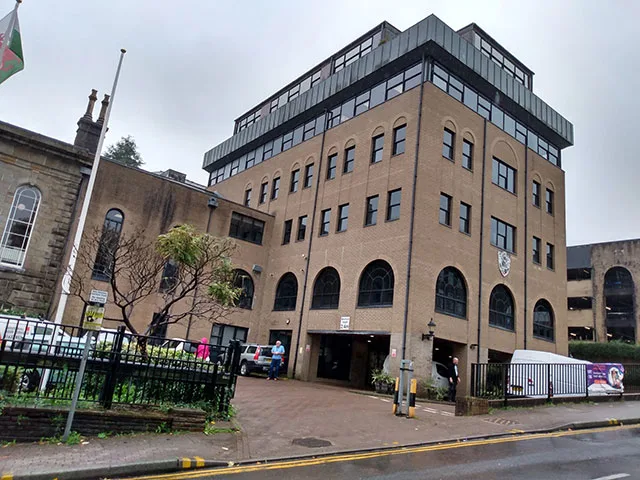
Torfaen County Borough Council has formally expressed “support and solidarity” with the Nepalese community after the devastating flash flood that swept through the Himalayan valley on the Nepal‑Tibet border in August.
The disaster, triggered by a glacial collapse, claimed more than 1,300 lives and left thousands still missing, according to international relief agencies.
At the council’s September meeting, councillors passed a motion of support for local Nepalese residents and thanked the Wales Gurkha Community Association for its swift fundraising efforts.
Labour leader Cllr Anthony Hunt said the tragedy had been “very distressing for us all to witness and especially for those whose families who have been most affected back in Nepal.”
He added that the council would seek to channel aid through the Gurkha Association, which has strong links to the Nepalese diaspora in Wales.
Reform UK councillor for Llantarnam, Alan Slade, backed the motion and asked whether contributions could be drawn from a “small schemes fund” earmarked for modest grants.
He suggested that a modest allocation could provide immediate relief to families who have lost homes and livelihoods.
Cllr Hunt replied that he would recommend the Wales Gurkha Community Association as the most appropriate conduit, noting its local connections and experience in disaster response.
Labour’s Cllr Sue Morgan highlighted the broader implications of the flood, saying it underscored the “effects climate change can have”.
She thanked council members who had recently attended a screening of The People’s Emergency Briefing, a film that outlines the United Kingdom’s exposure to climate‑related and nature‑based risks.
The briefing, produced by a consortium of climate scientists and policy experts, warned that extreme weather events in distant regions can reverberate across the globe, affecting migrant communities at home.
Torfaen’s motion also called on the council to explore longer‑term support, including mental‑health services for Nepalese families coping with loss and trauma.
Local Nepalese businesses, many of which operate in the county’s industrial estates, have already begun organising food parcels and clothing drives for relatives still in the affected valley.
Community leaders said the outpouring of assistance from Welsh residents reflects a deep‑rooted bond forged by generations of Gurkha service in the British Army.
“Our community has always felt a strong sense of belonging here, and we are grateful for the empathy shown by neighbours across Torfaen,” one Nepalese shop owner told the council.
The Wales Gurkha Community Association, which coordinates charitable initiatives for Gurkha veterans and their families, announced it would allocate the first tranche of donations to emergency shelter kits.
These kits contain waterproof blankets, basic cooking equipment and essential medical supplies, intended for distribution through local Nepalese community centres.
Council officials said they would also liaise with the Welsh Government’s International Development team to explore additional funding streams.
In a statement, the Welsh Government confirmed its commitment to support Nepal’s recovery, citing ongoing humanitarian assistance and a pledge to review climate‑adaptation strategies.
Experts warn that glacial lake outburst floods, such as the one that struck Nepal, are becoming more frequent as rising temperatures accelerate glacier melt.
“What we witnessed in August is a stark reminder that climate change is not a distant threat,” said a climate researcher from Cardiff University during the film screening.
He added that vulnerable mountain communities are often the first to feel the impact, with downstream effects felt worldwide.
Torfaen’s motion also urged local schools to incorporate climate‑education modules, aiming to raise awareness among young people about the interconnectedness of global environmental challenges.
Teachers from several primary schools have already begun integrating case studies of the Nepal flood into geography lessons.
“Understanding these events helps our pupils grasp the real‑world consequences of climate inaction,” noted a headteacher from a school in Cwmbran.
While the council’s immediate response focuses on humanitarian aid, officials acknowledge that long‑term resilience will require coordinated action across government, NGOs and the private sector.
Local businesses have pledged to match public donations, further bolstering the fund earmarked for Nepal’s most severely affected families.
As the search for missing persons continues, the Nepalese diaspora in Wales remains hopeful that the solidarity shown by Torfaen will translate into tangible relief on the ground.
“Every contribution, no matter how small, brings us a step closer to rebuilding lives back home,” said a community volunteer during the council meeting.
The council will review the progress of the aid distribution at its next quarterly meeting, ensuring transparency and accountability for the funds raised.
In the meantime, the Wales Gurkha Community Association is coordinating with partner charities in Kathmandu to expedite the delivery of essential supplies.
Torfaen’s gesture of support reflects a growing recognition among Welsh authorities that global climate disasters demand local empathy and action.