
Grass snake glides along River Dee in Connah’s Quay
Amateur wildlife videographer Matty Roberts captured the reptile as it moved confidently through the shallow water, later posting the footage on social media.
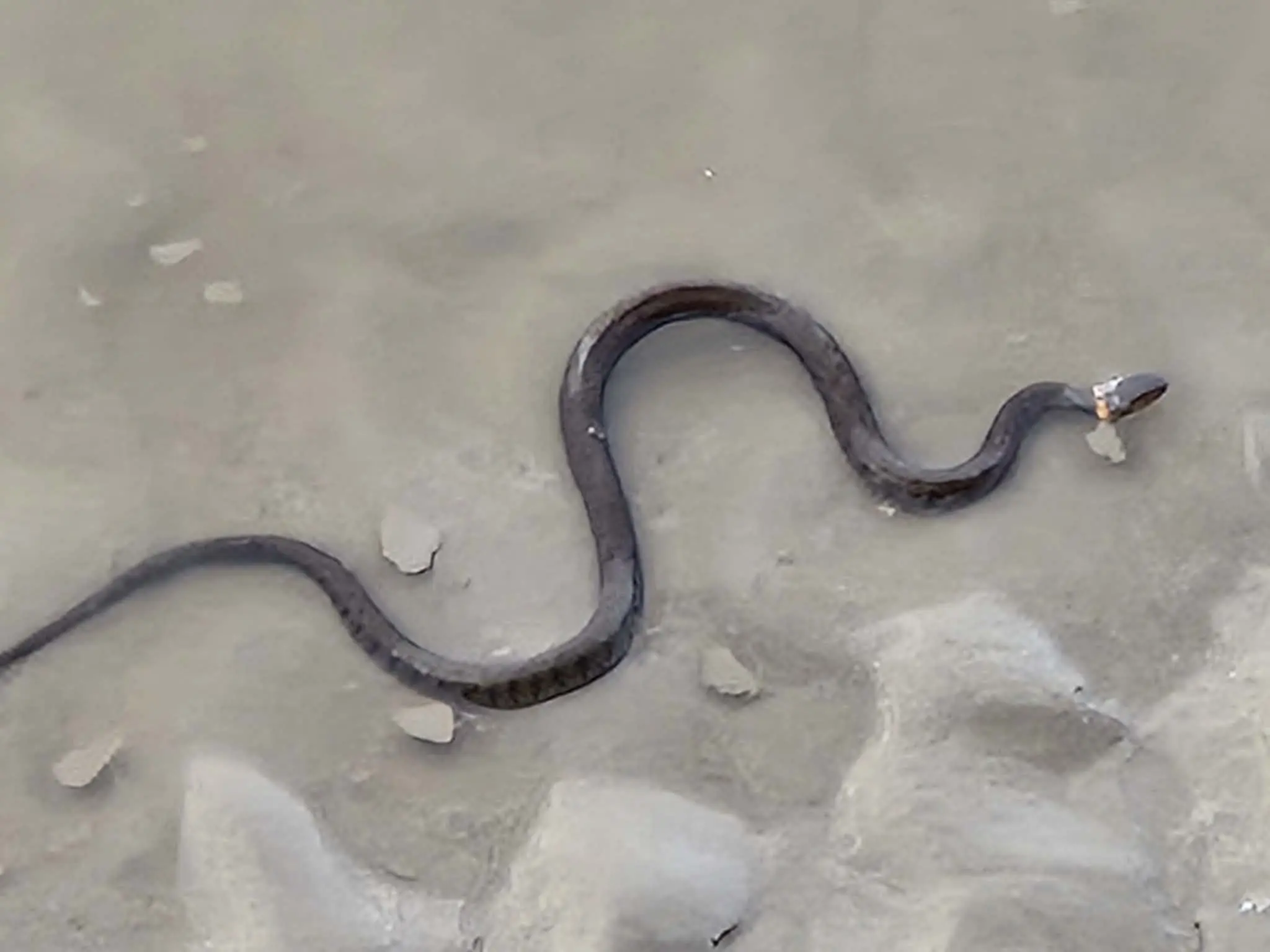
A grass snake was filmed gliding along the River Dee’s edge on Dock Road in Connah’s Quay on Thursday, prompting surprise and delight among local onlookers.
Amateur wildlife videographer Matty Roberts captured the reptile as it moved confidently through the shallow water, later posting the footage on social media.
“The snake was seen in the water on Dock Road,” Roberts wrote in the accompanying post, adding that the animal appeared unperturbed by the presence of people.
Grass snakes (Natrix helvetica) are Britain’s largest native snake species, typically reaching lengths of up to one metre, and are most at home in wetland habitats such as rivers, ponds and marshes.
The River Dee and its estuary, which wind along the Flintshire coastline, support a rich tapestry of wildlife, including wading birds, seals and a variety of amphibians that form the grass snake’s primary prey.
Experts note that the species is an adept swimmer, often hunting for frogs, toads and small fish in the water before retreating to the banks to bask in the sun.
“Grass snakes are strong swimmers and are frequently found close to water, where they hunt for prey such as frogs, toads and fish,” a local naturalist explained.
Despite their striking appearance, grass snakes are harmless to humans; they are non‑venomous and will usually flee if threatened.
Under the Wildlife and Countryside Act 1981, the species enjoys full legal protection, making it illegal to intentionally kill, capture or disturb the animal.
Conservation officers in Flintshire have reminded residents to observe the reptile from a distance and to avoid handling it, stressing that disturbance can stress the animal and disrupt its role in controlling amphibian populations.
The sighting comes at a time when the Dee estuary is under renewed scrutiny for its ecological value, with recent surveys highlighting the area’s importance for breeding birds and rare invertebrates.
Local council representatives have reiterated their commitment to safeguarding the river’s biodiversity, noting that ongoing monitoring programmes aim to maintain water quality and habitat integrity.
“The Dee provides an essential corridor for wildlife, and sightings like this underline the health of the ecosystem,” a council spokesperson said.
Residents of Connah’s Quay, a historic port town that straddles the England‑Wales border, have long enjoyed the river’s scenic backdrop, but a swimming snake remains an uncommon spectacle.
Social media reactions ranged from curiosity to admiration, with many users sharing the video and encouraging others to respect the creature’s space.
“It’s a reminder that nature still thrives here,” one commenter wrote, adding that the footage offered a rare glimpse of a native reptile in its natural element.
Wildlife charities have used the moment to promote broader awareness of the grass snake’s ecological role, highlighting how the reptile helps regulate amphibian numbers, which in turn influences insect populations.
“Every species plays a part in the food web, and the grass snake is no exception,” a spokesperson for a regional conservation group said.
Authorities continue to advise the public that, while encounters with grass snakes are generally harmless, any injured or distressed animal should be reported to the local wildlife trust for appropriate care.
The video, now viewed by thousands, serves as a vivid illustration of the Dee’s vibrant natural heritage and the unexpected moments it can provide to those who walk its banks.