
Smart vehicles could power future Welsh cities, study finds
New Cardiff Met research shows how connected cars can become resources for traffic, safety and energy in smart cities.
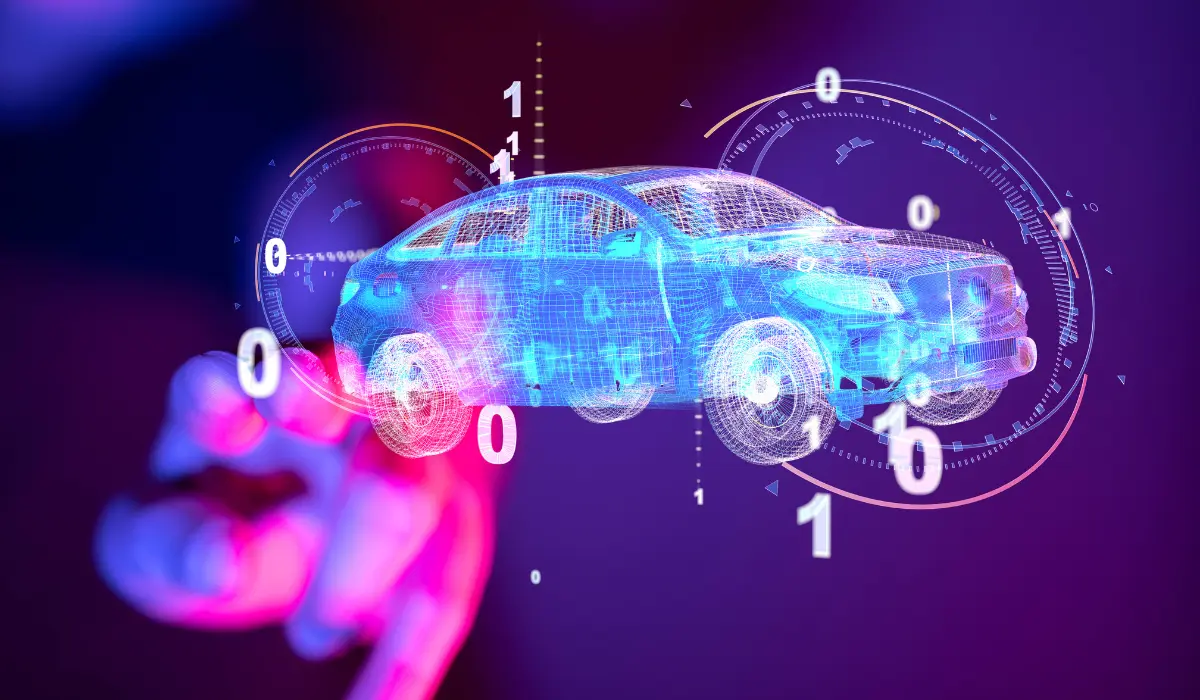
Researchers at Cardiff Metropolitan University have unveiled a framework that could turn everyday cars into vital components of future smart cities.
The study, conducted with partners from Cardiff University, the University of the West of England and Beirut Arab University, introduces Connected and Intelligent Vehicular Systems as Resources (CI‑VSaR).
CI‑VSaR proposes that the computing power, sensors, communication links and batteries already fitted to modern vehicles be repurposed for urban services.
Instead of being mere transport assets, connected, autonomous and electric cars could feed data into city‑wide networks for traffic control, environmental monitoring and public safety.
Professor Issam Damaj, Head of Computer Science at Cardiff Met, explained the concept.
“Modern vehicles contain a remarkable range of technologies that are often underused.” Our research shows that by treating vehicles as part of a broader smart city ecosystem, we can unlock capabilities that support citizens, communities and public infrastructure.
The vision is to move beyond seeing vehicles simply as transportation assets. The computing power, communications capabilities, sensors and energy resources already available in many vehicles could help address real urban challenges, from traffic congestion and sustainability to public safety and energy resilience.
Our findings demonstrate that this approach is both technically feasible and scalable.
The research team built a simulation involving 1,000 vehicles operating within a virtual smart city environment.
Results showed the system could identify available vehicle resources, allocate them efficiently and sustain high service quality.
Key performance indicators such as response time for emergency communications and accuracy of air‑quality readings improved markedly when vehicle data were incorporated.
Battery storage from electric cars also proved useful for balancing local energy demand, offering a distributed reserve that could support grid stability.
Dr Fiona Carroll, co‑author of the paper, noted that the approach leverages infrastructure already in place, reducing the need for costly new installations.
“By using the sensors and processors that manufacturers already embed in vehicles, cities can avoid duplicating hardware and focus investment on integration and data governance,” she said.
The framework outlines three layers of interaction: data collection from on‑board sensors, communication via vehicle‑to‑infrastructure (V2I) links, and coordinated resource allocation managed by city control centres.
Security and privacy safeguards are built into the design, with anonymised data streams and encrypted channels to protect motorists’ identities.
Professor Mehmet E. Aydin of the University of the West of England highlighted the scalability of the model.
“The simulation demonstrates that even with a modest fleet penetration, the cumulative effect is significant.” As vehicle connectivity rises, the potential impact will only increase,” he added.
Abdallah H. Salem from Beirut Arab University contributed expertise on sensor fusion, ensuring that disparate data types could be merged into coherent city‑level insights.
Professor Omer Rana of Cardiff University stressed the importance of aligning the technology with public expectations.
“People must see clear benefits, such as reduced congestion or faster emergency response, before they accept their cars becoming part of a wider network,” he said.
The researchers acknowledge that real‑world trials are essential to validate the simulation outcomes.
They propose pilot projects in partnership with local authorities, focusing on high‑traffic corridors and areas prone to air‑quality concerns.
If successful, the CI‑VSaR framework could inform national policy on smart‑city development, offering a cost‑effective route to greener, more responsive urban environments.
Cardiff Met plans to publish detailed technical guidelines later this year, aiming to assist municipalities and industry partners in adopting the model.
The study adds to a growing body of evidence that the automotive sector can play a pivotal role beyond mobility, contributing to sustainability and resilience goals across Wales and the wider UK.