
Reform UK backs campaign to keep Newport M4 junctions open
Reform UK joins the South Wales Argus’ call to halt proposed M4 junction closures as the Welsh Government prepares a decisive transport announcement for Newport.
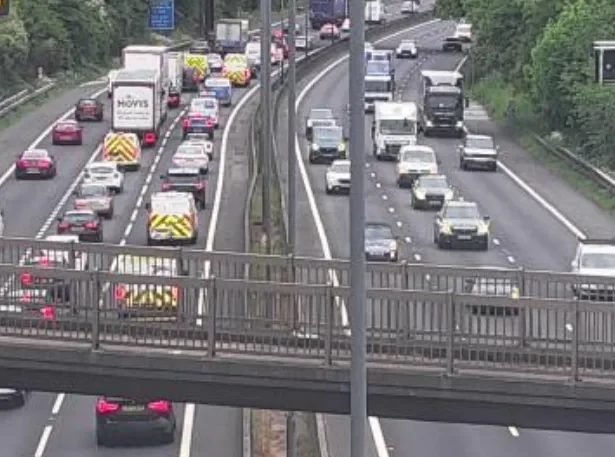
Pressure is mounting on the Welsh Government as it prepares to unveil the next phase of its Newport transport strategy, with Reform UK joining the South Wales Argus’ “Hands Off Our Junctions” campaign to keep the M4 junctions open.
The campaign, launched this week, warns that proposals to close junctions around the Brynglas tunnels could disrupt journeys to work, schools, hospitals and local businesses.
Reform UK’s Welsh deputy leader and Senedd member Laura Anne Jones said the party “would build the desperately needed M4 relief road” and described any closure plan as “wholly unacceptable”.
“We in Reform have been clear from the beginning: we would build the desperately needed M4 relief road.” The failure to build one by Labour and Plaid has imposed huge costs on commuters, freight, and the wider Welsh economy.
Plaid’s solution to congestion seems to be to close M4 junctions, which is wholly unacceptable.
Jason O’Connell, Reform Wales’ shadow cabinet minister for economy and transport, added that motorists and businesses had been “shocked” by the junction‑closure proposals and reiterated that a relief road remained the answer to congestion.
Local Labour and Conservative representatives have also voiced opposition to any closures, arguing that diverting traffic onto side streets would create new bottlenecks across Newport.
Welsh Conservative leader Darren Millar, speaking after the party’s conference, reaffirmed the pledge to build an M4 relief road if the Conservatives form the next government.
Natasha Asghar, MS for Caerphilly Islwyn, warned that “nearly 30 years of dithering and inaction from Labour” had allowed relief‑road costs to rise, urging the Plaid Cymru government to green‑light the project before expenses climb further.
The South Wales Argus campaign calls on ministers to publish traffic modelling, economic assessments and air‑quality studies before any final decision is taken.
Campaigners argue that no public evidence currently demonstrates how permanent junction closures would affect Newport’s road network, local economy or air quality.
Transport analysts note that the Brynglas tunnels, a long‑standing pinch point on the M4, handle a high volume of freight traffic, and any reduction in junction capacity could shift heavy vehicles onto residential streets.
The Welsh Government has already ruled out reviving the “Black Route” relief road, citing environmental concerns for the Gwent Levels, but says it is still examining alternative road and public‑transport options.
Officials are expected to announce later today whether the proposed junction closures remain on the table, a decision that will shape commuting patterns for thousands of South‑East Wales residents.
Local business groups have warned that reduced accessibility could deter investment and increase delivery costs, while environmental charities stress the need to balance traffic solutions with protection of the surrounding wetlands.
As the deadline approaches, the “Hands Off Our Junctions” campaign urges the Welsh Government to be transparent, stating that “Newport residents deserve to see the data behind any proposals before major changes are made to one of the city’s key transport links”.
Stakeholders across the political spectrum will be watching the announcement closely, with the outcome likely to influence the broader debate over a long‑delayed M4 relief road for South Wales.