
Welsh Government launches Town Centre Taskforce
Seventeen experts gather for the inaugural meeting of the Welsh Government’s Town Centre Taskforce, set to shape the future of Wales’s town centres.
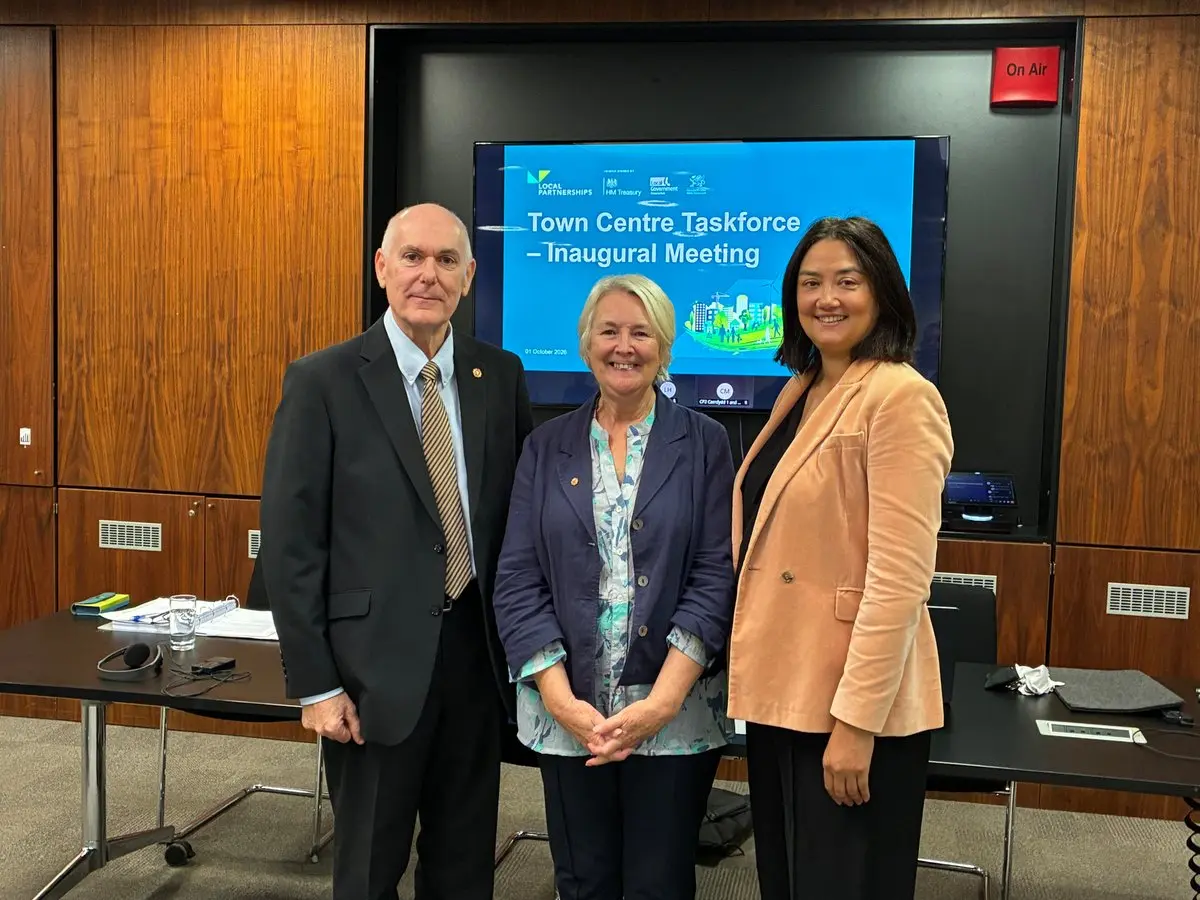
The Welsh Government’s Town Centre Taskforce met for the first time on Thursday, marking the start of a new phase of work aimed at reshaping Wales’s town centres.
Created to deliver practical, expert advice, the taskforce will examine how town centres can evolve beyond traditional retail to become vibrant, mixed‑use hubs for living, working and community life.
Professor Simon Gibson CBE and Tamsin Ramasut were named as co‑chairs on 11 August, bringing together senior experience from academia and the private sector.
The 17‑strong panel draws on a wide range of expertise, including business, local government, regeneration, planning, transport, housing and community development.
Among those taking their places at the inaugural meeting were Sioned Williams, head of Gwynedd Council’s Economy & Community Department, and Cris Tomos, chief executive and enterprise coordinator at PLANED.
“Our town centres are changing.” They’re no longer just places to shop, but places where people live, work, access services and take part in community life.
This Taskforce will look at how they can continue to evolve as diverse, mixed‑use places that support businesses and communities. This work builds on action already under way, including permanent business rates support which, subject to Senedd approval, will give eligible hospitality and leisure businesses a 30 per cent reduction in their rates bills from April 2027.
I’m grateful to everyone giving their time and expertise.
Minister Gwenllian’s remarks underline the shift from a retail‑centric model to a broader vision that recognises town centres as essential social and economic ecosystems.
One of the first policy levers the taskforce will consider is the proposed permanent business rates relief for eligible hospitality and leisure operators, a measure that awaits Senedd approval.
If enacted, the 30 per cent cut slated for April 2027 aims to stabilise cash‑flow for businesses still recovering from pandemic‑related disruptions.
The taskforce has been given a tight timetable, with a focused programme of work set to produce a suite of evidence‑informed recommendations for Welsh Ministers in the new year.
Members are expected to combine data analysis with on‑the‑ground insights, ensuring that proposals are both realistic and grounded in the lived experience of Welsh towns.
Local authorities will play a pivotal role, providing case studies that illustrate successful regeneration projects and highlighting obstacles that persist across different regions.
Academic input, led by Professor Gibson, will supply rigorous research on trends such as changing consumer behaviour, digital commerce and the impact of transport connectivity on town‑centre vitality.
Business representatives, including Tamsin Ramasut, will bring forward the perspectives of retailers, hospitality firms and property developers, stressing the need for flexible planning frameworks.
The taskforce’s remit also covers housing, recognising that integrating affordable homes into town‑centre precincts can boost footfall and create a more sustainable population base.
Transport considerations will focus on improving public‑service links, cycling infrastructure and parking strategies to make town centres more accessible without encouraging excessive car use.
By drawing on this multidisciplinary expertise, the taskforce aims to avoid generic recommendations and instead deliver targeted actions that can be implemented by Welsh Ministers within the next twelve months.
Stakeholders have been urged to contribute evidence and local knowledge throughout the consultation phase, ensuring that the final report reflects the diversity of Wales’s urban and rural communities.
With the inaugural meeting now concluded, the taskforce will convene regularly over the coming months, reviewing progress against its objectives and refining proposals ahead of the formal submission.
Welsh Ministers have signalled that the recommendations will be taken forward as part of a broader strategy to secure resilient, thriving town centres that support both economic growth and community wellbeing.