
Dyslexic entrepreneur Steph Hind leads AI benefits firm Heka
Steph Hind, diagnosed with dyslexia at five, co‑founded Heka and now runs a multi‑million pound AI benefits business, urging support for neurodiverse talent.
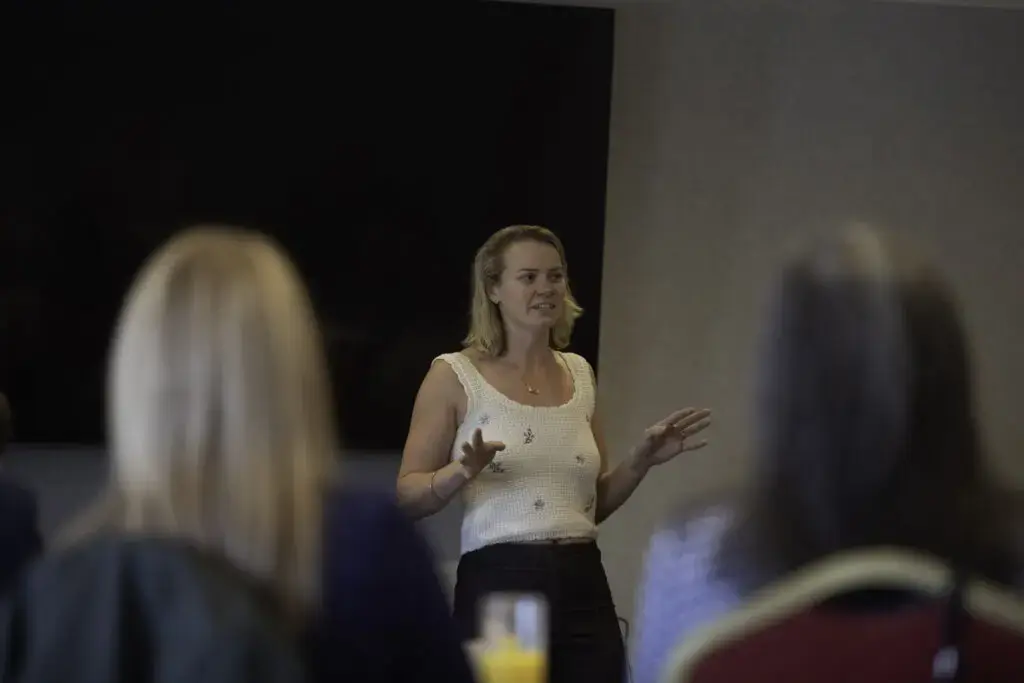
Steph Hind, a dyslexic mother of two from Hawarden, has taken the helm of Heka, an AI‑driven employee benefits firm now valued at several million pounds.
Speaking to the Wrexham Business Professionals committee at Hotel Wrexham, Hind said her own experience of learning difficulties inspired the company’s personalised approach.
Diagnosed with dyslexia at the age of five, Hind struggled through primary school, receiving a single‑digit score for spelling and dreadfully slow reading aloud.
“I was getting one out of 10 for my spelling and I really hated reading out loud because I was very slow at it,” she recalled.
She added that teachers’ public reading requests triggered anxiety, fearing she would be labelled “stupid”.
After repeating Year 2 and finishing at the bottom of her sets, Hind transferred to a new school in Year 3 where she received one‑to‑one dyslexic support for the first time.
“The way that I was thinking was different, but I wasn’t ‘just slow’.” It was such a turning point, because all of a sudden everything clicked and it changed my life,” she said.
Early intervention enabled her to progress to sixth form, then to university where she graduated with a first‑class degree.
In partnership with her husband Alex, Hind co‑founded Heka, a firm that uses artificial intelligence to match employees with bespoke benefits packages.
Heka now supplies its services to a roster of global organisations, including leading banks and law firms across the UK.
“I created Heka because I have had first‑hand experience of going through school thinking ‘this wasn’t built for me’,” Hind explained.
She argued that neurodiverse talent brings resilience and a willingness to go the extra mile, qualities she believes are undervalued in traditional recruitment.
“If you have gone through life in your early days and had to find that extra layer of resilience, then who wouldn’t want to hire somebody who is more resilient and who is used to those challenges?” she said.
Hind warned that neglecting neurodiversity represents an economic loss, urging businesses to build scaffolding that turns personal challenges into organisational advantage.
“When it comes to neurodiversity talents, I think when we give people the right support, it is not just a personal win, it is an economic one,” she asserted.
She called for regional leaders in North Wales to champion neurodiversity as a driver of growth rather than a problem to accommodate.
Dr Faye Favill, Special Needs Coordinator at St David’s College, Llandudno, also addressed the meeting, highlighting that neurodiverse employees often excel in creativity, problem‑solving, pattern recognition and lateral thinking.
“Businesses could miss out on these skills if recruitment continues to focus too heavily on traditional qualifications,” Dr Favill warned.
Committee member Ian Edwards said the event should prompt deeper consideration of neurodiversity among local firms.
“I would hope the meeting allowed people to go away and think more deeply about neurodiversity than perhaps they have done in the past,” he remarked.
Louise Harper echoed the sentiment, noting the importance of support structures.
“It was interesting to hear about how if the right support is in place, we can all benefit from the skills neurodiverse people have,” she observed.
Hind’s story, from a child terrified of reading aloud to the chief executive of a thriving tech‑enabled business, underscores the transformative impact of early, targeted assistance.
She concluded that embracing diverse ways of thinking can reshape the benefits landscape and, more broadly, the Welsh economy.