
Scaled‑back wellness retreat wins planning approval near Mathry
The original application, submitted by Gayle McFarlane in July, sought to convert existing farm buildings and add new structures, including stargazing domes, to create a rural wellness centre.
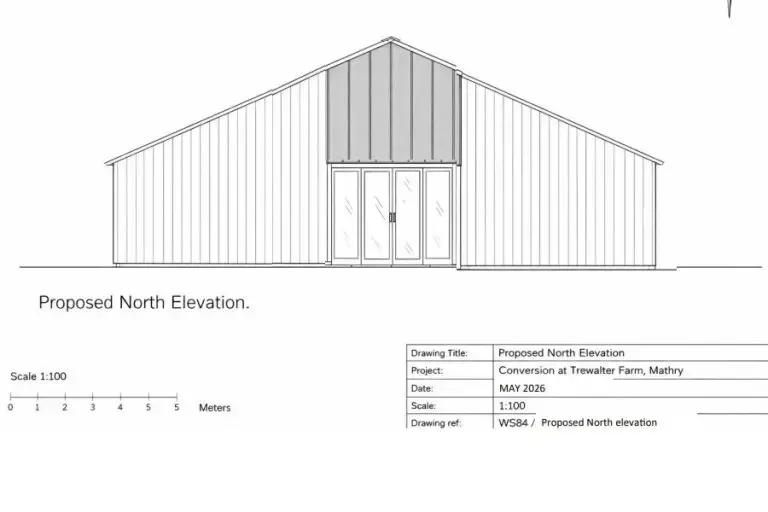
A revised plan for a yoga and therapy retreat at Trewallter Llwyd, west of Mathry, has been granted planning permission by Pembrokeshire County Council after a previous, larger scheme was rejected.
The original application, submitted by Gayle McFarlane in July, sought to convert existing farm buildings and add new structures, including stargazing domes, to create a rural wellness centre.
Planners refused the proposal, stating it lacked “robust justification” demonstrating that the proposed use required a countryside location.
The supporting statement for the initial scheme described it as “a high‑quality, low‑impact rural enterprise centred on wellbeing, nature connection and immersive dark skies experiences ‘Nightfall’,” and added that “the development will support sustainable rural tourism and is fundamentally shaped by — and reliant upon — the environmental qualities of its countryside location.”
It also claimed the project was “conceived as a nature‑led retreat, where landscape, tranquillity and environmental quality form the core of the visitor experience rather than a secondary backdrop.”
Following the refusal, the applicant submitted an amended plan that removes the domes and limits development to the existing agricultural building and its immediate hard‑standing.
The revised proposal is described as focusing “exclusively on the productive reuse of an existing agricultural building” for “a small‑scale employment‑generating wellness business incorporating yoga, therapy and wellbeing facilities.”
In the new application, the applicant argued that the existing structure could accommodate the new use without extensive alteration and that the works would not cause significant harm to the wider landscape.
The council’s delegated report had previously accepted that “the proposed use represents an employment activity and that the existing building is capable of accommodating that use without extensive alteration.” It also accepted that the associated works would not result in significant harm to the wider landscape setting.”
Further, the revised plan states: “The revised proposal has been reduced further.” The previously proposed wellness domes have been removed entirely.
The development is now confined to the existing agricultural building, existing hard‑standing and ancillary external works directly associated with the operation of that building.”
After reviewing the amended application, planners concluded that the reduced scheme met the required criteria for countryside development.
“The site is located in the countryside, where the proposal derives benefit from the tranquil rural setting of the site and the relationship with the surrounding natural environment forms an integral component of the wellbeing experience being offered,” the council’s decision notice read.
Local residents had expressed mixed feelings during the initial consultation, with some welcoming the prospect of a new rural enterprise and others concerned about visual impact.
The approval now allows the conversion work to commence, subject to standard building regulations and any conditions imposed by the council.
Construction is expected to create a modest number of jobs, aligning with the council’s aim to support sustainable rural tourism and employment.
Gayle McFarlane confirmed the project will proceed as outlined, emphasising the focus on “productive reuse” and the importance of preserving the site’s natural character.
The decision marks a shift from the ambitious original vision to a more modest, site‑specific development that balances commercial ambition with environmental stewardship.