
Welsh scholars chart global battles over public statues
Swansea University historians publish a comparative study of how communities worldwide contest and reinterpret controversial monuments.
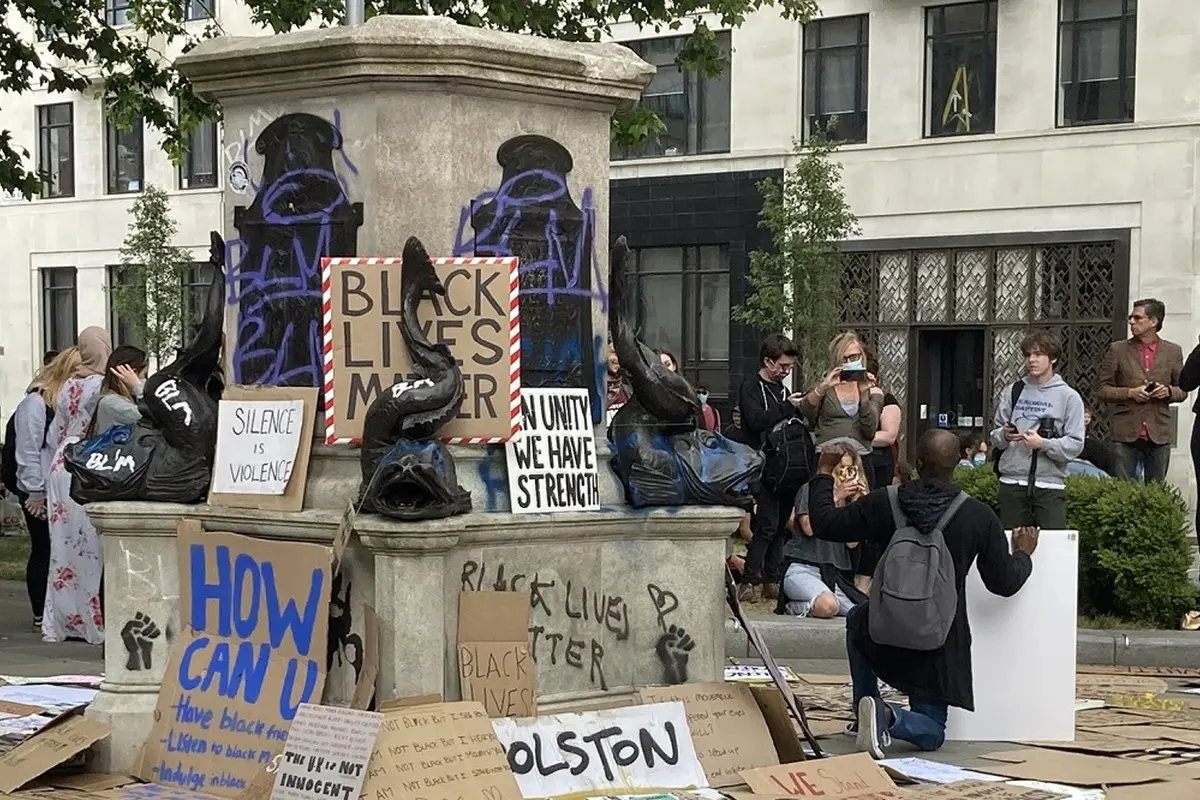
Historians from Swansea University have released a new volume that maps how societies worldwide grapple with statues linked to painful pasts. The book, Contested Histories: Global Perspectives on the Past, Present and Future of Public Monuments, assembles ten essays that examine cases from Bosnia and Herzegovina to the United States.
Edited by Dr Simon John, Associate Professor of Medieval History, Professor Tomás Irish of Modern History and graduate researcher Hannah Lyons, the collection is published by Bloomsbury Academic. Its genesis lies in an international conference hosted by Swansea in 2021, convened after the toppling of Edward Colston’s statue in Bristol the previous year.
Contributors explore why monuments are erected, how their meanings shift, and the range of responses that follow, from artistic interventions to outright removal. One essay analyses the contested statue of Cecil Rhodes at Oxford, while another revisits the now‑toppled Colston monument in Bristol, illustrating how historic figures are reassessed in contemporary debates.
Geographic breadth includes examinations of colonial memorials in India, post‑war statues in Italy, and the legacy of Confederate monuments in the United States. In the Philippines, scholars trace how public art reflects the nation’s struggle with its martial‑law past, and in Libya, the removal of Gaddafi-era sculptures is linked to broader political transformation.
Across the case studies, the authors argue that monuments are never static; they are continually re‑interpreted by activists, artists and local communities. “Whether it’s the statue of Rhodes in Oxford or the now‑toppled statue of Colston in Bristol, monuments continue to provoke controversy in the twenty‑first century.”
The guiding aim of this volume is to draw lessons from how past societies have responded to controversial monuments, better to understand the controversies of our own age, and how these debates might unfold in the future.” – Dr Simon John
Professor Irish highlights the book’s global scope, noting that the controversies pre‑date the heightened attention of 2020. “Contested Histories is an important book because it highlights how and why public monuments have generated controversies across the globe in the twentieth and twenty‑first centuries.”
While many of these issues gained heightened public prominence in the summer of 2020, the volume shows that monuments have long histories of being contested, and that this will continue – and take new forms – in the decades ahead.” – Professor Tomás Irish
The volume also surveys how new forms of commemoration are emerging, such as temporary installations that invite public dialogue without permanently altering the built environment. One chapter details a community‑led project in Dublin that replaced a contentious war‑time statue with a digital plaque, allowing visitors to access layered histories via QR codes.
In contrast, a study of a Bosnian town records how residents have physically altered a Yugoslav‑era monument, adding graffiti that re‑claims the space for a multi‑ethnic narrative. Across the essays, a common thread emerges: the act of confronting a monument often sparks broader conversations about identity, memory and power.
By juxtaposing disparate locales, the book demonstrates that the politics of public memory are both locally rooted and globally resonant. Contested Histories is available in hardback and ebook formats, offering scholars, policymakers and the interested public a comparative toolkit for navigating the fraught terrain of public monuments.