
Thirty‑seven abandoned boats cleared from Afon Teifi estuary
£80,000 Crown Estate project removes derelict vessels from Cardigan’s Afon Teifi, improving water quality and habitat safety.
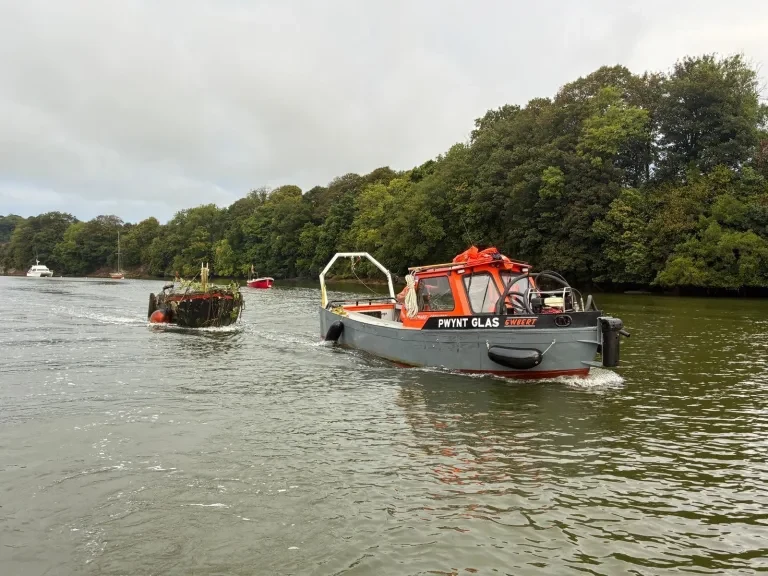
Thirty‑seven derelict vessels have been cleared from the Afon Teifi estuary in Cardigan after an £80,000 clean‑up funded by The Crown Estate.
The operation, delivered by land‑and‑sea managers Cooke & Arkwright, also removed a number of abandoned dinghies, a canoe and assorted debris that had littered the river system.
Local authorities had warned that the rotting hulls posed a growing threat to water quality, navigation and the visual appeal of the popular estuary.
“By removing these abandoned vessels, we have reduced the risk of pollutants entering the river system, improved the appearance and accessibility of the estuary, and helped safeguard this important natural habitat for future generations,” said Samuel Lynn, graduate surveyor at Cooke & Arkwright.
The Crown Estate committed the full £80,000 to identify, extract and responsibly dispose of the abandoned craft, part of a wider nature‑recovery programme across Wales.
Before any work began, Afon Teifi Fairways Ltd carried out a vessel‑identification survey to trace owners where possible, before issuing formal notices to the responsible parties.
Specialist marine contractor Bluepoint Marine then undertook the physical removal, navigating the tidal estuary to lift each boat without damaging the surrounding habitat.
Andy Farrell, managing director of Bluepoint Marine, described the task as technically demanding, noting that careful planning was required to avoid further environmental impact.
All thirty‑seven vessels, together with the smaller watercraft and miscellaneous waste, were lifted out of the water and taken to licensed disposal facilities.
The Afon Teifi supports a rich array of marine life, from otters and salmon to a variety of seabirds, and is a key attraction for anglers, kayakers and tourists.
Environmental officers warned that the deteriorating hulls could release micro‑plastics, glass‑reinforced plastic fragments and residual fuels into the estuary.
“The scheme shows what can be achieved through local partnership working,” said Ryan Pratt, coastal and leisure portfolio manager at The Crown Estate.
Pratt added that the clean‑up tackled a long‑standing problem, removing hazards and improving conditions for wildlife, water users and the wider community.
John Taylor, director of Afon Teifi Fairways Ltd, said residents and visitors had already noticed a marked improvement in the river’s appearance.
A spokesperson for Ceredigion County Council highlighted the Teifi as one of the county’s most important natural assets, stressing that the project would help protect the estuary for future generations.
The removal forms part of The Crown Estate’s broader coastal management strategy, which aims to restore habitats and enhance resilience along the Welsh shoreline.
Local fishermen welcomed the clearance, noting that the removal of obstructive hulls should make navigation safer and reduce the risk of entanglement for nets.
Tourism operators also expect a boost, with the cleaner waterway offering a more attractive backdrop for boat tours and coastal walks.
Environmental groups have praised the initiative, calling it a tangible step towards mitigating the cumulative impacts of abandoned marine debris.
Bluepoint Marine confirmed that all extracted material will be recycled or disposed of in accordance with UK environmental regulations.
The project demonstrates how coordinated funding, surveying and specialist execution can address legacy pollution in a sensitive coastal environment.
With the estuary now free of the derelict fleet, officials plan to monitor water quality and biodiversity indicators over the coming months to assess the long‑term benefits.