Welsh Language Commissioner steps down from role
Rhun ap Iorwerth said, “I have today accepted the resignation of the Welsh Language Commissioner, Efa Gruffudd Jones for personal reasons.” I thank her for all her work since her appointment in…
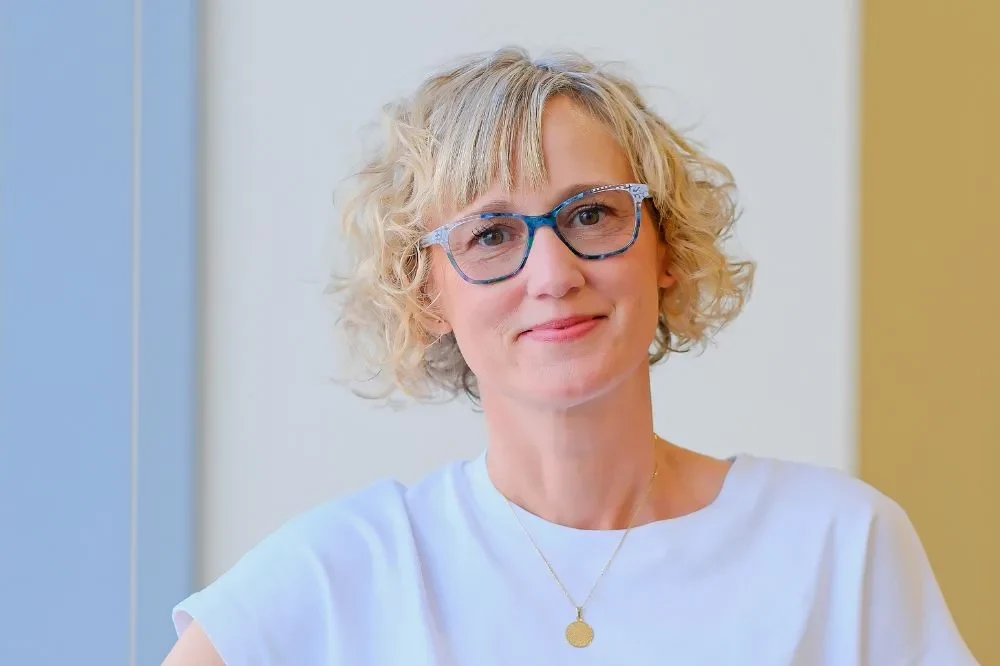
Welsh Language Commissioner Efa Gruffudd Jones has resigned with immediate effect, citing personal reasons. The First Minister, Rhun ap Iorwerth, confirmed the departure in a written statement and announced that Deputy Commissioner Lowri Williams will assume the commissioner’s functions until a new appointment is made.
Rhun ap Iorwerth said, “I have today accepted the resignation of the Welsh Language Commissioner, Efa Gruffudd Jones for personal reasons.” I thank her for all her work since her appointment in 2023. A full public appointments process will now be undertaken for a new Commissioner.
In the meantime, Ms Gruffudd Jones appointed Lowri Williams as Deputy Welsh Language Commissioner, who will therefore exercise the functions of the Commissioner until the appointment process concludes. No further comment was provided on the reasons behind the resignation.
The resignation follows a wave of criticism aimed at the commissioner’s handling of place‑name decisions. Language campaigners have repeatedly voiced concerns about “failures to regulate properly”, arguing that the office has weakened a range of language‑rights policies.
Cymdeithas yr Iaith described the commission as “a body that promotes the Welsh language through soft approaches, siding with institutions while becoming increasingly dismissive of ordinary people’s experiences.” The group has highlighted a decline in complaint investigations and the relocation of the commissioner’s office to the Welsh Government’s headquarters.
The controversy intensified after the final decision on the Welsh name for Varteg was announced. The commissioner had recommended the use of “Y Farteg”, citing the national standard reference work, A Gazetteer of Welsh Place‑Names (University of Wales Press, 1967). The full guidance read: “Y Farteg is the form recommended in the national standard reference work, A Gazetteer of Welsh Place‑Names (University of Wales Press, 1967).”
One should not deviate from its recommendations without good reason. “The form Y Farteg would ideally be the only form used in both Welsh and English, as it is a Welsh name and the ‘English form’ represents a non‑standard spelling.” It should be noted, however, that the form Varteg is commonly used, and that this is the only form officially adopted by the local authority.
“The Welsh definite article (y/yr) should be included in full and capitalised when preceding the Welsh form on signage where the place‑name is the main focus of the sign.” Further advice on how to display place‑names on signage can be found in the technical guidance on our website. “When writing this name as part of a Welsh sentence, the definite article should be shown in lower case, e.g.”
‘yn y Farteg’ (in Varteg). It can also be contracted following a vowel in accordance with the rules of Welsh grammar, e.g. ‘mynd i’r Farteg’ (going to Varteg).
Residents in the village on the outskirts of Pontypool had feared ridicule if the “F” spelling appeared on road signs, arguing that the Welsh alphabet contains no “V.” In 2013 Torfaen Borough Council had agreed to retain the “Varteg” spelling in both languages, a decision that was never adopted nationally.
In January last year the commissioner approached Torfaen Council to revisit the issue, resulting in an agreement on 54 place names to be recognised in both English and Welsh. The list confirmed that Varteg would continue to be used in both languages, while other areas such as Fairwater in Cwmbran and Sebastopol retained their existing spellings.
Peter Jones, the council’s cabinet member for corporate governance, noted that the Welsh language compliance notice, in place since 2016, requires treating Welsh no less favourably than English. A report by the council’s Welsh language policy officer, Alan Vernon‑Jones, warned that the failure to adopt the names nationally had caused confusion for external organisations relying on the commissioner’s website.
Earlier this year Gruffudd Jones called for an expansion of Welsh language standards, marking a decade since their introduction at the National Eisteddfod. She urged that the next ten years be used to strengthen standards and support the Cymraeg 2050 aspirations.
She also highlighted that existing promotion strategies had yet to reach their full potential and should play a greater role in creating everyday opportunities for speaking Welsh. At a conference in Cardiff, she raised concerns about BBC cuts to minority‑language services, warning that such reductions could threaten the promotion of regional languages.