
Welsh art exhibition draws 39,000 visitors at Venice Biennale
The Sownd exhibition marks Wales’ return to the Venice Biennale, attracting thousands and sparking debate on landscape and identity.
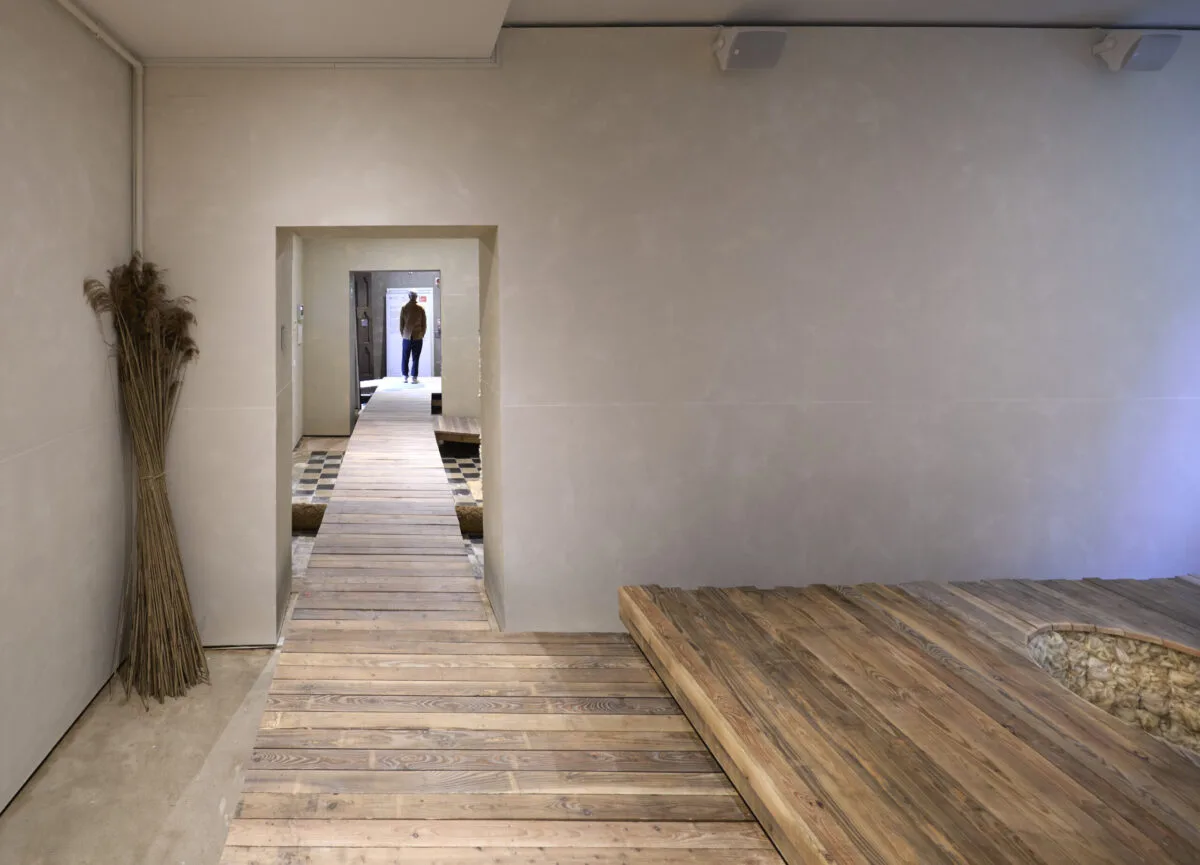
More than 39,000 visitors have attended the Welsh pavilion at the Venice Biennale since it opened in May, marking a significant cultural milestone for the nation. The exhibition, titled *Sownd*, represents Wales’ return to the world-renowned festival after a seven-year hiatus and has emerged as one of the most successful iterations to date. With just one month remaining before the event concludes, the artists are urging visitors to experience the installation at the Istituto Santa Maria della Pietà in the Castello district.
Manon Awst and Dylan Huw were selected to represent Wales this year, working in close collaboration with curator and joint project director Steffan Jones-Hughes of Oriel Davies. Catherine Spring of Oriel Myrddin also served as joint project director, alongside a wider team of creatives who helped shape the exhibition’s narrative. This collective effort has driven the project’s international profile and critical acclaim.
Over the past six months, *Sownd* has generated substantial dialogue regarding landscape and identity in both Venice and Wales. These discussions were supported by Art Fund and the Colwinston Chae Trust, which funded the *Sownd [ar safle]* site-specific live art events. The initiative successfully bridged the gap between the Venetian installation and on-the-ground activities within Welsh communities.
Between June and September, Awst and Huw were joined by commissioned artists at several key locations across the country. These included Cors Bodeilio on Ynys Môn, Cors Caron in Ceredigion, and Cors Crymlyn in Swansea. The events also extended to the 2026 National Eisteddfod, where conversations and film screenings further explored the themes of the exhibition.
The project has also served as a crucial springboard for early career talent. Nineteen early career artists acted as invigilators during the Biennale, gaining valuable professional experience while exhibiting their own work. This component highlights the broader impact of the project on the Welsh arts ecosystem beyond the main pavilion.
Critical response has praised the exhibition for its avoidance of regional nostalgia. Writing in Artlyst, Paul Carter Robinson noted that “materials gathered from Welsh peatlands sit alongside organic specimens from the Venetian lagoon, damp transitional landscapes that preserve ecological histories while mirroring the vulnerabilities of minoritised languages.” This juxtaposition creates a powerful visual and conceptual link between the two locations.
Robinson further observed that “Huw’s text and sound weave through tactile environment, transforming the rooms into something genuinely multi-sensory.” He described the pavilion as “a living archive that raises serious questions about what survives, what gets buried, and what it means to maintain a language and a culture against the pressure of larger forces.”
The final weekend of the 61st Venice Biennale, running from 21 to 22 November, will feature a special transformation of the exhibition space. Stanza 4 of the *Sownd* installation will become a record of the project’s site-specific evolution in Wales. Video documentation by filmmaker Liam Martin will loop continuously, layering newly commissioned live work presented on Welsh peatlands onto the Venice installation.
A diverse group of featured artists will contribute to this final presentation. The lineup includes Anushiye Yarnell, Catrin Menai, Bob Evans, Naomi Pearce, and Eddie Ladd. Sited contributions from commissioned writers Becca Voelcker and Carwyn Graves will also be displayed, alongside photographic prints by Gwenno Llwyd Till, Lowri Page, and Sam Stevens.
The artists will be present in the space all day on Saturday 21 November to share their work and mark the Venice closing of this multi-platform project. A reading by Becca Voelcker is scheduled for 11am, offering visitors a direct engagement with the literary elements of the exhibition. This final gathering serves as a culmination of the collaborative efforts that defined the project.
Maggie Russell, Chair of the Arts Council of Wales, congratulated the team on their achievement. She stated: “I’d like to congratulate Manon, Dylan, Steffan, Catherine and everyone at Oriel Davies and Oriel Myrddin on these visitor numbers and the success of *Sownd*, both in Venice and here in Wales through *Sownd [ar safle]*.”
Russell also expressed gratitude to the cohort of invigilators, noting: “I’d also like to thank this year’s cohort of invigilators, without whom we wouldn’t be able to open the doors – I hope this has been a rich learning experience for you as you start your art careers.” She acknowledged the dedication of Arts Council of Wales colleagues in supporting the initiative.
The strategic intent behind the return to La Biennale was to propel Welsh visual arts onto a global stage. Russell explained: “Our intention in returning to La Biennale after a seven-year hiatus was to propel Welsh visual arts onto a global stage and attract international interest and debate around Welsh visual arts.”
She emphasised the importance of maintaining a visible presence in the international arts community. “It is essential that we own that space in the world and create international experiences and connections for galleries, curators and artists that will develop the visual arts in Wales,” Russell added. The project’s success underscores the potential for Welsh culture to engage meaningfully with global audiences.