
Is Wales a Country?
An authoritative look at Wales’s constitutional position, its devolved powers and why it is recognised as a country.
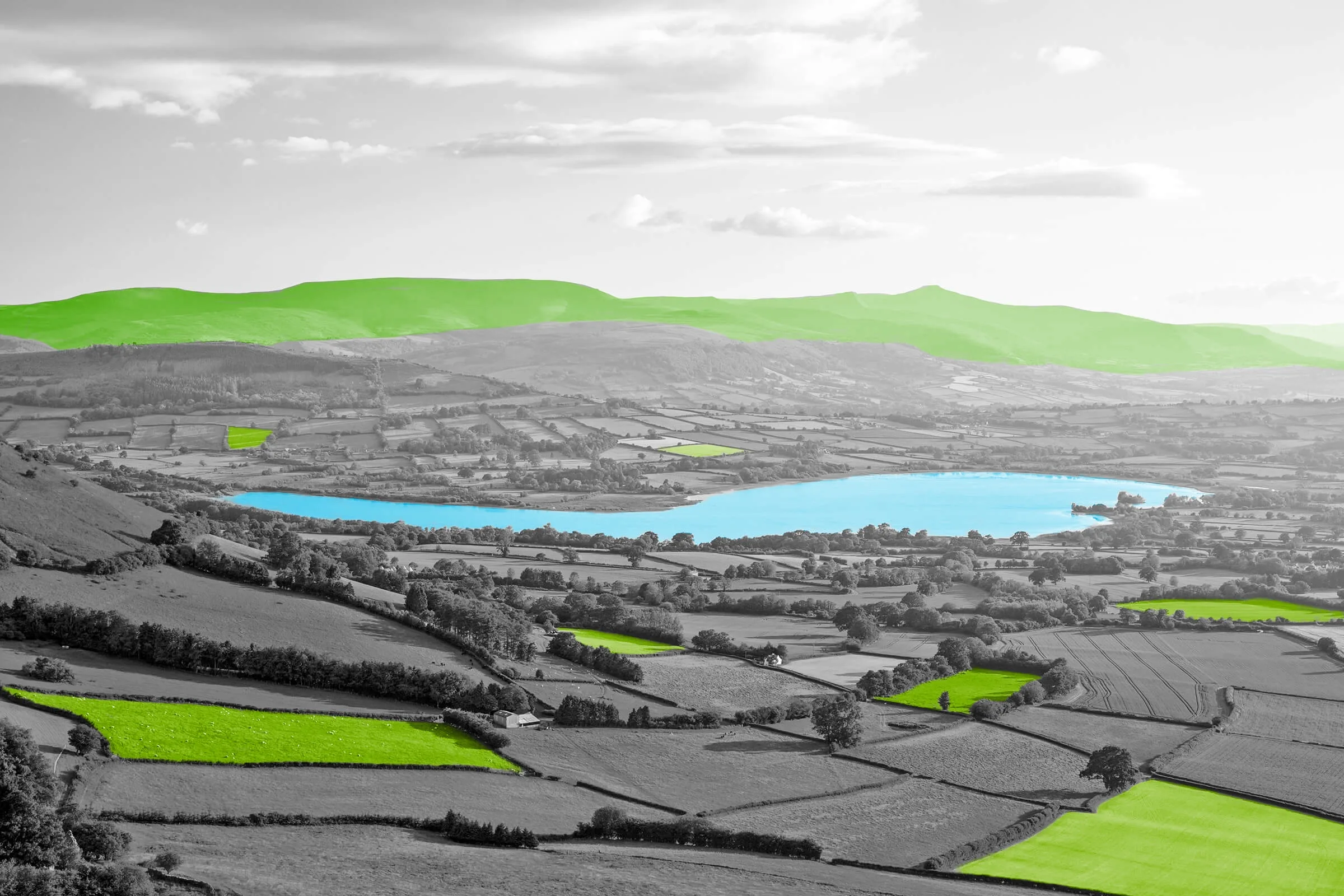
Wales is officially recognised as a country within the United Kingdom, a status that often sparks debate among the public and abroad.
The United Kingdom of Great Britain and Northern Ireland is a sovereign state comprising England, Scotland, Wales and Northern Ireland, each described as a country in its own right.
Legal definitions stem from centuries of constitutional development, beginning with the Statute of Rhuddlan in 1284 which annexed the Principality of Wales to the English Crown.
That annexation did not dissolve Wales as a distinct entity; it merely placed Welsh lands under English law while preserving a separate cultural identity.
The 1707 Act of Union merged the English and Scottish Parliaments, creating Great Britain, but Wales remained attached to England rather than forming a separate kingdom.
When the 1801 Act of Union added Ireland, the United Kingdom of Great Britain and Ireland was formed, still encompassing Wales as a component country.
Following the partition of Ireland in 1921, the current United Kingdom of Great Britain and Northern Ireland emerged, with Wales retaining its status as a country.
Modern constitutional arrangements grant Wales devolved powers through the Senedd Cymru, established under the Government of Wales Act 1998 and expanded in 2011.
The Senedd now legislates on matters such as health, education, agriculture, transport and the environment, reflecting a degree of self‑government.
Nevertheless, reserved matters – defence, foreign affairs, immigration and overall fiscal policy – remain the remit of the UK Parliament at Westminster.
This dual‑layered governance structure underpins the description of Wales as a “country within a country”.
Internationally, Wales does not appear as a separate United Nations member; the UN recognises the United Kingdom as the sovereign state.
Consequently, Wales, like its fellow nations, is listed as a constituent nation rather than an independent member state.
Public perception sometimes conflates the historic title “Prince of Wales” with the notion of a principality, a misunderstanding rooted in medieval arrangements.
Edward I’s conquest of northern Wales in the 13th century created a principality that was largely limited to that region, not the whole of Wales.
The title “Prince of Wales” has persisted as a ceremonial designation for the heir apparent to the British throne, but it does not define Wales’s constitutional status.
Wales’s cultural distinctiveness – its own language, national symbols, literature and festivals – reinforces its identity as a nation.
Welsh language statistics show that over 800,000 people in Wales claim ability to speak Welsh, a figure that underpins policy decisions in education and public services.
Economic data from the Office for National Statistics indicates that Wales contributes roughly 5 % of the UK’s gross domestic product, underscoring its role in the wider economy.
In fiscal terms, Wales receives a block grant from the UK Treasury, calculated using the Barnett formula, which funds devolved services.
Recent debates in Westminster have focused on the adequacy of this funding, but they do not alter Wales’s constitutional classification.
Legal scholars agree that the term “country” in the UK context denotes a nation with a distinct identity and devolved institutions, not full sovereignty.
Thus, while Wales does not possess independent diplomatic representation, it enjoys recognised self‑government within the United Kingdom’s framework.
The clarity of Wales’s status is reflected in official documents, including the UK Government’s “Constitutional Reform and Governance Act” which lists Wales alongside England, Scotland and Northern Ireland as a country.
Educational curricula across the UK now teach that Wales is a country, a fact reinforced by the presence of the Welsh flag and national anthem at official events.
In summary, Wales is a country – a nation with its own language, culture and devolved legislature, operating under the umbrella of the United Kingdom’s sovereign state.