
Folly Farm submits plans to replace Highcroft house with three holiday bungalows
Folly Farm Adventure Park seeks council approval to demolish Highcroft and build three new holiday lets, sparking local debate.
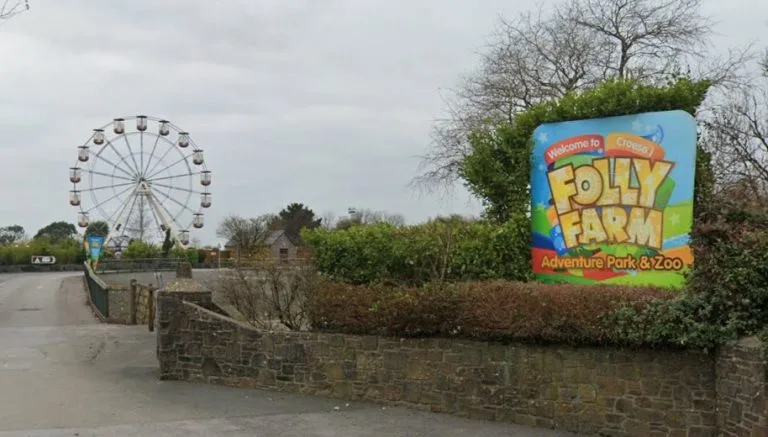
Plans to replace a historic house with three new holiday bungalows have been lodged with Pembrokeshire County Council for the popular Folly Farm Adventure Park and Zoo.
Managing director Chris Ebsworth, acting through A D Architectural Design Consultants, is seeking permission to demolish the nearby dwelling known as Highcroft and to develop three detached units on the same site.
The proposal would see the existing house and an adjoining workshop pulled down, the land re‑graded and three new holiday lets erected, each with its own parking space and private amenity area.
Folly Farm Holiday Park, situated on the outskirts of Begelly, has expanded its accommodation offering in recent years, adding a range of self‑catering units to complement the attraction’s day‑visit facilities.
According to the supporting statement submitted with the application, the current house occupies a disproportionate footprint on the site, leaving a large area of garden that is “excessive” and under‑used.
“The size of the existing dwelling in relation to the overall site is mis‑proportionate and there is at present an excessive area of garden area which isn’t utilised,” the statement reads.
Ebsworth argues that the new bungalows would make better use of the land and provide a “beneficial” boost to the ever‑growing holiday park.
The three proposed units would be built to the right of the existing park, a location already owned by Folly Farm, and would each feature private parking and dedicated outdoor space.
Folly Farm, which began as a modest diversification of a dairy farm in 1988, celebrated its 35th anniversary in 2023.
It now draws more than half a million visitors annually from across the United Kingdom and beyond, making it one of Wales’s most‑visited family attractions.
The site is best known for its blend of exotic and farmyard animals, fairground rides, adventure playgrounds and a large indoor vintage fairground that opened in 1996 and claims the title of Europe’s biggest of its kind.
Since adding a zoo component in 2002, the park has introduced several high‑profile species, including Wales’s only giraffes in 2009.
In 2020 the park celebrated the birth of a black rhino calf named Glyndwr, a tribute to late founder Glyn Williams.
Folly Farm remains a family‑run operation, with the grandchildren of the original founders still involved in day‑to‑day management.
The planning application will be considered by the county’s planning officers and then forwarded to the council’s planning committee for a decision later this year.
Local residents have been invited to comment on the proposal, with the council setting a deadline for written objections and support.
Opponents of the demolition argue that Highcroft is a locally recognised building that contributes to the rural character of the area.
Supporters contend that the current garden space is “under‑utilised” and that the new holiday lets would create additional accommodation for visitors, potentially extending stays and increasing revenue for the attraction.
Planning officers will assess the application against the council’s development plan, which seeks to protect the historic environment while encouraging sustainable tourism growth.
If approved, construction could begin in early 2025, with the new bungalows expected to be ready for guests by the summer of 2026.
The development would join a series of recent expansions at Folly Farm, which has steadily added new attractions and facilities to meet rising visitor numbers.
Critics of the plan warn that increased accommodation could put pressure on local infrastructure, including roads and public services.
Council officials have indicated that traffic impact studies will form part of the assessment, ensuring that any increase in visitor numbers does not overwhelm the surrounding community.
Should the council grant permission, the three new holiday lets would sit alongside existing self‑catering cabins and lodges, offering a broader range of options for families and groups.
The decision will be watched closely by both tourism operators and heritage groups, reflecting the delicate balance between development and conservation in rural Pembrokeshire.
Folly Farm’s management remains confident that the proposal aligns with the park’s long‑term vision of providing “ever‑growing” visitor experiences while making better use of its land assets.
County planners are expected to publish their recommendation in the coming months, after which the council’s planning committee will take the final vote.