
Powys chief urges backing for Sustainable Powys programme
Council chief Emma Palmer calls on councillors to stop opposition and embrace the Sustainable Powys plan after a panel’s nine recommendations.
Powys County Council’s chief executive has urged councillors to stop opposing the Sustainable Powys programme and to rally behind the plan after a recent panel assessment highlighted nine improvement recommendations.
The call came during the Governance and Audit Committee meeting on Friday 25 September, where councillors and independent lay members examined the authority’s response to the Panel Performance Assessment carried out in April.
The panel, composed mainly of councillors and senior staff from neighbouring authorities, produced a report with two sections dedicated to Sustainable Powys, focusing on the programme’s economic priorities and its digital and artificial‑intelligence strategy.
It also stressed that communicating the principles of Sustainable Powys to staff, residents and partners should be “a priority”.
Sustainable Powys is the council’s umbrella term for a suite of reforms aimed at reshaping services amid the funding crisis gripping local authorities across the UK.
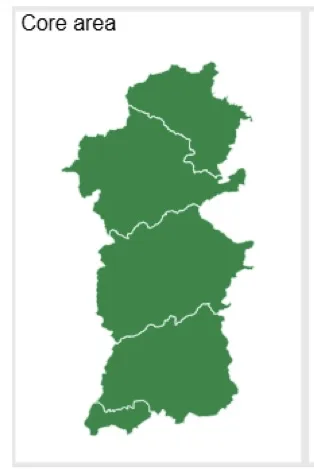
The scheme proposes dividing the county into five core service hubs centred on Brecon, Llandrindod Wells, Newtown, Welshpool and Ystradgynlais, with residents in outlying areas expected to travel up to an hour for access.
Critics on the council have warned that the reorganisation could leave vast swathes of Powys without essential services, while others have questioned the lack of tangible outcomes to date.
Emma Palmer, the council’s chief executive, told the committee that the opposition stemmed from a misunderstanding of the programme’s aims.
“It’s around the whole council understanding Sustainable Powys,” she said. “And the whole council needs to be part of taking Sustainable Powys forward rather than essentially opposing or simply saying they don’t understand.”
Palmer added that the council is “shaping” its services to reflect Powys’s changing demography and economy, a shift that requires clearer communication and broader buy‑in.
Independent lay member Gareth Hall echoed the need for a more resident‑focused narrative.
“I’d like to put myself in the shoes of the target audience, the citizens and residents of Powys and, as the report says quite rightly, it is not a one size fits all,” Hall said.
He continued, “We’re talking about communicating sustainable development principles.” When you put yourselves in their shoes in terms of their perspective of the council, it’s immediately on things like: potholes being filled, is my refuse being collected, car parking and are my kids getting the best education.”
Hall argued that people care more about outcomes than abstract principles, urging the council to showcase “positive constructive outcomes that have required hard, tough decision making by applying the principles of sustainable development”.
The committee noted the panel’s recommendation that the council prioritise clear, outcome‑focused messaging to rebuild public confidence.
It also highlighted the need to accelerate the digital and AI components of Sustainable Powys, which aim to streamline service delivery and reduce costs.
Council leaders have pledged to develop a communication plan that translates the programme’s technical goals into everyday benefits for residents.
Meanwhile, several councillors remain sceptical, insisting that any centralisation must be matched by demonstrable improvements in service quality and accessibility.
Palmer warned that continued resistance could jeopardise the council’s ability to meet its statutory duties under tightening fiscal constraints.
“We must work together to ensure Powys can thrive in the coming decade,” she concluded, urging colleagues to move beyond opposition and embrace a shared vision for sustainable development.