
Wrexham couple links dog’s rare heart tumour to contaminated land
A grieving couple urges a review of pet health data after their dog’s death, citing possible links to historic chemical dumping near Cefn Aqueduct.
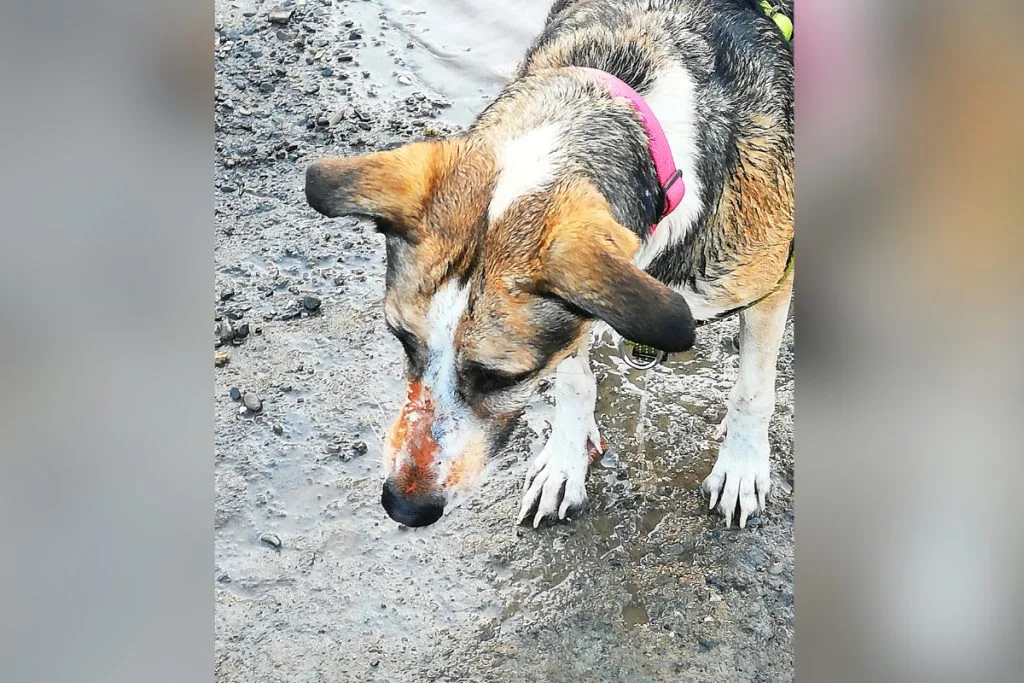
A Wrexham couple claim the death of their nine‑year‑old Labrador, Misty, may be linked to historic chemical contamination around the Cefn Aqueduct, prompting calls for a wider review of pet health records in the area.
Donna and Pete O’Brien say Misty was a healthy, four‑year‑old dog until a December 2019 walk near Ty Mawr turned unsettling.
“We never thought too much of it at the time,” said Donna. “It was December 2019 and we went out for a walk near Ty Mawr.”
“Misty loved running in the mud and swamps.” We were walking under the aqueduct and she ran off to play in some swampy land and when she came back she was covered in a sort of greasy orange film.
“At the time you think it might be copper or iron washing down through the landscape but it stank and it was sort of oily all over her coat.” It was kind of iridescent, it caught the light like oil would.
“When we got home we washed it off her and vowed not to go back but we had no idea what this stuff was.”
Veterinary notes show Misty began suffering periodic diarrhoea and vomiting from late 2022, and by early 2024 she was struggling to finish walks.
In April 2024 she started coughing up blood and bleeding from her nose, and ultrasound scans revealed a growth on her heart – a tumour type that affects just 0.19 % of dogs – alongside possible lesions on her stomach and lungs.
“When we watched that it made us sit up and take notice,” said Pete. “People were describing substances similar to what we washed off Misty – greasy, oily orange deposits.”
“Then we went to the meeting of the Monsanto Contamination Action Group and heard more stories that resonated.” “It’s worrying because a lot of people visit Ty Mawr and the aqueduct and if there is a risk those visitors are unaware – plus what if that is finding its way into the River Dee?”
“We can’t say for certain that Misty’s health was affected by contaminated land but because there are so many questions we can’t say it wasn’t.”
The couple’s concerns echo those raised by Cefn County Councillor Derek Wright at a Wrexham County Borough Council meeting on the proposed Notice of Motion to tighten monitoring of contaminated sites.
“Just a stone’s throw from Ty Mawr Country Park there are three areas I believe were settling ponds from the waste in Monsanto – one of which has always been fenced off.” “Wrexham Council had the fence renewed in about 2014 and is still fenced off now.”
Why are these areas fenced off? What is in there?
The fence is only three foot, there’s no signs on that say the chemicals that are in there or why they’re fenced off. “One of the ponds has now become a public footpath and it’s less than 130 yards away from the River Dee.”
Wrexham Council’s spokesperson countered that the deposits are the result of historic coal‑mining water, not industrial waste.
“The ocherous deposits along the banks of the River Dee and footpath adjacent to the Dee arise due to coal mine impacted water,” said the spokesperson. “There is at least one known adit – a horizontal mining access shaft – in this area.”
Pet health advocates argue that animals can act as early indicators of environmental hazards, developing symptoms years before humans show comparable effects.
“Dogs go everywhere,” said Pete. “Illnesses that take decades to develop in humans often progress much quicker in animals.”
“Data on pet health from local vets could perhaps fill in some of the gaps around just how much of an impact this historic dumping has had on the area.” “We don’t walk our dogs by Cefn Aqueduct any more but there are so many sites who knows what we and they are being exposed to.”
That’s why we need clear answers. “If medical data from vets shows clusters of rare diseases or conditions that might help indicate where we need to look for some of the undocumented sites around Wrexham.”
The O’Brien family hopes their campaign will spur a systematic review of veterinary records across Wrexham, seeking patterns that could confirm or refute a link between the region’s legacy contamination and rare pet illnesses.