
Conwy Council pushes ahead with rural school closures despite opposition
Council officers recommend shutting Ysgol Betws y Coed and Ysgol Ysbyty Ifan, sparking protests and petitions from local communities.
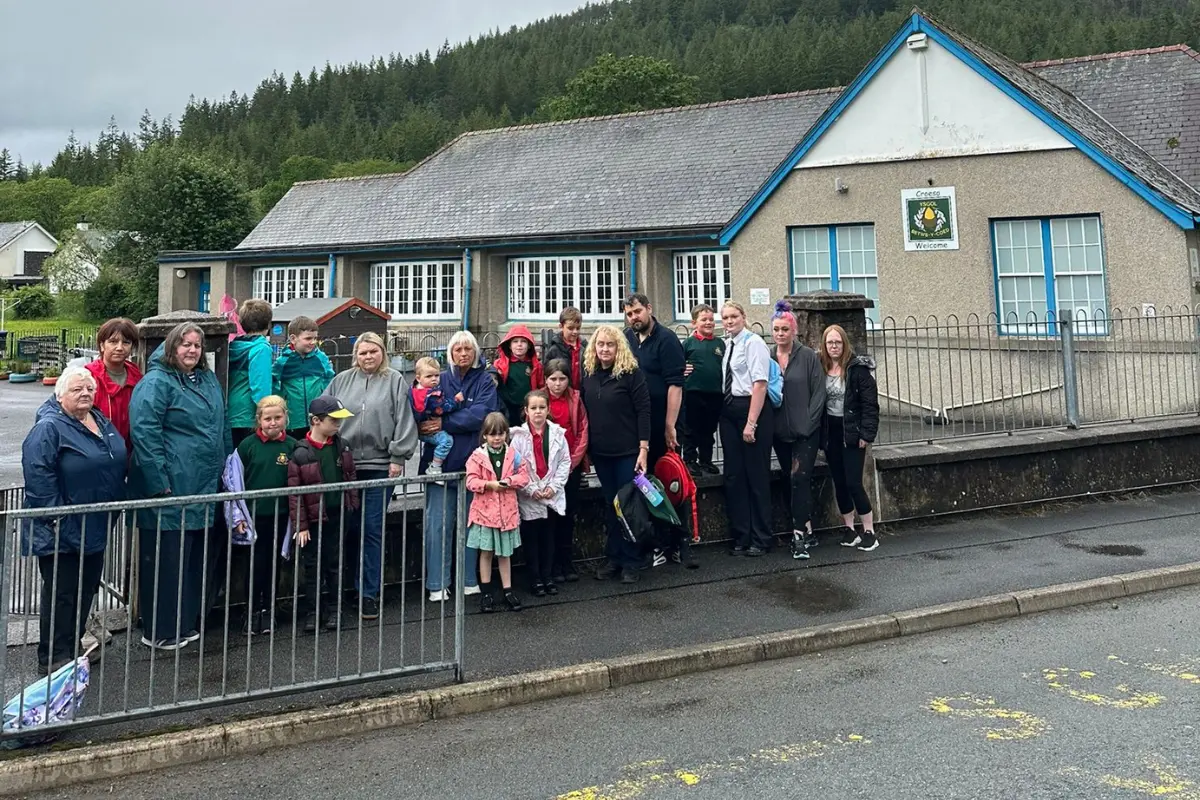
Conwy County Council officers have put forward a recommendation to shut Ysgol Betws y Coed and Ysgol Ysbyty Ifan, despite a public consultation that recorded strong local opposition.
The two rural primary schools, both earmarked for closure on 31 August 2027, serve sparsely populated communities in the county’s north‑west.
Ysgol Betws y Coed, which has a capacity for 100 pupils, was attended by just 14 children at the time of the consultation.
Ysgol Ysbyty Ifan, designed for 40 pupils, also had 14 pupils enrolled when the figures were recorded.
During the feedback period, residents submitted a petition bearing 612 signatures and logged 134 online objections against the Betws y Coed closure.
In the case of Ysbyty Ifan, 24 formal objections were lodged with the council.
Council officers concluded that the objections did not constitute new evidence sufficient to alter the proposed plan.
They argued that the schools’ low enrolments, surplus places and ongoing financial pressures justified the closures.
Estyn, the education inspectorate, previously noted “minimal evidence” that the council had fully considered the impact on pupils’ learning and wellbeing.
Nevertheless, the inspectorate acknowledged the council’s rationale centred on the schools’ under‑capacity and fiscal constraints.
Both schools have been part of a formal federation since March 2016, linked with Ysgol Dolwyddelan and Ysgol Capel Garmon under a single governing body and headteacher.
Parents of Betws y Coed warned that the loss of the school could turn the area into “the next Abersoch”, a reference to a nearby village that has seen rapid development and rising house prices.
Local campaigners argue that the closures would increase travel times for young children, disrupt community cohesion and place additional pressure on neighbouring schools.
Council officials maintain that the federation model already provides a framework for shared resources and that the closures would free up funds for reinvestment elsewhere in the education system.
The recommendation will be debated by the council’s Cabinet on Tuesday, 6 October, at the Coed Pella headquarters.
Cabinet members are expected to vote on whether to endorse the officers’ proposal or to revisit the decision in light of the public response.
If the closures proceed, pupils from Betws y Coed are slated to transfer to Ysgol Dolwyddelan, while those from Ysbyty Ifan will move to Ysgol Capel Garmon.
Both receiving schools have indicated they have capacity to accommodate the additional learners, though they have not detailed any specific adjustments to staffing or facilities.
Transport arrangements for the displaced pupils have yet to be finalised, with the council indicating that bus routes will be reviewed.
Community groups have called for a transparent impact assessment, citing concerns over the social and emotional effects on children forced to travel longer distances.
The council’s finance department estimates that closing the two schools could save approximately £1.2 million annually, funds that would be redirected to other educational priorities.
Opponents counter that the short‑term savings may be outweighed by long‑term costs associated with increased travel, potential declines in enrolment at neighbouring schools and the loss of a community hub.
Local councillors representing the affected wards have pledged to raise the issue at the upcoming Cabinet meeting, urging a reconsideration of the closures.
The debate is expected to draw heightened attention from rural education advocates across Wales, who see the case as indicative of broader pressures on small schools.
Stakeholders will be watching the outcome closely, as the decision will set a precedent for how financial pressures are balanced against community needs in the county.
Regardless of the Cabinet’s verdict, the issue is likely to remain a focal point of local discourse throughout the remainder of the year.