
South West Wales pushes unified investment proposition
Leaders gather in Llanelli to present a coordinated plan for economic growth, energy, transport and housing across South West Wales.
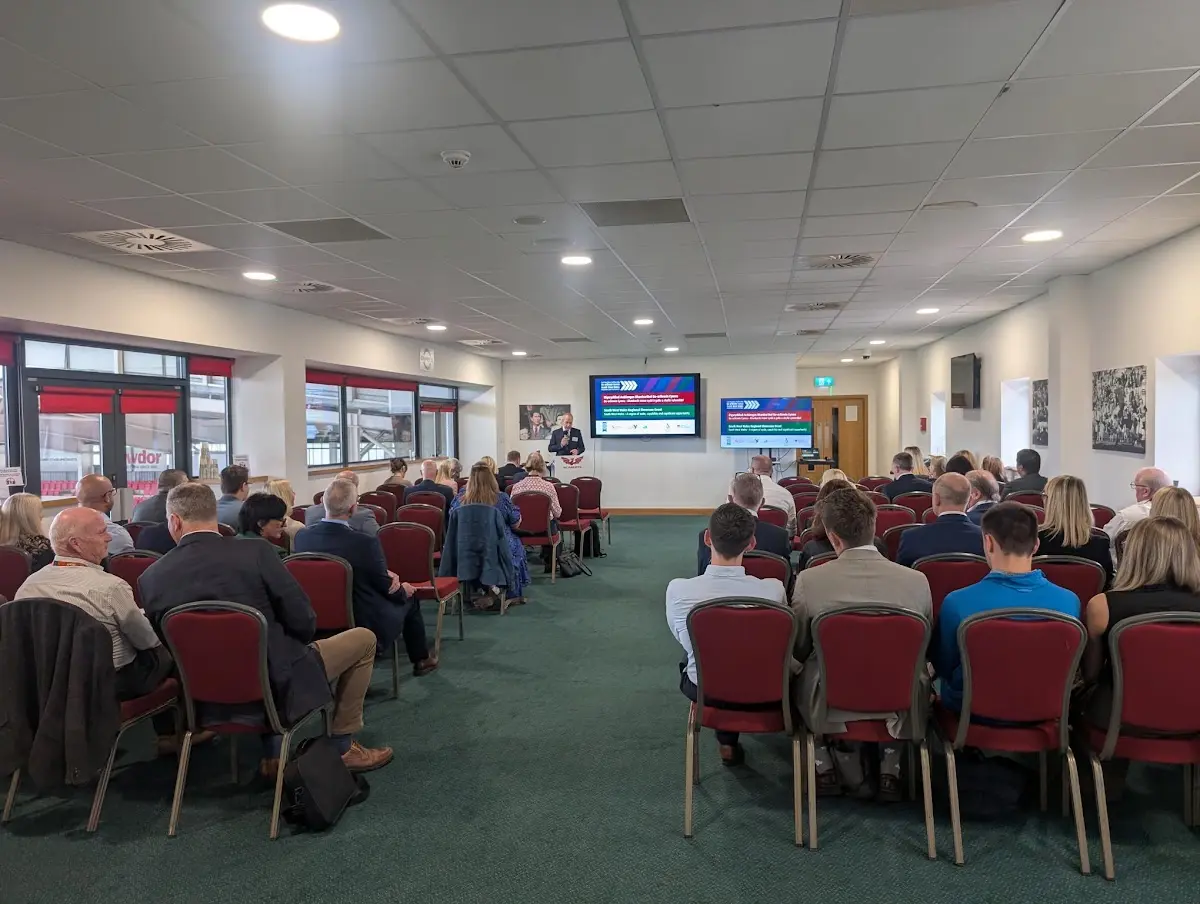
Leaders from across Carmarthenshire, Neath Port Talbot, Pembrokeshire and Swansea gathered at Parc y Scarlets in Llanelli on Thursday to outline a single investment proposition for South West Wales.
The South West Wales Corporate Joint Committee (SWWCJC) hosted the event, stressing that a coordinated regional approach could turn a growing pipeline of projects into tangible economic growth.
Four strands of work – the Regional Economic Delivery Plan, Regional Energy Strategy, Regional Transport Plan and an emerging Strategic Development Plan – were presented as the backbone of the new framework.
Officials said the combined strategies would clarify where development should occur, what infrastructure is required and how investment can boost employment and productivity.
South West Wales boasts a diverse portfolio of assets, from energy and manufacturing to ports, universities and rural economies, but many infrastructure needs cross council boundaries.
Energy networks, transport corridors, housing and skills provision are increasingly seen as regional issues rather than local ones, the committee argued.
The SWWCJC brings together the four councils and the Pembrokeshire Coast and Bannau Brycheiniog National Park Authorities to coordinate work that demands a wider lens.
“South West Wales has the assets, partnerships and ambition to deliver nationally significant growth,” said Cllr Rob Stewart, Chair of the SWWCJC and Leader of Swansea Council.
He added, “By working together across local authority boundaries, we are strengthening the region’s voice, attracting investment, supporting our communities and planning for a more sustainable future.”
“Our message is clear: South West Wales is ready to deliver, and continued collaboration with Government, partners and investors will be essential to turning our shared ambitions into lasting impact.”
The Regional Economic Delivery Plan sets out goals for higher‑quality employment, business growth, innovation and greater prosperity across urban, rural and coastal communities.
Meanwhile, the Regional Energy Strategy looks to develop a net‑zero energy system while harnessing the transition to create new skills and investment opportunities.
The Regional Transport Plan aims to improve connections between communities, workplaces and services, supporting economic development and lower‑carbon travel.
In parallel, the emerging Strategic Development Plan will outline a regional framework for housing, employment, infrastructure and services.
Cabinet Minister for Enterprise, Connectivity and Energy Adam Price welcomed the collaborative effort, saying regional work could align local priorities with wider Welsh economic objectives.
He noted, “The South West Wales CJC is increasingly demonstrating how regional collaboration can support more coordinated planning, stronger partnerships and greater strategic alignment between local, regional and national priorities – such as our ambition to drive productivity and unleash the full potential of the Welsh economy.”
Price continued, “The showcase highlights the region’s growing capacity to develop and deliver a clear regional vision and an identified pipeline of opportunities across economic development, transport, strategic planning and investment.”
Stakeholders argued that a unified proposition would allow investors to view projects as parts of a broader economic ecosystem rather than isolated schemes.
Major energy and industrial developments, for example, require grid capacity, transport links and a skilled workforce, all of which benefit from regional coordination.
Employment growth, in turn, creates demand for housing and connectivity, while new infrastructure can unlock additional sites for development.
By linking decisions across these sectors, the region hopes to move from a collection of individual projects to a cohesive narrative that appeals to both investors and government.
The next hurdle, officials acknowledged, is to demonstrate how strategic plans translate into concrete projects, measurable investment and economic outcomes across all four local authorities.
Observers will be watching closely as South West Wales seeks to convert its coordinated vision into a lasting boost for jobs, growth and sustainability.