
Wrexham councillors reject biomass boiler plan beside primary school
Planning committee refuses a revised 200 kW biomass boiler proposal next to Gwenfro Primary, citing air‑quality risks for children.
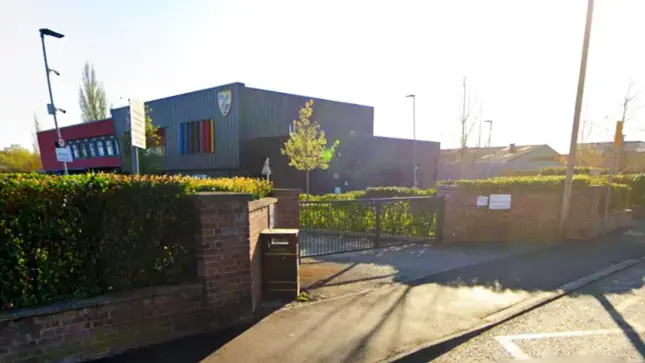
Wrexham Council’s planning committee has rejected for a second time a proposal to install a biomass boiler beside Gwenfro Community Primary School in Caia Park.
The decision was taken at the committee meeting on Thursday, with all members voting unanimously against the revised scheme.
The application sought permission for a 200 kW biomass boiler to be housed inside the Thorncliffe Building Supplies warehouse on Queensway, adjacent to the school.
Only the outdoor fuel‑storage facility, a new solid‑walled structure, required planning consent; the boiler and its flume are classed as internal plant and fall outside the planning regime.
Officers warned that the flume does not need permission and that the boiler could be installed regardless of the committee’s ruling.
Despite that, councillors argued the proximity of the fuel store to the school raised serious air‑quality concerns for pupils and staff.
Gwenfro’s chair of governors, Darren Jacks, told the committee that “the application hasn’t materially changed” and stressed the risk to “young, vulnerable children and teachers”.
“The combustion process remains, the proximity to the school remains.”
Jacks added that biomass combustion can emit particulate matter, nitrogen dioxide and other pollutants, and that compliance with emission limits does not guarantee safety for children who spend considerable time outdoors.
Cllr Brian Cameron, representing the Whitegate ward that includes Gwenfro, echoed the concerns, noting that the boiler and flume sit close to the school playground where “hundreds of young children visit each year”.
The original 240 kW boiler proposal was withdrawn after Welsh Government was asked to consider a call‑in over health worries.
Under the call‑in procedure the planning committee could only refuse or defer the application, not grant approval.
When the revised 200 kW plan was submitted, the committee again found the evidence insufficient to justify a refusal.
Head of Service for Planning Development Management, Matthew Phillips, cautioned that the council lacked concrete evidence to support rejecting the fuel‑store permission.
He said the only element needing consent was the storage area, which had been altered to a more robust structure since the previous submission.
Phillips warned that without solid evidence the council could be vulnerable in any subsequent planning appeal, as inspectors would expect a clear factual basis for the decision.
Nevertheless, members voted to refuse the application, citing the “risk to children is far too high to ignore”.
The decision leaves the boiler itself unimpeded; the plant could be installed inside the warehouse without further planning approval.
Local residents have voiced mixed reactions, with some supporting the council’s precautionary stance and others concerned about potential delays to the warehouse’s heating upgrade.
Wrexham Council has not indicated whether it will seek further clarification from the Welsh Government on the call‑in process.
Should the developers appeal, the case is expected to be examined by a planning inspector who will require the council to present detailed evidence of the alleged air‑quality impact.
For now, the fuel‑storage facility remains unapproved, and the biomass boiler proposal stands at an impasse pending any further regulatory review.