
Historic “Welcome to Wales” sign removed after crash
A decades‑old border sign near Chirk has been taken down following a vehicle collision, prompting a call for restoration funds and a skilled blacksmith.
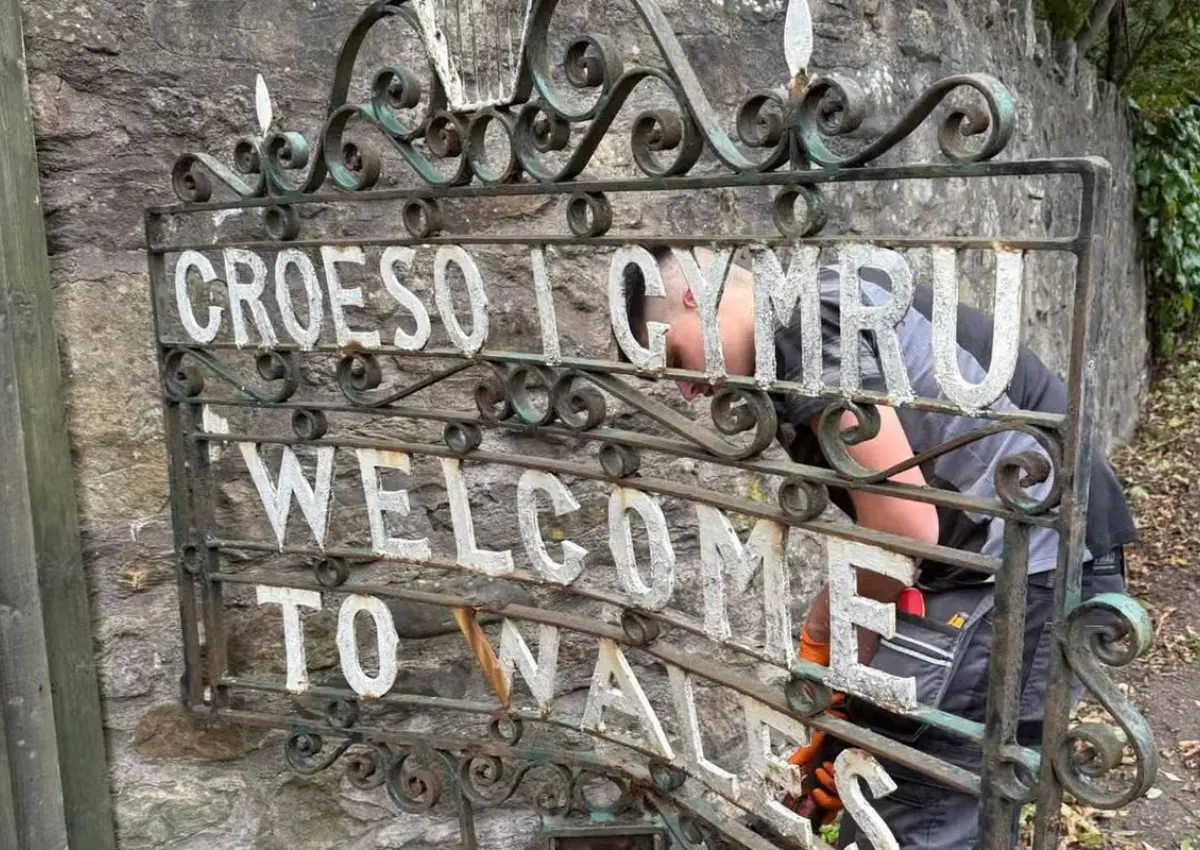
Historic “Welcome to Wales” signage near Chirk has been taken down after a vehicle collision caused extensive damage to the decades‑old landmark. The wrought‑iron sign, bearing the bilingual inscription “Croeso i Gymru – Welcome to Wales”, has greeted motorists for close to 80 years.
It stands on the A5 just inside the Welsh border, a route long used by holidaymakers and commercial traffic alike. Early on Tuesday a driver lost control on a sharp bend and struck the structure, leaving the metal twisted and partially broken.
Chirk Community Councilor Terry Evans confirmed the incident and described the sign as a cherished piece of local heritage. “This wonderful old ‘Welcome to Wales’ sign has stood on this site for the best part of 80 years, welcoming generations of people into Wales and becoming a much‑loved part of Chirk’s local heritage.”
Sadly, recently someone lost control of their vehicle on the bend and collided with the sign, causing considerable damage.”
Evans added that the sign’s considerable weight made removal a difficult task for the council team. “It was extremely heavy and difficult to move, but thankfully we managed to get it safely removed.”
The sign was originally forged by local blacksmith George Stevenson after a commission from Miss Jagger in the early 1940s.
Its design reflects the traditional Welsh font and the use of wrought iron, typical of mid‑century civic works. The council has now taken the damaged piece to a specialist workshop for assessment and possible repair.
Volunteers Harry Wright and Meurig Davies assisted Evans in lifting the heavy sign from the roadside. “I was assisted by Harry Wright and Meurig Davies in removing the damaged sign from the roadside.”
Preliminary reports suggest the metal framework can be repaired, but the ornate lettering may require recasting.
The council is seeking a skilled blacksmith to undertake the restoration, a craft that has become increasingly rare. Evans appealed for assistance from local businesses, heritage organisations and private donors to fund the work.
“I would love to see it restored and back where it belongs, so it can continue welcoming visitors for many more generations to come.”
He also invited anyone with historical knowledge of the sign’s origin to come forward. The sign forms part of a wider network of welcome markers that line the Welsh border, many of which date from the post‑war period.
Heritage groups have highlighted the importance of such markers in promoting Welsh identity to visitors. The removal of the Chirk sign has sparked a modest outpouring of support on social media, with residents sharing photographs of the original landmark.
Local historian Dr Siân Morgan noted that the sign is one of the few remaining examples of George Stevenson’s work, which also included ornamental gates and public benches. The council hopes the restored sign will be reinstated before the next tourist season, allowing it to continue its role as a gateway to Wales.
No specific timeline has been set, pending funding and the availability of a suitable craftsman.