
Powys council faces possible fine as recycling rate slips below 70%
The figure emerged at the Economy, Residents and Communities Scrutiny Committee meeting on Wednesday 14 October, where councillors examined a performance report drawn from the Corporate and Strategic Equality…
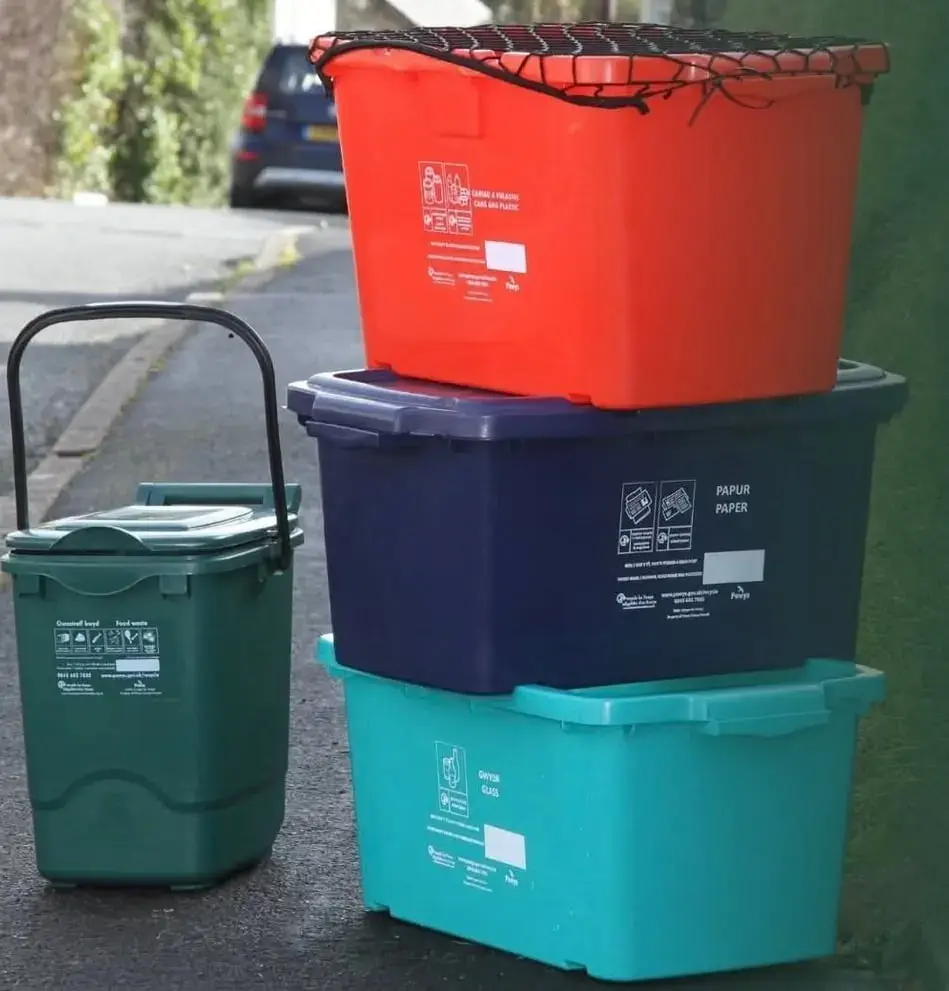
Powys County Council’s recycling rate dropped to 65.7 per cent in the first quarter of the 2026/27 financial year, falling short of the Welsh Government’s 70 per cent legal target and prompting warnings of a possible fine.
The figure emerged at the Economy, Residents and Communities Scrutiny Committee meeting on Wednesday 14 October, where councillors examined a performance report drawn from the Corporate and Strategic Equality Plan 2023‑2027 update for the quarter covering April to June.
Under the 2024/25 legislation, councils that miss the 70 per cent threshold face a levy of £200 for every tonne of waste below the target.
In the 2024/25 year, Powys was among the 12 of 22 Welsh authorities that met the target, but the latest data shows a sharp reversal.
Committee chairwoman Cllr Angela Davies (Liberal Democrat – Rhayader) asked, “Why is the recycling performance below target?”
Cllr Pete Lewington (Conservative – Newtown West) added, “We get a fine if we don’t hit the target and I think it’s quite a hefty one, what are we doing to put it right?”
Cabinet member for legal and regulatory services Cllr Richard Church (Liberal Democrat – Welshpool Castle) explained, “The reasons relate partly to a reclassification of some of the materials and definitions.” He warned the fine was “not automatic” but a possibility, dependent on the council’s justification.
Information and systems manager Curtis Ross said, “We are starting to see an improvement in quarter two.” He noted a 20 per cent reduction in collection by the end of September, adding, “in winter we may see a glut of funding and more activity by the highways team to bridge that gap.”
Ross highlighted that the council’s “gully waste” collected by highways teams had been mistakenly included in recycling figures, a practice that may change if the Welsh Government funds the service on trunk roads.
He also revealed a dramatic shift in wood‑waste recovery, stating, “Wood waste for a long time we were being assured by the sector that recycles it that our recovery was 89/90 per cent plus.”
Natural Resources Wales (NRW) subsequently questioned the plausibility of those claims, a concern Ross described as “a Wales‑wide issue.”
“NRW have done a big piece of work towards the end of the last financial year and determined the figures being quoted were not feasible, looking at all the site returns for the processing facilities it goes to, which includes English facilities and authorities,” he said.
He continued, “We reported these figures in good faith, NRW are now prescribing figures for us to use and from 90 per cent last year we’ve dropped down to 23 per cent, which is a huge deficit.”
Ross estimated that without the revised wood‑waste data, the quarter‑one recycling rate would have been 67.7 per cent, still below the target but marginally higher.
“A lot of material impacts are outside our control,” he added, pointing to factors such as the extended dry summer that reduced garden‑waste collection.
To address the shortfall, the council has doubled its waste‑awareness enforcement team and plans a campaign to boost food‑waste recycling, Ross said.
The committee will forward its recommendations to the cabinet, where decisions on remedial actions and any potential fine will be taken.