
Chicken’s escape film ‘Hen’ screens at Cardigan’s Theatr Mwldan
György Pálfi’s 15‑rated chicken odyssey arrives at Theatr Mwldan on 25 October, blending dark humour with a look at greed, smuggling and the migrant crisis.
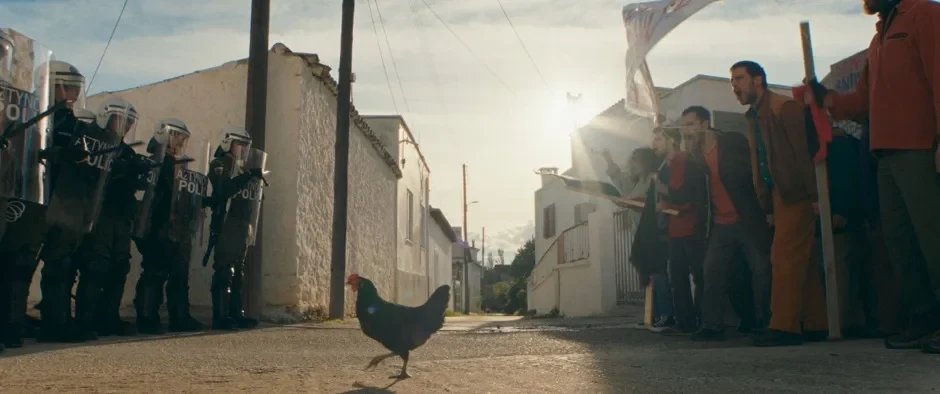
A quirky, 15‑rated feature about a chicken’s daring escape from an industrial farm will make its Welsh debut at Cardigan’s Theatr Mwldan Film Society on Sunday, 25 October.
Directed by Hungarian auteur György Pálfi, the 98‑minute drama, titled Hen, follows the bird’s flight from a bleak factory to a crumbling seaside taverna on the Greek coast.
The film is narrated entirely from the chicken’s perspective, a bold choice that forces audiences to view the world through an unlikely, feathered lens.
Pálfi, known for his visually inventive work such as Taxidermia and Final Cut, said the project allowed him to explore “the absurdity of modern food production while keeping the humour alive”.
In Hen, the chicken, simply called “She”, flees the clutches of a mechanised farm and lands in a dilapidated restaurant where human drama unfolds around her.
As she guards her clutch of eggs, she inadvertently becomes a silent witness to a tangled web of greed, smuggling and the migrant crisis that grips the local community.
The film society’s spokesperson explained, “As she fights to protect her eggs, she becomes an unwitting witness to the complex human lives around her as the restaurant is caught up in greed, smuggling, and the migrant crisis.”
Local audiences will be treated to a blend of dark comedy and stark social commentary, a combination that has earned the film a 15 rating for its mature themes and occasional graphic imagery.
Cardigan’s Theatr Mwldan, a historic venue that regularly hosts independent cinema, will screen the film at 6.30 pm, offering a rare opportunity for Welsh viewers to engage with a work that tackles global concerns from a distinctly personal angle.
Animal‑rights groups have welcomed the film’s premise, noting that it shines a light on the conditions of intensive poultry farming, an industry that supplies a significant portion of the UK’s meat market.
“Stories that give a voice to the voiceless can change public perception,” said a representative from a Welsh animal‑welfare charity, adding that the film could spark conversation about farm standards and consumer choices.
While the narrative is set in Greece, the themes resonate across Europe, where debates over agricultural policy, migrant flows and illicit trade have intensified in recent years.
Film critics have praised Pálfi’s use of close‑up cinematography to convey the chicken’s emotional journey, noting that the camera often mirrors the bird’s frantic movements.
“The visual language is both intimate and unsettling,” one reviewer observed, highlighting how the director’s signature surrealism is tempered by a grounded, human story.
For Cardigan’s residents, the screening also marks a cultural boost, as the town’s modest film programme seeks to attract a wider audience beyond the usual repertory fare.
Theatr Mwldan’s programming director said the society aims to “bring bold, thought‑provoking cinema to the community, challenging viewers while entertaining them”.
Tickets for the 6.30 pm showing are expected to sell out quickly, reflecting a growing appetite for independent films that tackle pressing social issues.
As the lights dim on the historic stage, audiences will be invited to contemplate the plight of a lone chicken and, by extension, the broader human stories that intersect with her flight.